
Posted on Leave a comment

Kitchen Cabinet Buying Guide: Rockville, MD Showroom

Kitchen Cabinet Buying Guide: Rockville, MD Showroom

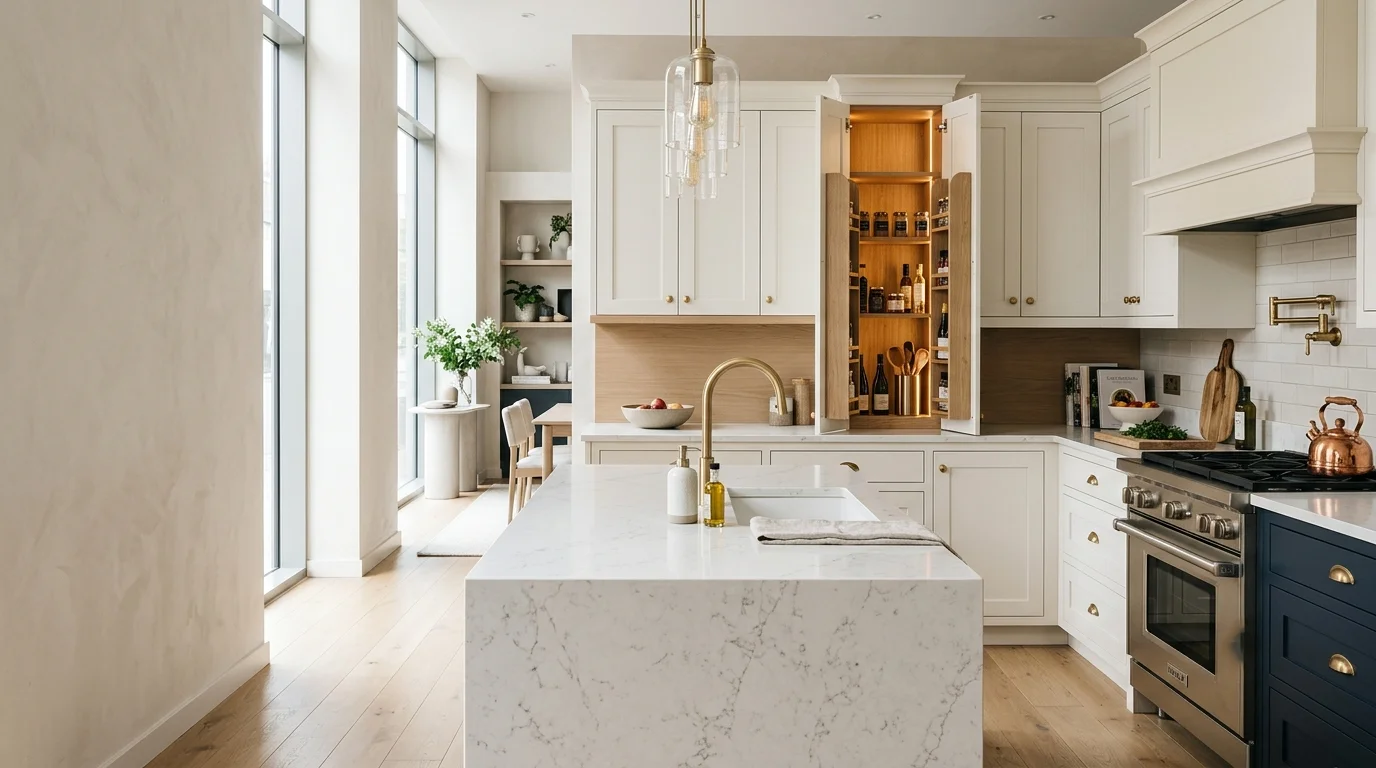
Kitchen cabinets are the biggest investment in any kitchen remodel, and they are also the hardest to reverse. Pick the right construction, door style, and finish and you will enjoy the room for decades. Pick wrong and you are looking at another full renovation. This guide walks you through everything you need to decide before you buy, and it is written for homeowners across Rockville, Montgomery County, and the Washington, D.C. metro who want to see materials in person before they commit.

Why start with the cabinets

Cabinets define the layout, the budget, and the look of a kitchen. Countertops, tile, and flooring all get selected around them, not the other way around. That is why we always tell visitors to our Derwood showroom: start with cabinetry, then build the rest of the palette around it. A cabinet decision fixes your footprint, your storage plan, and roughly a third of your remodel budget, so it deserves the most research time.

Know your cabinet construction: RTA vs assembled

The first fork in the road is how your cabinets are built and delivered. Ready-to-assemble (RTA) cabinets ship flat and get put together on site. Fully assembled cabinets arrive built. Both have a place, but the trade-offs matter for a Maryland remodel. RTA lines can save money and are a legitimate option for rental properties and quick flips. Assembled cabinets cut down install time, reduce the risk of assembly errors, and often carry better warranties. We stock both in the showroom, so you can feel the difference in hinge feel, drawer glide, and panel thickness before you decide. Read our RTA vs assembled cabinet planning guide for the full breakdown.

Door styles: what the profile says about your kitchen

Door style is the personality of the room. The most requested profile in our showroom is the shaker door, a clean, recessed panel that fits both traditional and transitional kitchens. If you want a sleeker, flat look, modern slab doors are a strong fit for contemporary homes. Full-overlay doors cover the cabinet frame for a seamless, furniture-like appearance; inset doors sit flush inside the frame for a more traditional, built-in feel. The right choice depends on your home’s architecture and how much visual texture you want. Compare the details in our shaker vs modern cabinet doors guide.

Materials and finishes that hold up

Cabinet boxes are typically plywood, MDF, or particleboard. Plywood is the most durable and the best choice for full-height pantry units and heavy-use kitchens. Thermofoil wraps are easy to clean and budget-friendly, while painted and stained finishes give you the premium look most homeowners want. On finishes, think about daily life: light colors open up a room but show wear in high-traffic homes, while matte finishes hide fingerprints better than high-gloss. Our cabinet finish durability guide explains how each finish ages so you can match one to your household.

Brands we stock in the Rockville showroom

You should never buy cabinets without knowing the brand and the warranty behind them. At H&C Kitchen & Bath we spec lines builders trust: Forevermark, Fabuwood, Medallion, St. Martin, CNC, Tribeca, Crestwood, Nations, Revola, and Evoke / R.D. Henry. These are distributor-backed lines with ready-to-spec SKUs, which means consistent pricing, real lead times, and support if anything goes wrong, exactly what you will not get buying on the open market alone. You can compare several of these brands side by side on our showroom floor and get honest guidance on which one fits your project and budget. See how the top lines stack up in our cabinet brand comparison guide.

How much should kitchen cabinets cost?

Expect cabinets to run 30% to 45% of a full kitchen remodel. In the D.C. metro, a mid-range kitchen cabinet package typically lands between $15,000 and $30,000 installed, and premium lines push higher. The number depends on lineal footage, door style, finish, and hardware. What matters more than the sticker price is what is included: soft-close hardware, dovetail drawers, plywood boxes, and warranty coverage all change the real value of a quote. Bring your measurements or a rough layout to the showroom and we will help you estimate scope honestly, with no pressure to oversize your order.

How to plan before you visit

A productive showroom visit starts before you walk in. Do this first:

  • [ ] Measure your kitchen, rough ceiling-to-floor and wall lengths are enough to start
  • [ ] Save 5 to 10 kitchen photos you actually like (not dream kitchens)
  • [ ] Note your must-haves: pull-outs, lazy Susans, soft-close, drawer count
  • [ ] Set a budget range before you fall in love with a finish
  • [ ] Decide who installs: your contractor, or a crew we coordinate

The H&C showroom advantage

You can research cabinets for weeks online, but nothing replaces touching the hardware and seeing finishes at full scale. At our showroom at 17620 Redland Rd Ste A, Derwood, MD 20855, you can walk materials with a specialist, compare cabinet lines side by side, and document your selections so your quote and order stay aligned with your decisions. We serve Rockville, Bethesda, Gaithersburg, Silver Spring, Potomac, and the greater D.C. metro, and we work with homeowners and contractors alike.

Ready to plan your kitchen cabinets? Book a free showroom visit or consultation and bring your measurements. Tell us about your project or call (301) 939-0009.

Keep learning:
Posted on Leave a comment

RTA vs Assembled Cabinets: What to Plan For

RTA vs Assembled Cabinets: What to Plan For

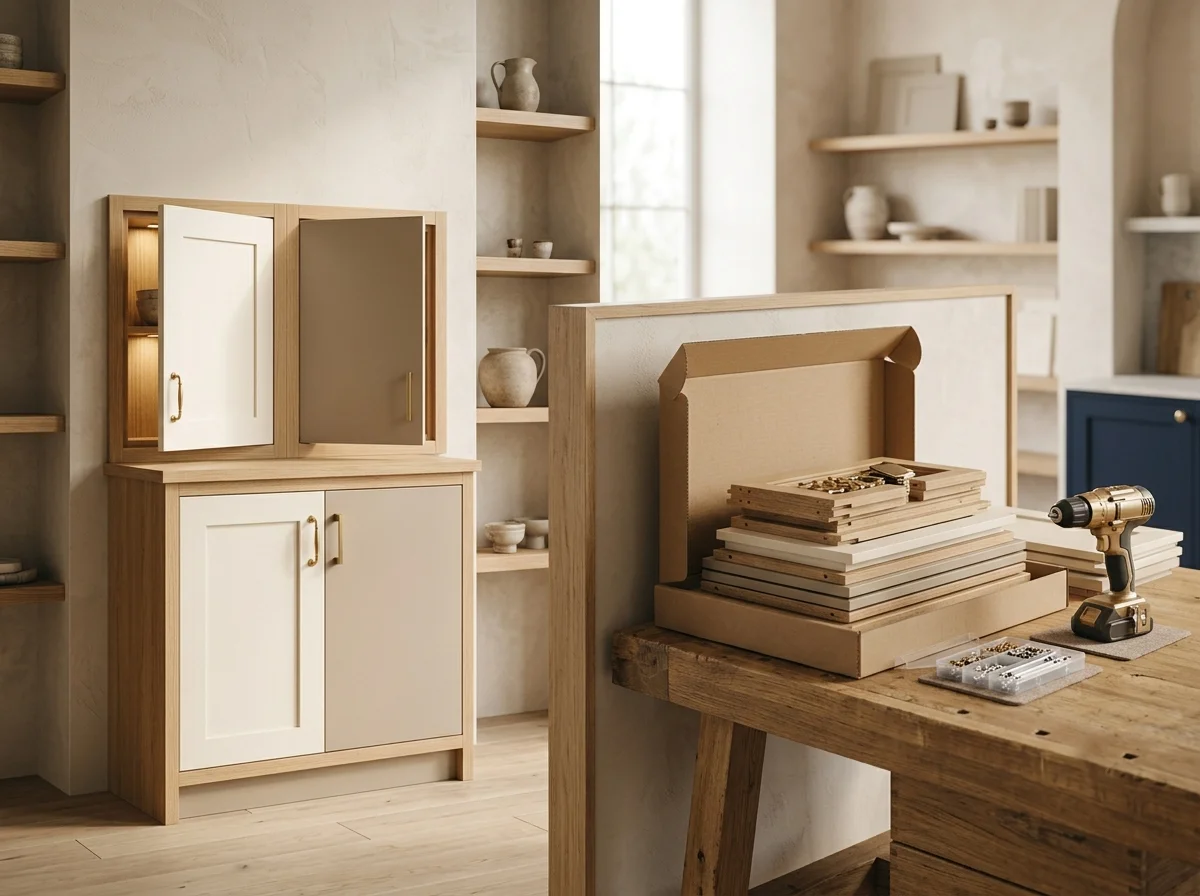
Every cabinet buyer hits the same fork in the road: ready-to-assemble (RTA) or fully assembled cabinets. The decision shapes your budget, your install timeline, and the quality you can expect in ten years. This guide explains what each option really means so you can plan a Maryland kitchen remodel without surprises.

What RTA cabinets are

RTA cabinets ship flat-packed in boxes and are assembled on site with screws, cam locks, and a drill. Because they ship flat, freight costs are lower and the price per box is typically the most affordable route into a real cabinet line. Assembly can be done by the homeowner or by a contractor, and modern RTA lines use the same materials and hardware as assembled boxes.

What assembled cabinets are

Assembled cabinets arrive fully built, ready to be set in place. You skip the assembly step entirely, which saves hours on site and removes the risk of a weekend DIY assembly gone wrong. Assembled boxes usually come with stronger warranties and a more finished feel right out of the crate, which is why most trade professionals and homeowners doing a full remodel choose them.

The honest trade-offs

  • Cost, RTA saves 15% to 30% off equivalent assembled lines, but factor in assembly labor
  • Install time, assembled cabinets are ready to hang the same day; RTA adds hours or a full day of assembly
  • Quality, both can use plywood boxes and soft-close hardware; check the spec sheet, not the label
  • Warranty, assembled lines typically carry longer, clearer warranties
  • Hassle, RTA is a real project; assembled is a “set and finish” project

Where RTA genuinely makes sense

RTA is a smart choice for rentals, flips, basements, and utility spaces where you want a quality look on a tight budget. If a tenant or future buyer will treat the cabinets hard, or if you are staging a property quickly, RTA lets you stretch the dollar. Many of our clients buy RTA for secondary spaces and assembled for the main kitchen.

Where assembled cabinets win

For the kitchen you will live in every day, assembled is usually the better long-term value. Cabinets are the hardest-working furniture in your home. Paying a little more up front for a fully assembled plywood box with soft-close hardware and a solid warranty costs far less over twenty years than replacing sagging RTA boxes in eight. That is the honest math we give every homeowner who visits.

How to tell quality apart in person

Labels are not enough. When you compare cabinets in a showroom, check these details:

  • [ ] Box material, plywood sides vs particleboard
  • [ ] Drawer construction, dovetail joints vs stapled corners
  • [ ] Drawer glides, full-extension soft-close vs basic
  • [ ] Hinges, soft-close vs standard
  • [ ] Door and panel thickness, feel the weight
  • [ ] Back panel, is it real wood or cardboard?

Plan the install before you buy

The biggest hidden cost in any cabinet project is installation. Assembled cabinets cut hours off the install, which can offset most of the price gap between RTA and assembled when you factor in labor at D.C. metro rates. Get an install quote alongside your cabinet quote so you compare apples to apples.

Compare both at the H&C showroom

At H&C Kitchen & Bath in Derwood, MD, we show both RTA and assembled lines so you can feel the difference in hinge weight, drawer glide, and box quality before you commit. We serve Rockville, Bethesda, Gaithersburg, Silver Spring, Potomac, and the wider D.C. metro for homeowners and contractors.

Want to compare RTA and assembled in person? Book a showroom visit and bring your measurements. Get started or call (301) 939-0009.

Keep learning:
Posted on Leave a comment

Quartz vs Granite Countertops: Honest Comparison

Quartz vs Granite Countertops: Honest Comparison

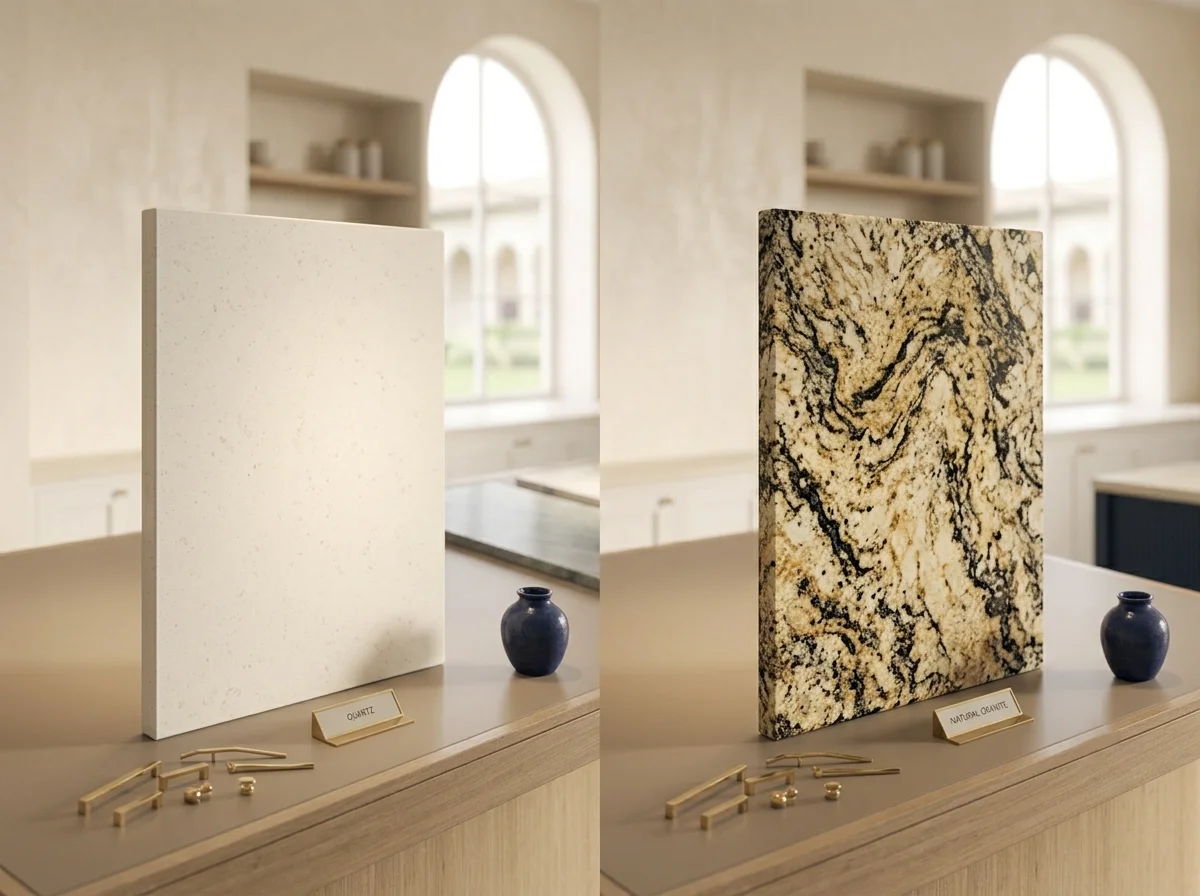
Quartz is engineered stone that never needs sealing and resists stains better. Granite is natural stone that handles heat better and gives you a one-of-a-kind slab. For most Maryland kitchens quartz is the lower-maintenance choice, and granite is the better choice next to a cooktop or if you want a pattern nobody else has. Both cost roughly the same installed: $60 to $120 per square foot in the DC metro.

The quartz versus granite debate is the most common countertop question we get in the showroom, and the honest answer is: both are excellent, and the right one depends on your lifestyle. Here is a no-nonsense comparison so you can decide.

The one-sentence difference

Granite is natural stone, unique, heat-tolerant, and porous. Quartz is engineered, consistent, non-porous, and maintenance-free. Everything else follows from that difference.

Maintenance and daily life

  • Quartz, never needs sealing; wipes clean; resists stains, bacteria, and most acids. The low-maintenance champion.
  • Granite, needs periodic sealing (typically every 1 to 2 years) and quick cleanup of acidic spills like lemon juice and wine to avoid etching.

If you want to think about your countertop as little as possible, quartz wins. If you are fine with a yearly seal and careful cleanup, granite is no burden.

Heat and cooking

Granite handles hot pans directly from the stove with ease. Quartz is heat-tolerant but not heat-proof, a hot pan can scorch or crack the resin binder, so you need trivets. For heavy, high-heat cooking, granite is the safer surface. For everyday cooking with normal care, quartz is fine.

Appearance and uniqueness

Every granite slab is a one-of-a-kind natural formation with movement, veins, and speckle. Quartz offers consistent patterns you can match across large kitchens, with marble-look options that fool most eyes. If you want a unique natural statement, granite. If you want a predictable, coordinated look, quartz.

Durability and repair

Both are durable, but they fail differently. Granite can chip at edges and crack under stress, repairable with epoxy but not invisible. Quartz resists chipping well and scratches less easily, but a deep scratch cannot be polished out the way stone can. Neither should be cut on directly; use a cutting board.

Cost in the D.C. metro

Quartz pricing is consistent and predictable; granite varies by slab and rarity. In Maryland, both land in a similar mid-range band for most projects, with exotic granite or premium quartz lines pushing higher. Get installed quotes from the same fabricator to compare fairly.

Which should you choose?

  • Choose quartz for low maintenance, consistent design, and family-friendly durability, especially with young kids
  • Choose granite for unique natural beauty, high-heat cooking, and a classic look you are happy to care for
  • See both in person before deciding, the texture difference is real

Side by side, on the factors that actually decide it

Factor Quartz Granite
Sealing Never Every 1 to 3 years, varies by stone
Stain resistance Excellent, non-porous Good when sealed, vulnerable when not
Heat resistance Moderate, resin can scorch above roughly 300F Excellent, handles hot pans
Pattern consistency Consistent, repeats on long runs Every slab unique
UV stability Can discolor in direct sun over time Stable
Repairability Difficult, chips are hard to match Chips can often be filled
Installed cost, DC metro $60 to $120 per sq ft $55 to $120 per sq ft
Best for Busy family kitchens, low maintenance Cooking-heavy kitchens, unique look

The three situations where the answer is not close

Next to a professional cooktop: granite. Quartz uses a resin binder, and sustained high heat can scorch or discolor it. Trivets solve this, but if you routinely move pans directly from burner to counter, granite is the safer material.

A kitchen with strong direct sunlight: granite. Some quartz products can shift color under prolonged UV exposure. Manufacturers vary in their warranty language, so check the specific line if the counter sits in a sunroom or under a large south-facing window.

A rental, a busy family kitchen, or anyone who will not seal on schedule: quartz. Sealing is easy and people still do not do it. An unsealed granite counter absorbs oil and wine. Quartz forgives neglect.

What about the price myth

The belief that granite is cheaper than quartz is outdated. Entry-level granite is cheaper than entry-level quartz, and premium granite is more expensive than most quartz. At the mid-range where most kitchens land, they are close enough that price should not be the deciding factor. See our Maryland kitchen renovation cost breakdown for how countertops sit in the wider budget, and our countertop showroom guide for how to compare actual slabs. Browse countertops in Maryland.

Frequently asked questions

Is quartz better than granite?

Neither is universally better. Quartz never needs sealing and resists stains better, which suits busy family kitchens. Granite handles heat better and gives a unique slab, which suits cooking-heavy kitchens. Choose quartz for low maintenance and granite for heat tolerance and individuality.

Which is more expensive, quartz or granite?

They overlap heavily. Both run roughly $55 to $120 per square foot installed in the DC metro. Entry-level granite is cheaper than entry-level quartz, while premium granite exceeds most quartz. At the mid-range they are close enough that price rarely decides it.

Does quartz stain more easily than granite?

No. Quartz is non-porous and resists staining better than granite. Granite is porous and must be sealed every one to three years to resist oil and wine. An unsealed granite counter will absorb stains that quartz would not.

Can you put hot pans on quartz countertops?

It is not recommended. Quartz contains a resin binder that can scorch or discolor above roughly 300F. Always use a trivet on quartz. Granite tolerates direct heat from cookware much better.

Which adds more value to a home, quartz or granite?

Both are viewed as premium surfaces by buyers in the DC metro and neither carries a clear resale advantage. Condition and installation quality affect perceived value more than the choice between the two.

Compare them at the showroom

At H&C Kitchen & Bath in Derwood, MD, quartz and granite are displayed at full scale in gallery light so you can see the difference in movement, texture, and finish, and ask a specialist the questions that matter for your kitchen. We serve Rockville, Bethesda, Gaithersburg, Silver Spring, Potomac, and the D.C. metro.

Still deciding between quartz and granite? Compare both in person. Book your consultation or call (301) 939-0009.

Keep learning:
Posted on Leave a comment

Hardwood vs LVP for Kitchen Remodels

Hardwood vs LVP for Kitchen Remodels

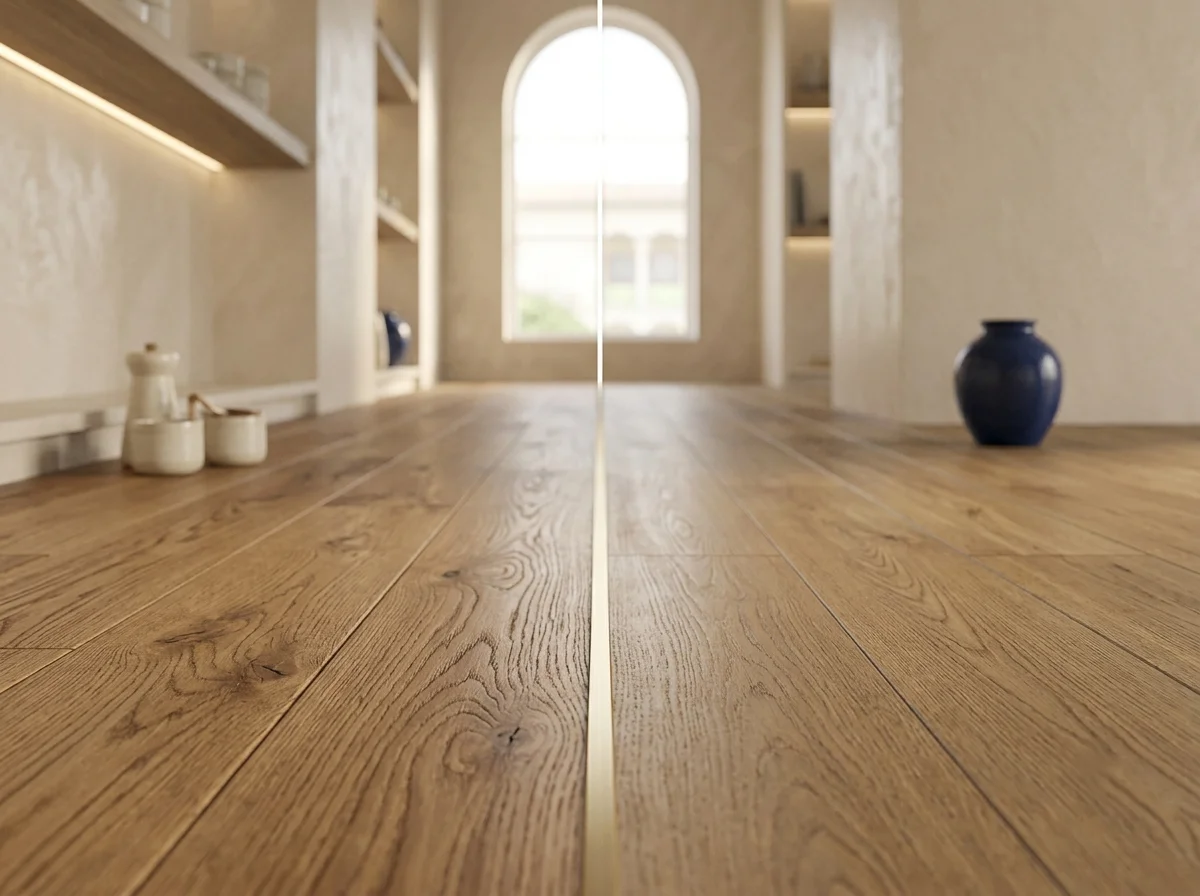
The kitchen floor takes more abuse than any other surface in the house, spills, dropped pans, heavy traffic, and the occasional runaway juice box. For Maryland homeowners planning a remodel, the decision usually comes down to hardwood and luxury vinyl plank (LVP). Both are excellent; they are simply built for different priorities.

Hardwood: warmth, value, and timelessness

Hardwood flooring brings natural warmth, character, and a classic look that real estate agents love. It adds resale value and can be refinished, sanded and re-stained, to look new again decades later. The trade-off is water and scratching. In a kitchen, spills need prompt cleanup, and pets and kids will add character marks. With area rugs at the sink and sensible care, hardwood is a long-term investment that pays back at resale.

LVP: waterproof and worry-free

Luxury vinyl plank (LVP) is a multi-layer vinyl floor that convincingly mimics wood. Its defining advantage is waterproof construction, spills, mopping, and even standing water do not harm it. It is softer underfoot, warmer than tile, quieter than laminate, and far more affordable than hardwood. Modern LVP looks remarkably real, with embossed grain you can feel. The downside: it cannot be refinished, and it will not add resale value the way hardwood does.

The honest comparison

Consideration Hardwood LVP
Water resistance Low, needs care Excellent, waterproof
Durability Scratches, refinishable Very high, not refinishable
Resale value Adds value Neutral
Comfort underfoot Natural, warm Soft, cushioned
Cost Higher Budget-friendly
Lifespan Decades with refinishing 15–25 years

Matching the floor to the household

  • Family kitchen, kids and pets, LVP wins on stress-free daily life; waterproof beats beautiful
  • Long-term home, resale priority, hardwood wins on value and timelessness
  • Rental or flip, LVP for durability per dollar
  • Open floor plan, hardwood is easier to run continuously through adjacent rooms

Installation and transitions

Think about how the kitchen floor meets the rest of the house. Hardwood can flow seamlessly through an open plan. LVP needs transition strips between rooms unless you install it throughout. Both are fine with radiant heat in the right configurations, ask us which works for your setup.

What we recommend

There is no universal winner, it is a values decision. If low-maintenance, waterproof peace of mind matters most, choose LVP and never worry about a spilled glass of water again. If warmth and long-term value matter most, choose hardwood and care for it properly. Come walk both at the showroom; the feel underfoot settles most debates.

See hardwood and LVP at the showroom

At H&C Kitchen & Bath in Derwood, MD, we display hardwood and luxury vinyl options so you can compare texture, color, and underfoot feel in person. We serve Rockville, Bethesda, Gaithersburg, Silver Spring, Potomac, and the D.C. metro.

Choosing a kitchen floor? Compare hardwood and LVP in person. Book your visit or call (301) 939-0009.

Keep learning:
Posted on Leave a comment

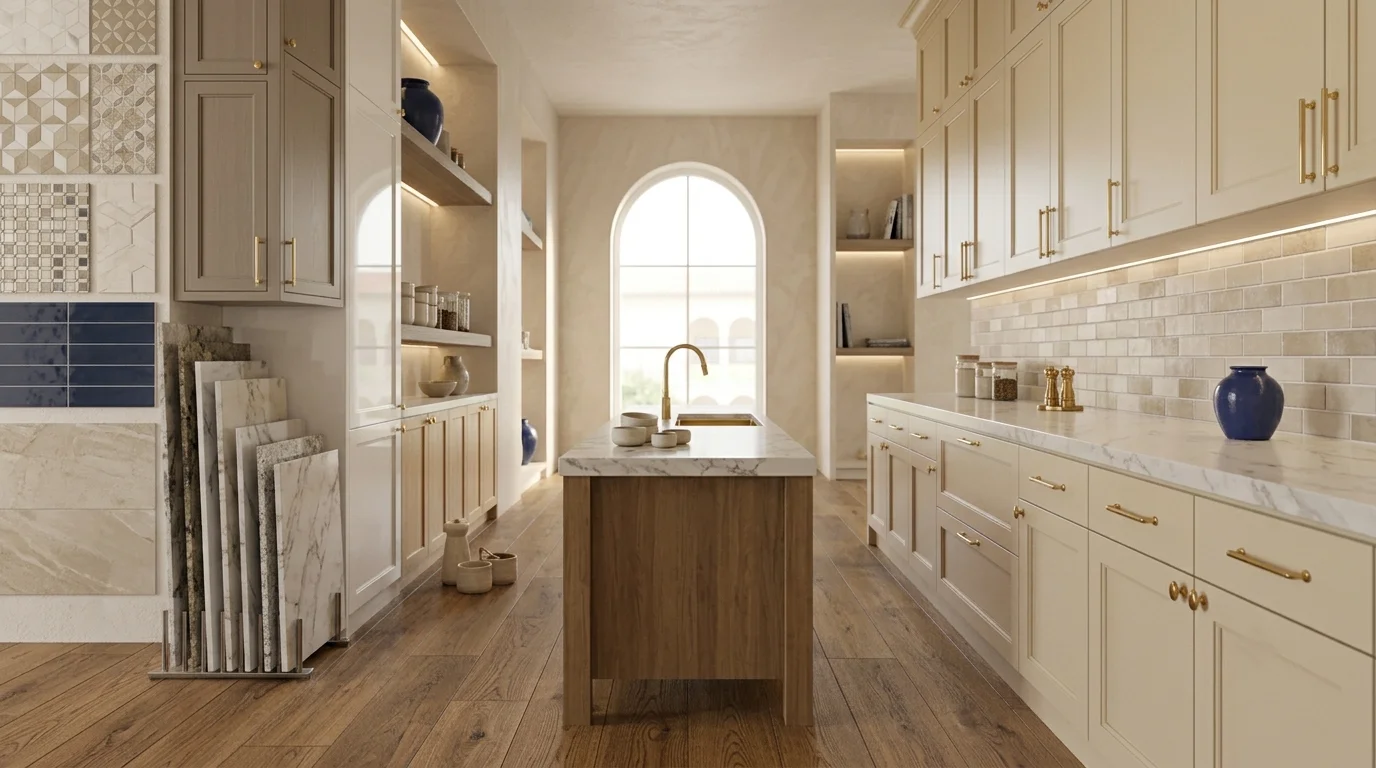
Why Visit a Kitchen & Bath Showroom Before You Buy

Why Visit a Kitchen & Bath Showroom Before You Buy

Visit a kitchen and bath showroom before you buy because screens flatten the three things that decide satisfaction: texture, scale, and true color. A showroom lets you open a loaded drawer, see a full slab standing up, and check finishes under real light. For a full renovation, one visit prevents the mistakes that cost the most and can be fixed the least.

You can research cabinets, countertops, tile, and flooring online for weeks, and still order the wrong thing. Screens flatten texture, distort scale, and hide the details that matter most: how a drawer glides, how a finish catches light, how a slab feels under your hand. That is why visiting a real showroom before you buy is not optional; it is the smartest step in your whole remodel.

The problem with buying from a screen

Online catalogs are great for shortlisting and terrible for deciding. A marble-look quartz that looks stunning in a photo can read cold in your kitchen. A cabinet finish that seems white online can look yellow against your floor. Colors shift between screens, and you cannot test a soft-close hinge or feel a leathered finish through a browser. Every project we have seen go wrong started with a decision made from photos.

What you actually learn in person

  • Texture, honed vs polished vs leathered changes everything and only shows up by touch
  • Scale, tile and slab patterns look completely different at full size
  • Hardware feel, hinge weight and drawer glide tell you a cabinet’s real quality
  • Color truth, see finishes in gallery light, not a color-calibrated monitor
  • Durability, handle samples that have been lived with, not just brand-new displays

Get honest guidance, not a sales pitch

A good showroom helps you buy the right thing, not the most expensive thing. At H&C Kitchen & Bath, we give honest guidance on fit, durability, and budget, including when the budget-friendly option is the smarter call. We are a showroom, not an open marketplace, so you get distributor-backed lines, ready-to-spec SKUs, and real support if something goes wrong. That guidance saves money and regret.

Compare brands and materials side by side

The biggest advantage of a showroom is side-by-side comparison. Can you tell the difference between Forevermark and Fabuwood cabinets from a website? Between two nearly identical quartz slabs? Probably not, and that is exactly the point. In the showroom, you open the doors, pull the drawers, and see the difference with your own eyes before you commit a significant part of your remodel budget.

Keep selections, quotes, and ordering aligned

A remodel falls apart in coordination, not in design. When you select materials in a showroom, your approved choices are documented and carried through to quotes, ordering, and shipping. Nothing gets “upgraded” silently, nothing arrives as a surprise substitute, and your order stays aligned with your final decisions. That is the process we run at H&C from first walkthrough to install-ready delivery.

Avoid the expensive mistakes

  • Ordering a finish that looks wrong in real light
  • Choosing tile that is not rated for floors
  • Picking a “great deal” line with no warranty support
  • Matching colors exactly instead of coordinating undertones
  • Ignoring lead times and paying rush fees

Every one of these is preventable with one showroom visit.

What to do in the first twenty minutes

A showroom visit goes badly when it becomes browsing. Structure it:

  1. Start with cabinets, not counters. Cabinets are the largest line item and the longest lead time. Everything else coordinates to them.
  2. Open a loaded drawer. Not an empty display drawer. Weight reveals glide quality.
  3. Take the cabinet door with you to the countertop area. Undertones only work or fail in pairs.
  4. Ask what is in stock versus special order. Lead time changes your construction schedule more than price changes your budget.
  5. Photograph everything with the tag visible. You will not remember which finish was which by that evening.

Our showroom visit checklist goes deeper on each step, and the design consultation guide explains what a booked appointment produces. See our kitchen and bath showroom in Maryland and Montgomery County pages.

Frequently asked questions

Why should I visit a kitchen showroom instead of shopping online?

Screens cannot show texture, true color, or scale. Cabinet finishes shift under different light temperatures, and stone veining reads completely differently at full slab size than on a sample chip. These are the decisions most often regretted and least able to be corrected after installation.

What should I expect at a kitchen and bath showroom?

Expect full display kitchens you can touch, countertop slabs viewed standing up, tile and flooring at scale, and a specialist who asks how you cook before recommending anything. A good visit produces a shortlist and a budget range, not just inspiration.

Do I need an appointment to visit a kitchen showroom?

Walk-ins are usually welcome for browsing, but an appointment guarantees a designer is available to work through layout and pricing. If you want a plan and a number rather than a look around, book ahead.

Is a kitchen showroom more expensive than a big box store?

Showroom cabinets typically run 30 to 60 percent more per linear foot, covering plywood construction, size modifications, wider finish ranges, and order management. For simple layouts with stock sizes, a big box store can be the better value. See our showroom versus big box comparison.

What to expect at H&C Kitchen & Bath

When you visit our showroom at 17620 Redland Rd Ste A, Derwood, MD 20855, you can reserve a time or walk in, compare materials at full scale with a specialist, document your selections, and get a clear path from design to order. We serve Rockville, Bethesda, Gaithersburg, Silver Spring, Potomac, and the D.C. metro, homeowners and trade alike.

Ready to see your materials in person? Book your showroom visit today. Schedule your visit or call (301) 939-0009.

Keep learning:

Posted on Leave a comment

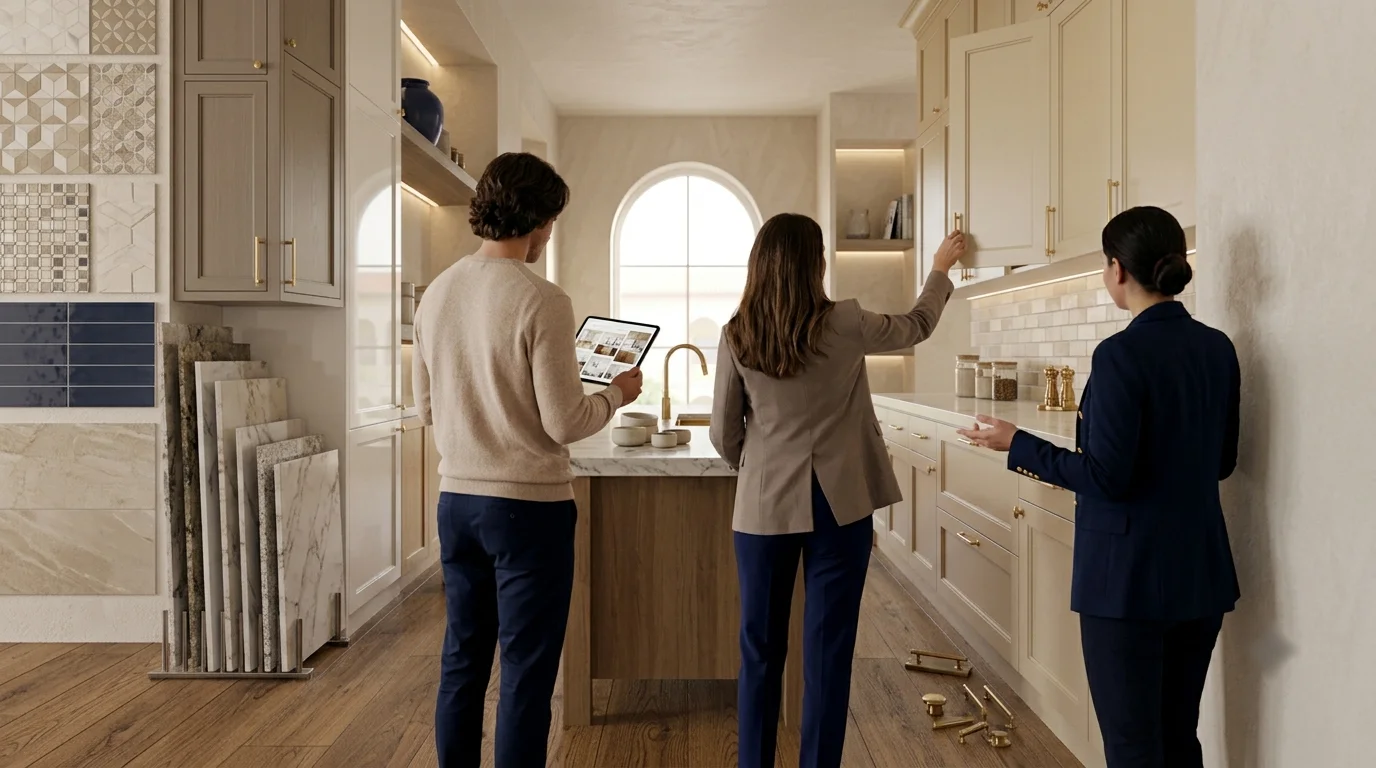
Showroom Visit Checklist for Kitchen & Bath

Showroom Visit Checklist for Kitchen & Bath

Bring six things to a kitchen and bath showroom visit: wall-by-wall measurements, ceiling height, photos of the room in daylight, appliance model numbers, your budget range, and a sample of anything staying in the room. Plan 60 to 90 minutes. Start with cabinets, since they carry the longest lead time and everything else coordinates to them.

A showroom visit is only as productive as your preparation. Walk in with a plan and you will leave with real decisions made; walk in cold and you will leave overwhelmed by options. Use this checklist to make your visit to H&C Kitchen & Bath, or any showroom, count.

Before you go

  • [ ] Measure the room, rough wall lengths, ceiling height, and window/door locations are enough to start
  • [ ] Save 5 to 10 real photos of kitchens or baths you like (your own style, not just “dream” rooms)
  • [ ] Note your must-haves: soft-close, pull-outs, drawer count, specific finish ideas
  • [ ] Set a budget range, and stick to it
  • [ ] Know your timeline, when do you need to order and install?
  • [ ] Decide who installs: your contractor, or a team we coordinate

Bring with you

  • [ ] Your rough measurements or floor plan
  • [ ] Your inspiration photos, phone is fine
  • [ ] A list of questions
  • [ ] Your contractor’s contact if you have one
  • [ ] Samples of anything you already own (flooring, trim, paint)

At the showroom: cabinets

  • [ ] Open and close doors, feel the hinge action
  • [ ] Pull every drawer, test the glide and soft-close
  • [ ] Compare box materials: plywood vs particleboard
  • [ ] Look inside, dovetail joints, full-extension glides
  • [ ] Touch the finishes, painted, stained, thermofoil, laminate
  • [ ] Ask about warranties and lead times for each line

At the showroom: countertops

  • [ ] Touch polished, honed, and leathered finishes
  • [ ] Compare quartz, granite, quartzite, and marble slabs
  • [ ] Check edge profile samples, eased, beveled, bullnose, ogee
  • [ ] Ask about sealing and maintenance for each material
  • [ ] Ask for installed pricing, not just per-square-foot

At the showroom: tile and flooring

  • [ ] Compare porcelain vs ceramic, know which is for floors
  • [ ] Check slip resistance for bathroom floors
  • [ ] Look at large-format options to minimize grout lines
  • [ ] Compare hardwood vs LVP underfoot
  • [ ] Ask how tile and flooring will coordinate with your cabinets

Before you leave

  • [ ] Get your selections documented in writing
  • [ ] Collect a quote or estimate for your scope
  • [ ] Confirm lead times for your top choices
  • [ ] Ask about the next step, consultation, order, or install coordination
  • [ ] Take photos of your shortlist

> The goal of a showroom visit is not to decide everything, it is to narrow your options with confidence. Leave with a shortlist of two to three choices per surface.

The five questions to ask before you leave

  1. What is the current lead time on this cabinet line, this week? Catalog lead times are frequently out of date. Ask what is actually shipping.
  2. Is this slab tagged for me, or am I approving the material? For granite, quartzite, and marble this distinction decides what arrives.
  3. Where will the seams fall? Get it discussed before fabrication, not after.
  4. What is the total including installation? A material number without an install plan is half a budget.
  5. What happens if something arrives damaged? The answer tells you what you are actually buying.

For how the phases sequence afterwards, see our kitchen remodel timeline and the countertop showroom guide.

Frequently asked questions

What should I bring to a kitchen showroom visit?

Bring wall-by-wall measurements, ceiling height, daylight photos of the room, appliance model numbers, your budget range, and samples of anything staying in the room such as flooring. Measurements and appliance specs matter most, since both drive cabinet configuration.

How long should a showroom visit take?

Plan 60 to 90 minutes for a productive first visit. Browsing takes less, but a visit that produces a shortlist, a layout discussion, and a budget range needs at least an hour with a designer.

What should I look at first in a kitchen showroom?

Start with cabinets. They are the largest budget line and carry the longest lead time, typically 4 to 10 weeks for semi-custom, so they set the construction schedule. Countertops, tile, and flooring coordinate to the cabinet selection.

Should I bring my contractor to the showroom?

Yes, if you have one. A contractor catches constraints a homeowner will not, such as whether a wall can be removed or whether the electrical panel has capacity. If your showroom also handles installation, that coordination happens automatically.

Plan your visit to H&C Kitchen & Bath

At 17620 Redland Rd Ste A, Derwood, MD 20855, we make showroom visits easy, reserve a time or walk in. Our specialists walk materials with you, document your selections, and keep your quotes and ordering aligned. We serve Rockville, Bethesda, Gaithersburg, Silver Spring, Potomac, and the D.C. metro.

Ready to make your visit count? Book your showroom appointment today. Schedule your visit or call (301) 939-0009.

Keep learning:
Posted on Leave a comment

Homeowner Prep Guide for Your First Showroom Visit

Homeowner Prep Guide for Your First Showroom Visit

Your first showroom visit can feel overwhelming, dozens of cabinet doors, a wall of tile, slabs everywhere, and a hundred finishes. It does not have to be. With a little preparation, your first visit becomes the moment your remodel stops being abstract and starts being real. Here is how to prepare.

Why the first visit matters

The first visit is about education as much as shopping. You are there to see what exists, feel what you like, and learn the vocabulary you will use for the rest of the project. It is completely normal to leave without deciding anything, the goal is a shortlist and clarity, not a contract.

Measure before you visit

You do not need architectural plans, but rough numbers help enormously:

  • Wall-to-wall length of each wall in the room
  • Ceiling height
  • Rough locations of windows, doors, and plumbing
  • Appliance sizes if you already own them

Rough numbers are enough to help a specialist estimate cabinet count and scope. Bring a tape measure if you have not measured yet, many showrooms have one you can borrow.

Bring your inspiration

Photos beat adjectives. A picture of a kitchen you love tells a specialist more than “warm and modern” ever will. Collect 5 to 10 images of kitchens or baths, the ones you keep coming back to, and bring them on your phone. Notice what you actually like: the cabinet color, the countertop movement, the tile pattern, or the overall vibe.

What to expect when you walk in

At H&C Kitchen & Bath, you will find full-scale cabinet vignettes, countertop slabs, and tile and flooring displays, not just samples on a board. A specialist will walk materials with you, answer durability and care questions, and help you narrow options. You can reserve a time or walk in. No pressure, no obligation to buy that day.

Questions worth asking

  • [ ] How durable is this finish with kids and pets?
  • [ ] What is the lead time for this line and finish?
  • [ ] What does the warranty actually cover?
  • [ ] Can you show me the difference between these two options?
  • [ ] How does this coordinate with my flooring?

How to handle budget

Be honest about your budget from the start. It is not embarrassing, it is information a good showroom uses to steer you toward the right options instead of wasting your time. A specialist should be able to show you value lines and premium lines side by side so you can see exactly what the extra money buys. If a showroom pushes you past your budget, that is a sign to walk away.

After the visit

  • [ ] Review the photos and notes you took
  • [ ] Shortlist two to three options per surface
  • [ ] Compare the quotes you collected
  • [ ] Ask follow-up questions by phone or email
  • [ ] Schedule a design consultation if you need help pulling it together

Plan your first visit to H&C Kitchen & Bath

At our showroom at 17620 Redland Rd Ste A, Derwood, MD 20855, first-time visitors are our favorite guests. Bring your measurements and inspiration, and we will guide you through materials, layouts, and finish combinations at your pace. We serve Rockville, Bethesda, Gaithersburg, Silver Spring, Potomac, and the D.C. metro.

Ready for your first visit? Reserve your time at the showroom. Book your visit or call (301) 939-0009.

Keep learning: