Posted on — Leave a comment

Kitchen Cabinet Installation Labor Cost

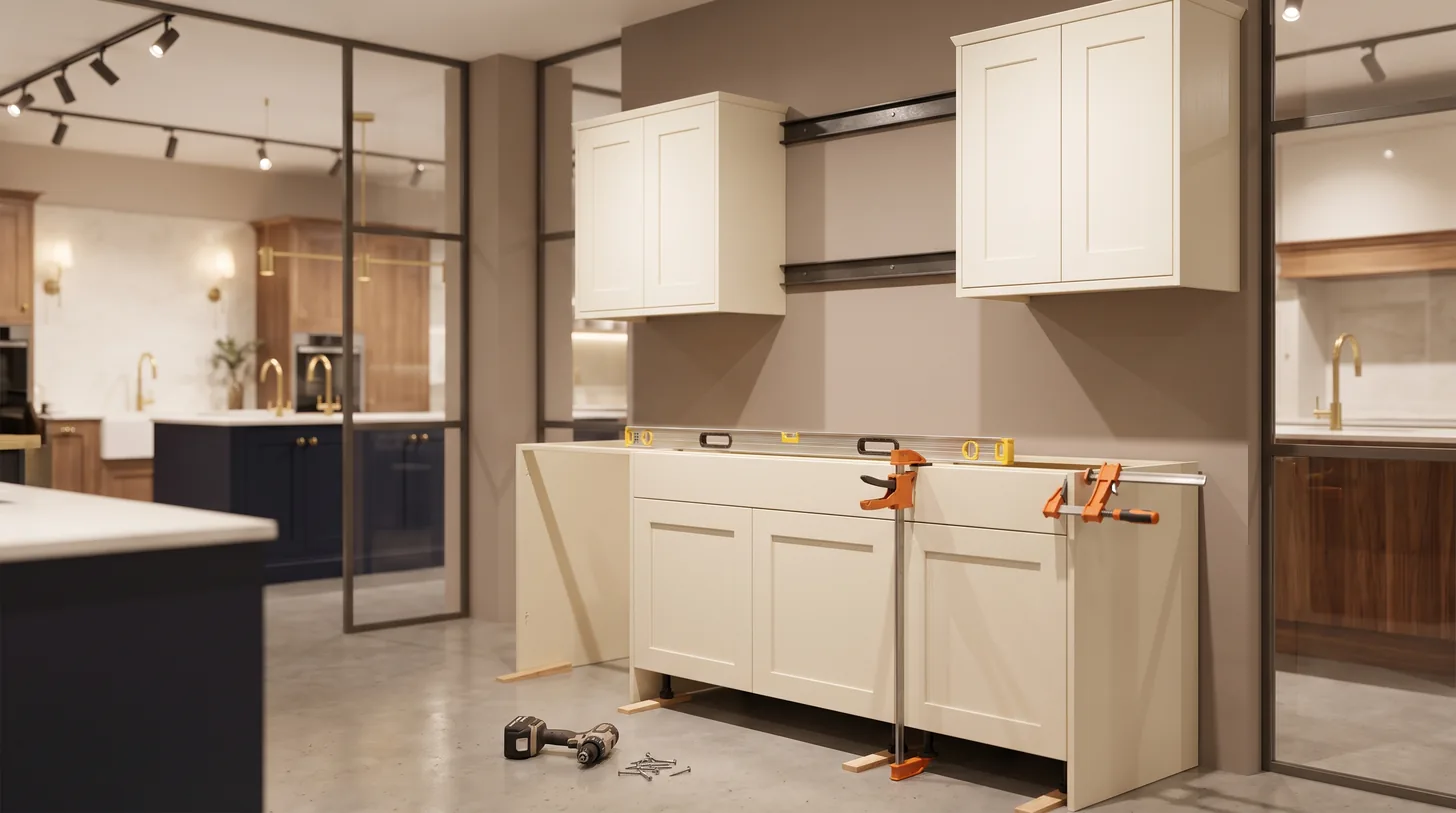
Shaker kitchen cabinets partly installed with level

Kitchen cabinet installation labor costs $100 to $300 per linear foot, or $2,000 to $6,000 for a typical 20 linear foot kitchen. That is 15 to 25 percent of what you spend on the cabinets themselves. The variable that moves it is not the brand or the door style: it is how far out of square and out of level your walls and floors are, because every cabinet has to end up plumb regardless of what it is attached to.

We sell the cabinets at our Derwood showroom and H&C Construction installs them, which means we see the quote and the invoice on the same kitchen.

What the labor includes

Task Share of labor Notes
Layout, levelling and ledger lines 15% Finding the high point of the floor, snapping lines
Hanging upper cabinets 25% Done first, so base cabinets do not obstruct
Setting and joining base cabinets 30% Shimming, clamping, fastening face frames together
Fillers, scribes and panels 15% Where the kitchen meets imperfect walls
Doors, drawers and hardware adjustment 15% Soft-close alignment is slow, fussy work

Countertop templating happens after this and is a separate trade and a separate line.
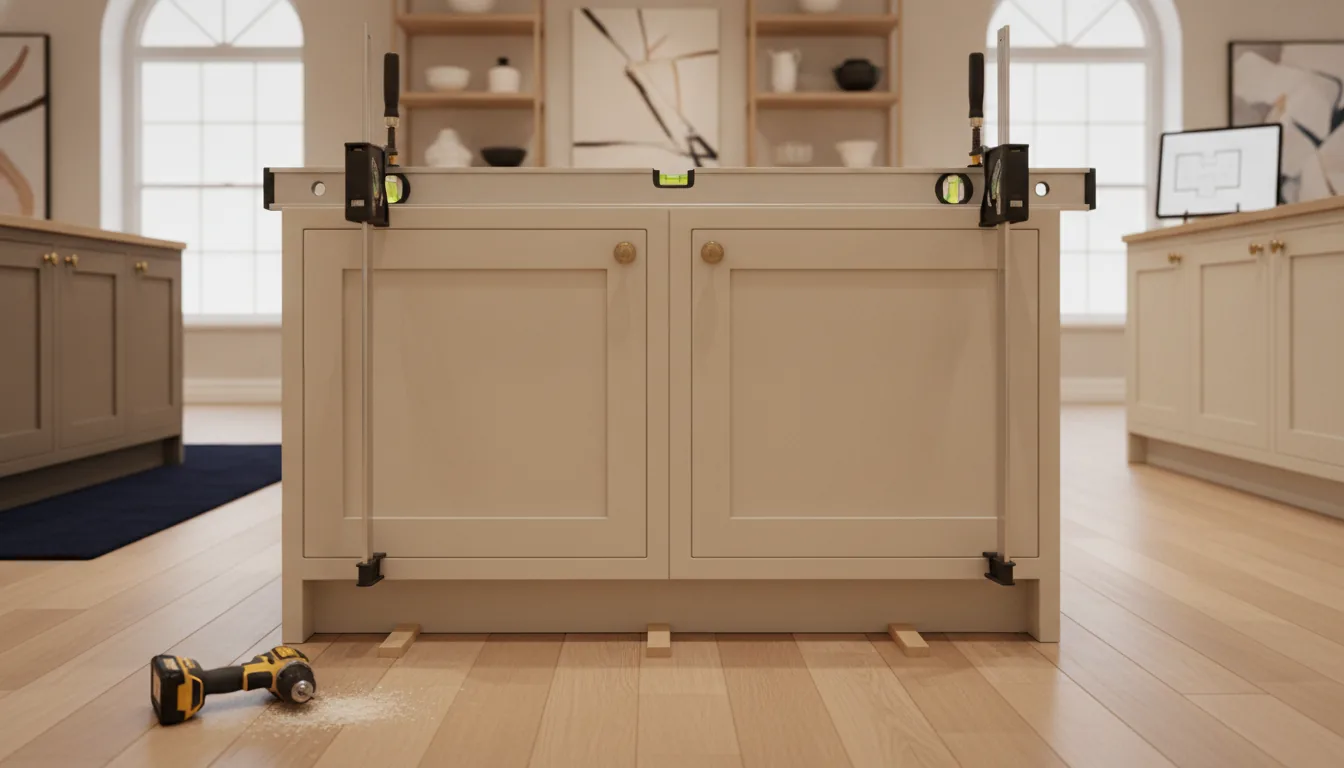
Base cabinets clamped and shimmed at face frame

Why two identical kitchens cost different amounts to install

Out-of-level floors. The installer finds the highest point of the floor and works from it, shimming everything else up to match. A floor that is three-quarters of an inch out across a run turns a one-day install into a two-day install and eats a toe kick.

Out-of-square walls. Corners that are not 90 degrees mean scribing fillers to fit, which is handwork. In older Maryland homes this is normal rather than exceptional.

Stock vs semi-custom. Semi-custom cabinets arrive in sizes that fit your kitchen, so there is less filler. Stock cabinets in 3-inch increments leave gaps that somebody has to resolve on site, and that resolution is labor.

Assembled vs RTA. Ready-to-assemble cabinets add $30 to $75 per box in assembly time, which is rarely included in a quoted installation rate.

The question to ask every bidder

Ask what the quote assumes about the floor and the walls, and what happens if they are out. An installation quote that does not mention levelling is a quote that has not looked at your kitchen. The second question is whether removal and disposal of the old cabinets is included: it is $300 to $800 and it is frequently excluded.

For how this sits in the full cabinet budget see how much kitchen cabinets cost, and for the alternative to replacing them, painting vs refacing.

Frequently asked questions

How much does it cost to install kitchen cabinets?

$100 to $300 per linear foot in labor, or $2,000 to $6,000 for a 20 linear foot kitchen. That is 15 to 25 percent of the cabinet cost.

Is cabinet installation included in the cabinet price?

Rarely. Showrooms and big box stores usually quote cabinets and installation separately, and disposal of the old cabinets is often a third line that is easy to miss.

How long does it take to install kitchen cabinets?

One to two days for a straightforward 20 linear foot kitchen, two to three days where floors are out of level, walls are out of square or there is significant filler and panel work.

Does it cost more to install RTA cabinets?

Yes, $30 to $75 per box in assembly time, which is not usually part of a quoted per-linear-foot installation rate. Ask specifically whether assembly is included.

Do cabinets go in before or after flooring?

It depends on the flooring type, and getting it wrong is expensive. See our breakdown of floors or cabinets first.

Want the install priced before you order? Bring your kitchen dimensions to our Derwood showroom and we will tell you what your floor and walls are likely to add. Call (301) 939-0009 or book a showroom visit.
Posted on — Leave a comment

Painting vs Refacing Kitchen Cabinets: Cost Compared

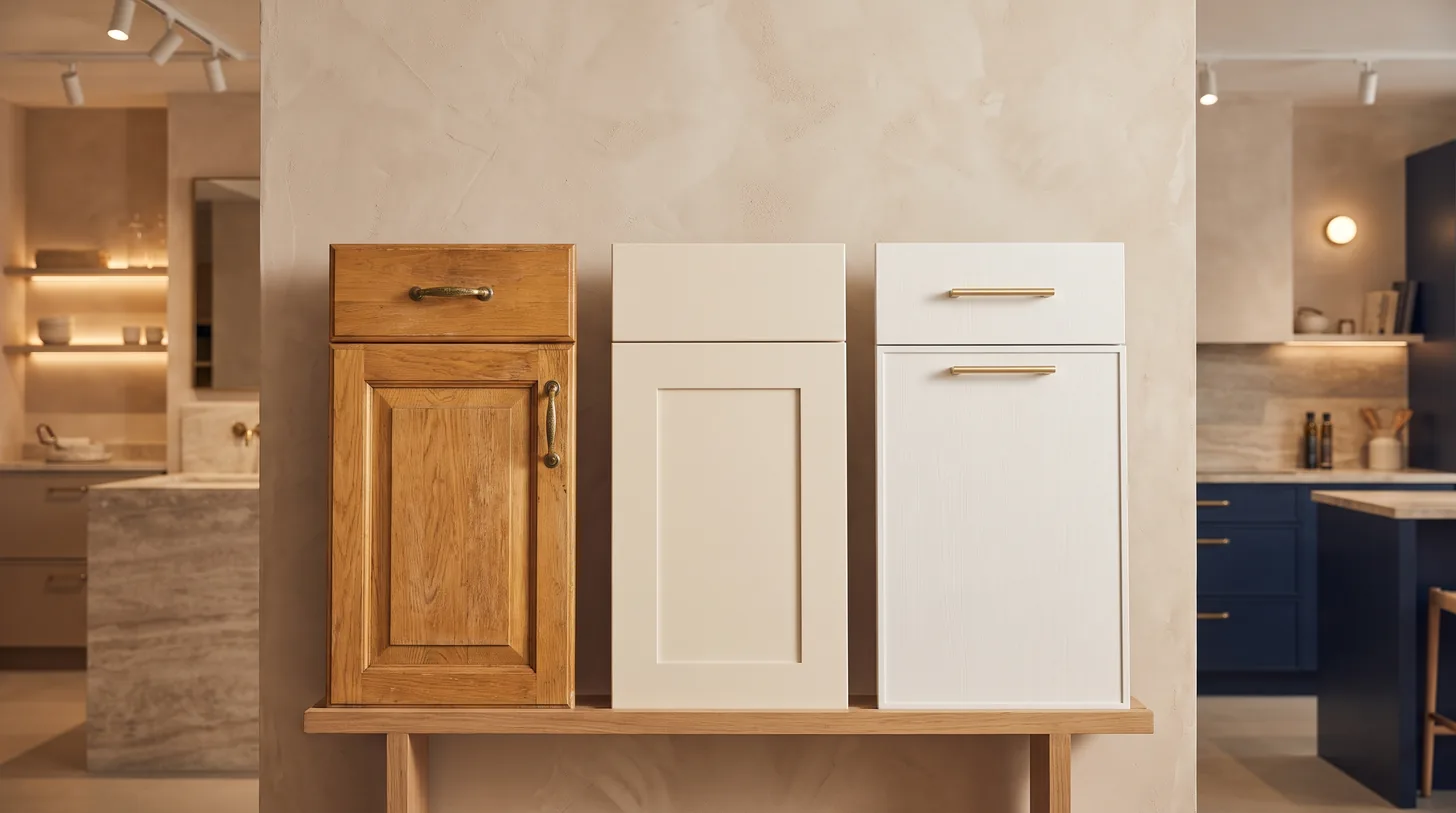
Oak painted and refaced cabinet doors compared

Professionally painting kitchen cabinets costs $3,000 to $8,000. Refacing costs $7,000 to $18,000. Painting keeps your existing doors and changes their colour. Refacing replaces the doors and drawer fronts entirely and puts new veneer on the frames. The decision is not about budget first, it is about whether your doors are worth keeping, and raised-panel oak with a heavy grain is the case where painting almost always disappoints.

What each one costs and does

Painting Refacing
Cost, 20 linear foot kitchen $3,000 to $8,000 $7,000 to $18,000
Doors Kept, repainted Replaced
Boxes Kept, frames painted Kept, frames veneered
Door style change No Yes
Time on site 3 to 7 days 3 to 5 days
Kitchen usable during Partially Mostly
Realistic life 5 to 10 years 15 to 25 years
Hides grain No, grain telegraphs Yes, new material

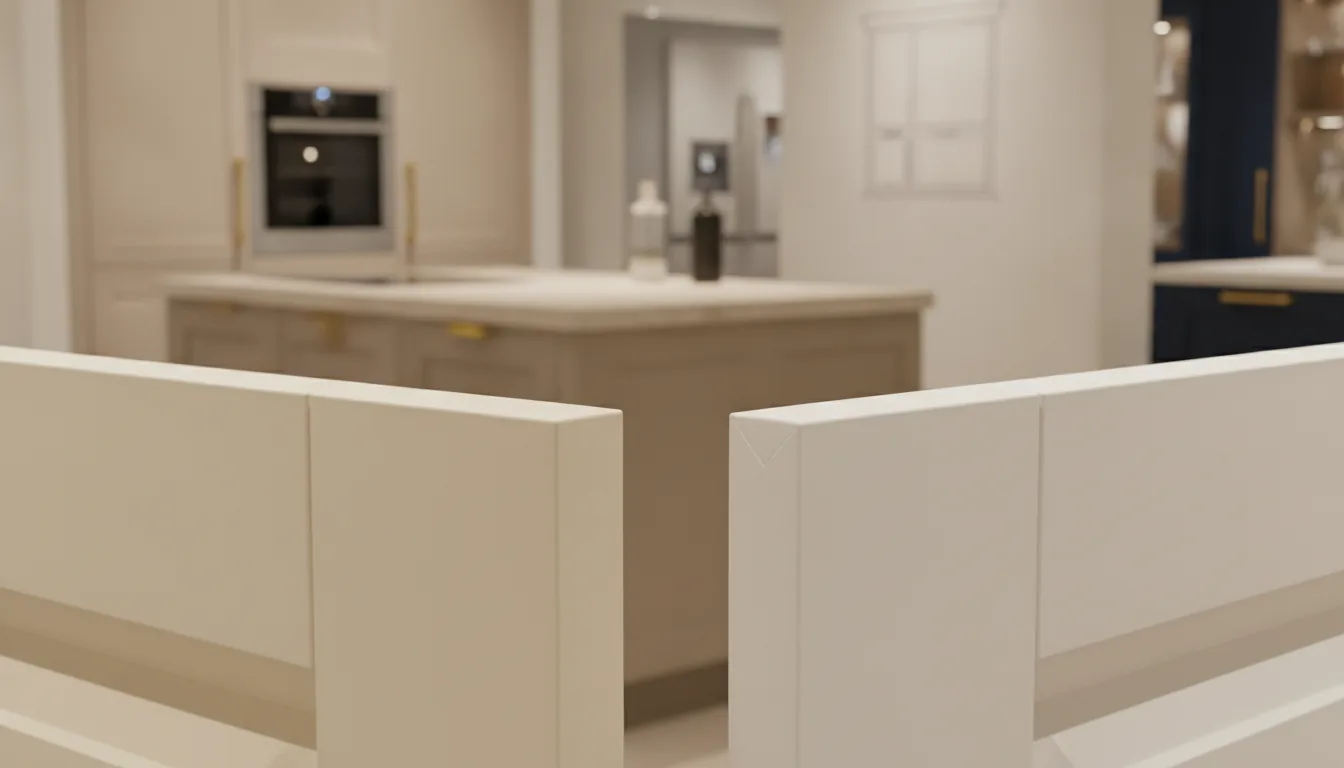
Painted and refaced cabinet door edges closeup

When painting is the right call

Painting works beautifully on smooth or lightly grained doors in sound condition: maple, poplar, MDF shaker, or any flat panel without an aggressive grain. In those cases a sprayed professional finish is close to indistinguishable from a factory one, and it costs less than half of refacing.

It also wins when the kitchen is being sold within a couple of years, or when the layout is changing soon and this is a stopgap.

When painting is a waste of money

Red oak with open grain. Paint sits in the grain and the texture reads through every coat. Filling and sanding it to smooth costs more labor than the doors are worth.

Thermofoil or laminate doors. Paint does not bond reliably, and peeling thermofoil is a symptom of a door that is already failing.

Doors that are sagging, swollen at the bottom, or delaminating. Painting a failing door buys a year.

In all three cases refacing is the honest answer, and if the boxes themselves are soft at the sink base, replacement is. See cabinet refacing vs replacing for that line.

The part nobody quotes

Both jobs assume your boxes are sound. Open the cabinet under your sink and press the bottom panel. If it has any give, if the particleboard has swollen, or if there is staining at the back corners, no finish treatment solves that. You are looking at replacement, and money spent on paint or veneer over a failing box is money spent twice.

Frequently asked questions

Is it cheaper to paint or reface kitchen cabinets?

Painting, by roughly half: $3,000 to $8,000 against $7,000 to $18,000 for a typical 20 linear foot kitchen. Painting keeps the existing doors; refacing replaces them.

How long does painted cabinetry last?

Five to ten years before high-touch areas around handles and the sink show wear. A sprayed professional finish lasts considerably longer than a brushed one.

Can you paint oak cabinets?

You can, but open-grain red oak telegraphs its grain through paint. Getting a smooth result requires grain filling and extra sanding, which erodes the cost advantage over refacing.

Does refacing change the door style?

Yes, that is the main thing it buys over painting. You choose new doors and drawer fronts, so a dated raised panel can become a flat shaker.

Is painting cabinets worth it before selling?

Usually yes, in a kitchen whose doors are smooth and sound. It is the cheapest change that reads as a renovation in listing photos.

Not sure which your doors are? Send us a close photo of a door edge and the inside of your sink base, or bring one to our Derwood showroom. We will tell you straight. Call (301) 939-0009 or book a showroom visit.
Posted on — Leave a comment

How Much Do Kitchen Cabinets Cost? Prices by Construction, Not by Brand

Kitchen cabinets cost $100 to $300 per linear foot installed for stock lines, $250 to $650 for semi-custom, and $600 to $1,200 for custom. A typical 20 linear foot kitchen lands between $6,000 and $13,000 in semi-custom. Cabinets are usually 30 percent of a full remodel budget, the largest single line item.

Cabinet pricing confuses people because the industry quotes it three different ways: per linear foot, per box, and per project. Worse, two kitchens quoted at the same price can differ by a decade of lifespan. What you are actually buying is four decisions, and only one of them is the brand name on the door.

What a kitchen costs, by tier

Linear foot means the run of wall the cabinets occupy, counting base and wall cabinets together. A standard galley or L shaped kitchen is 18 to 25 linear feet.

Tier Per linear foot, installed 20 foot kitchen Lead time
Stock $100 to $300 $2,000 to $6,000 In stock to 2 weeks
Semi-custom $250 to $650 $5,000 to $13,000 4 to 8 weeks
Custom $600 to $1,200+ $12,000 to $24,000+ 8 to 16 weeks

Most Montgomery County kitchens we specify land in semi-custom. Stock works when the layout is standard and the timeline is short. Custom earns its price when the room has odd angles, a nonstandard ceiling height, or a piece of furniture quality millwork is the point.

The four decisions that set the price

1. Box construction, the one you cannot see later

Plywood boxes cost 15 to 25 percent more than particleboard and are the difference between a kitchen that survives a leak and one that swells. Look at the side panel thickness, the drawer box joinery, and whether the back is a full panel or a hanging rail. Dovetailed solid wood drawer boxes with full extension soft close glides are the current standard in semi-custom and are worth insisting on.

2. Door style, priced by how it is made

A flat slab and a five piece shaker are not the same manufacturing operation. Inset doors, where the door sits flush inside the frame rather than over it, add 20 to 35 percent because the tolerances are tighter and the frame has to be perfect.

3. Finish, where painted beats stained on price every time

Painted costs 10 to 20 percent more than stained on the identical box. Paint shows every imperfection, so it requires more prep, more coats and more rejects at the factory. A specialty glaze or a matte conversion varnish adds again.

4. Configuration, the quiet budget killer

Drawer banks cost more than door bases. Every pull out, lazy susan, trash pull out, spice rack and appliance garage is a line item. A kitchen specified with every organizational accessory can run 20 percent over the same kitchen with sensible storage.

What the quote should include and often does not

  • Delivery and staging
  • Removal and disposal of the old cabinets
  • Installation labor, which typically runs $100 to $250 per linear foot on its own
  • Filler strips, toe kick, crown and light rail, which are not free
  • Scribing and shimming on out of square walls, common in homes built before 1970

A cabinet quote that is only the boxes is not comparable to a quote that includes install. This is the single most common reason two bids look thousands apart when they are actually the same kitchen.

The Maryland factor

Cabinet material prices are national. Installation labor is not. Montgomery County install rates run roughly 15 to 25 percent above national averages, driven by DC metro labor costs. Older housing stock adds real hours: walls that are not plumb and floors that are not level turn a two day install into a four day install.

Where our lines sit

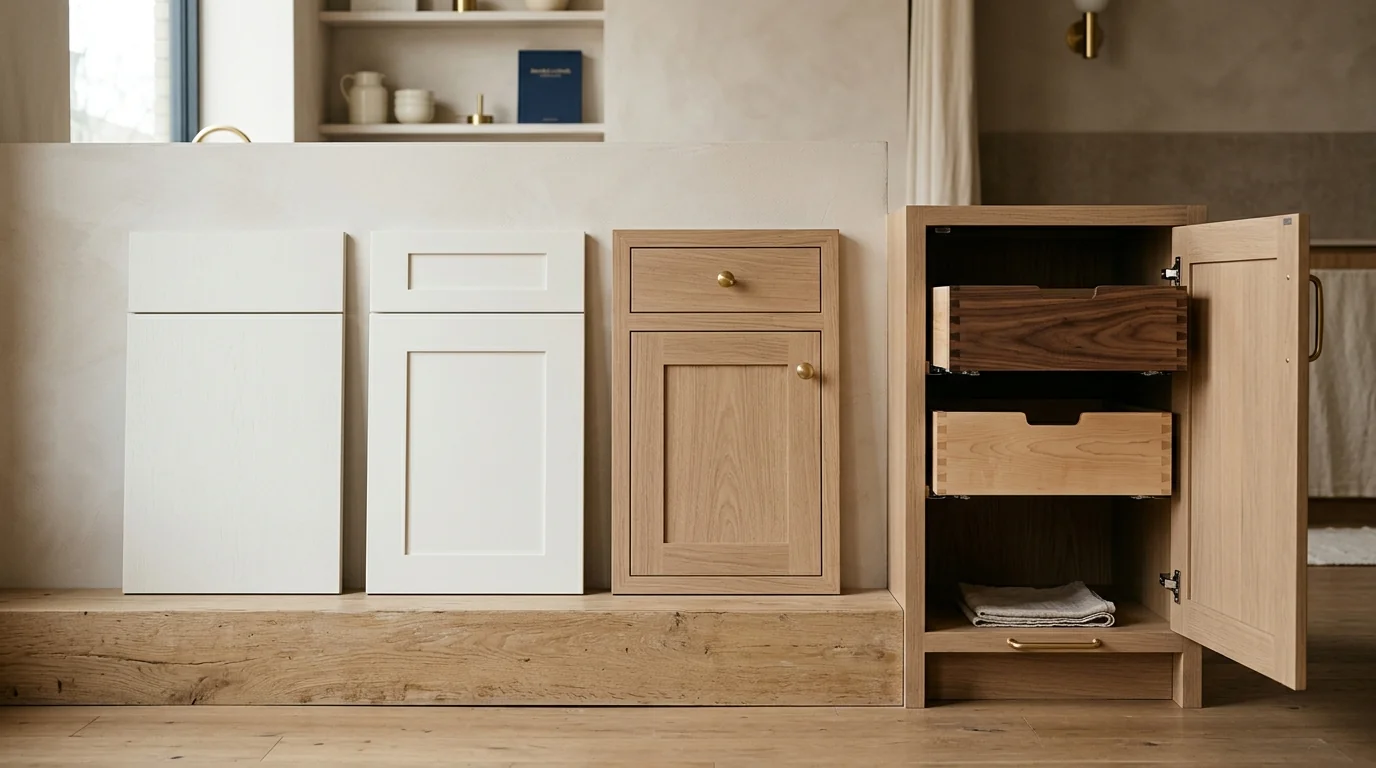
We stock Fabuwood, Forevermark, Cubitac, Medallion and St. Martin, which together span stock through the upper end of semi-custom. Seeing the boxes open, side by side, is the only reliable way to understand what separates a $250 linear foot line from a $500 one. The difference is visible in ten seconds and invisible in a photograph. Compare what we carry on our kitchen cabinets in Maryland page, then come see the boxes.

If the numbers here point you toward a full remodel rather than cabinets alone, our sister company handles the build and can scope the labor side against the same plan.

Frequently asked questions

How much do kitchen cabinets cost for a 10×10 kitchen?

A 10×10 kitchen is roughly 20 linear feet and is the industry’s standard comparison unit. Expect $2,000 to $6,000 in stock cabinets, $5,000 to $13,000 in semi-custom and $12,000 or more in custom, installed.

Are plywood cabinets worth the extra cost?

For base cabinets under a sink or near a dishwasher, yes. Plywood resists moisture and holds fasteners better over time. The 15 to 25 percent premium buys years of service life in exactly the spots that fail first.

Why are painted cabinets more expensive than stained?

Paint requires more surface prep, more coats and tighter quality control because it hides nothing. On the same box from the same manufacturer, painted typically runs 10 to 20 percent above stained.

Is it cheaper to buy cabinets and hire an installer separately?

Usually not, once change orders are counted. When the supplier and the installer are separate, nobody owns the seam between the order and the install, and mismeasures become your problem. See our comparison of a cabinet showroom versus a big box store.

How long do kitchen cabinets take to arrive?

Stock lines ship immediately or within two weeks. Semi-custom runs 4 to 8 weeks. Custom runs 8 to 16 weeks. Order lead time, not installation, is what usually sets a remodel schedule.

Want a real number for your kitchen? Bring your dimensions to our Derwood showroom and we will price the same layout across three cabinet lines so you can see what the money buys. Call (301) 939-0009 or book a showroom visit.
Posted on — Leave a comment

Cabinet Refacing vs Replacing: What Each Actually Costs

Cabinet refacing costs $4,000 to $12,000 for a typical 20 linear foot kitchen. Replacing costs $8,000 to $25,000 installed. Refacing runs about 40 to 60 percent of replacement and takes 3 to 5 days instead of 2 to 3 weeks. It only makes sense when the cabinet boxes are structurally sound and the existing layout works.

Refacing is the most oversold and most undersold service in the kitchen business at the same time. Oversold, because it gets pitched on kitchens where the boxes are already failing. Undersold, because homeowners with perfectly good plywood boxes tear out a functional kitchen to change a door color.

Side by side

Refacing Replacing
Typical cost, 20 foot kitchen $4,000 to $12,000 $8,000 to $25,000
Time on site 3 to 5 days 2 to 3 weeks
Kitchen usable during work Mostly yes No
Layout changes None possible Anything possible
New drawer boxes and glides Optional, adds cost Included
Interior storage upgrades Limited Full
Expected service life 10 to 15 years 20 to 30 years

The five minute test that decides it

Open the cabinet under your sink and look at the bottom panel and the back corners.

Refacing is the right call when all of these are true:

  • The boxes are plywood, or particleboard with no swelling, sagging or water damage
  • The face frames are solid and square, with no cracks at the joints
  • The layout works for how you actually cook
  • The doors are the problem, not the storage
  • You are staying in the home 10 years or less

Replacing is the right call when any of these are true:

  • Any box shows swelling, delamination or a sagging shelf
  • You want to move the sink, the range, or any wall
  • The kitchen has no drawer bank, only door bases with a single fixed shelf
  • Cabinet heights leave a soffit gap you want closed
  • The boxes are 1980s builder grade particleboard, which is most of what we see in homes from that era

The second list is not a preference list. Refacing a failing box means paying to put a new face on something that will be replaced within a few years.

What refacing actually includes

A real refacing job replaces the doors and drawer fronts, applies matching veneer or laminate to the exposed face frames and end panels, and installs new hinges and hardware. Anything less is a door swap, which is a different and cheaper product.

Price drivers are the door material and the number of openings, not the square footage of the kitchen. Rigid thermofoil is the entry point, wood veneer is the middle, and solid wood doors on refaced frames sit at the top and start to approach the cost of new cabinets. That last point is the one to watch: once a refacing quote passes roughly 60 percent of a replacement quote, replacement usually wins on value, because you get new boxes, new glides and the freedom to change the layout.

What replacing buys that refacing cannot

Storage, mostly. A modern base cabinet with three drawers holds more usable volume than a door base with one shelf, and you can reach all of it. Soft close glides, full extension, drawer dividers and a properly sized trash pull out are quality of life items you use every day.

The other thing replacing buys is the layout. If the dishwasher is on the wrong side of the sink, or the range has no landing space, no door color fixes that.

The Maryland factor

Refacing labor in Montgomery County runs above national averages, which narrows the gap between the two options relative to what national cost calculators show. On older homes in Bethesda, Silver Spring and Kensington we also find face frames that are not square, which adds scribing time to a refacing job and occasionally makes it uneconomical.

If the layout is coming out anyway, the demolition and rebuild is contractor work rather than showroom work. Our sister company handles that side and can put a labor number against your layout while we price the cabinetry.

Frequently asked questions

Is cabinet refacing cheaper than replacing?

Yes, typically 40 to 60 percent of replacement cost. A refacing job that lands above 60 percent of a replacement quote is usually not worth it, because replacement includes new boxes, new drawer glides and the ability to change the layout.

How long does cabinet refacing take?

Three to five days on site for a typical kitchen, compared with two to three weeks for a full replacement. The kitchen stays mostly usable during a refacing job.

Can you reface particleboard cabinets?

Only if the particleboard is dry, square and undamaged. Any swelling at the sink base, sagging shelves or delamination means the box is failing and refacing will not stop it.

Does refacing include new drawer boxes?

Not by default. Most refacing quotes cover doors, drawer fronts, veneer on the frames and new hinges. New drawer boxes and soft close glides are an upgrade, and worth pricing, because old center mount glides are usually the part people dislike most.

Does refacing add home value?

It improves presentation for a sale at a fraction of replacement cost, which is why it is popular before listing. For a long term stay, the storage and layout gains from replacement matter more than the finish.

Not sure which side your kitchen falls on? Send us a photo of the inside of your sink base, or bring one to the showroom, and we will tell you straight. Call (301) 939-0009 or book a showroom visit.
Posted on — Leave a comment

Kitchen Cabinet Buying Guide: Rockville, MD Showroom

Kitchen Cabinet Buying Guide: Rockville, MD Showroom

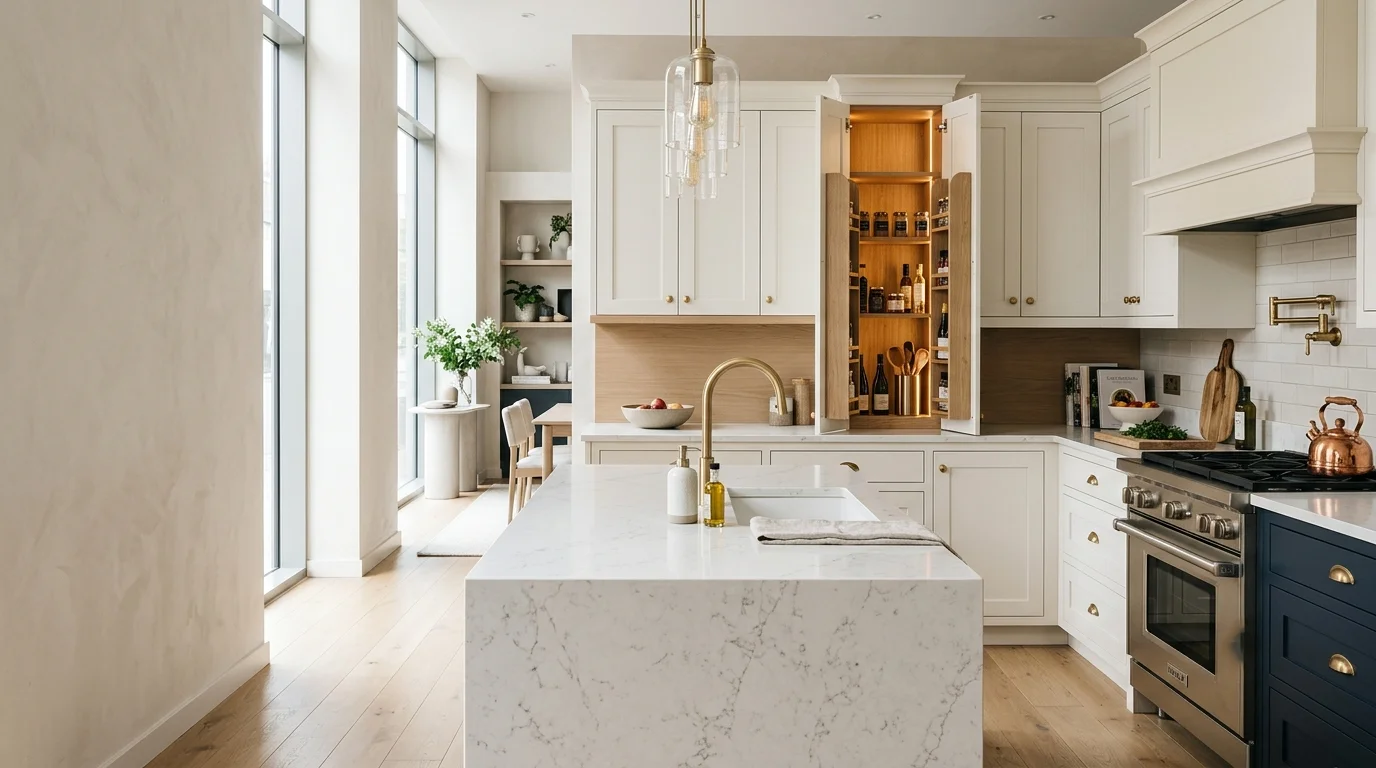
Kitchen cabinets are the biggest investment in any kitchen remodel, and they are also the hardest to reverse. Pick the right construction, door style, and finish and you will enjoy the room for decades. Pick wrong and you are looking at another full renovation. This guide walks you through everything you need to decide before you buy, and it is written for homeowners across Rockville, Montgomery County, and the Washington, D.C. metro who want to see materials in person before they commit.

Why start with the cabinets

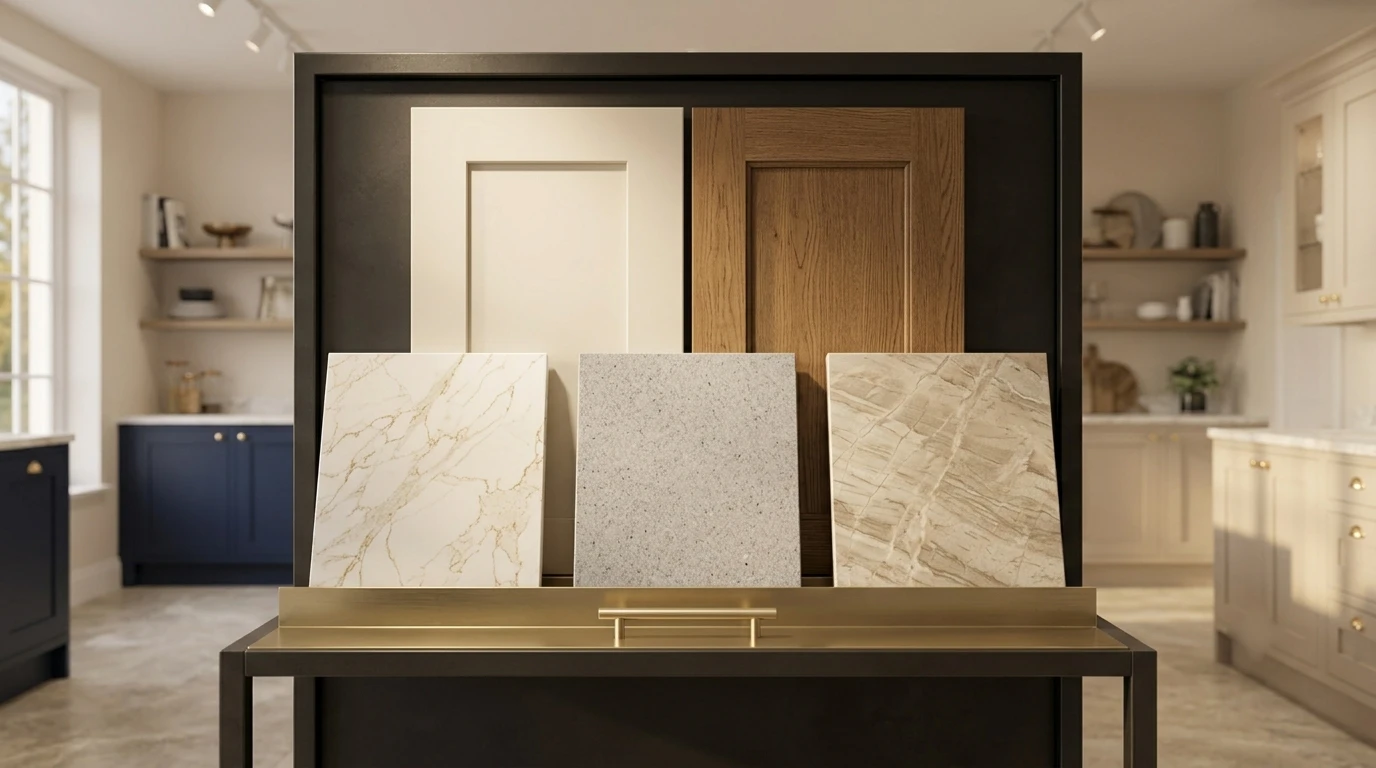
Cabinets define the layout, the budget, and the look of a kitchen. Countertops, tile, and flooring all get selected around them, not the other way around. That is why we always tell visitors to our Derwood showroom: start with cabinetry, then build the rest of the palette around it. A cabinet decision fixes your footprint, your storage plan, and roughly a third of your remodel budget, so it deserves the most research time.

Know your cabinet construction: RTA vs assembled

The first fork in the road is how your cabinets are built and delivered. Ready-to-assemble (RTA) cabinets ship flat and get put together on site. Fully assembled cabinets arrive built. Both have a place, but the trade-offs matter for a Maryland remodel. RTA lines can save money and are a legitimate option for rental properties and quick flips. Assembled cabinets cut down install time, reduce the risk of assembly errors, and often carry better warranties. We stock both in the showroom, so you can feel the difference in hinge feel, drawer glide, and panel thickness before you decide. Read our RTA vs assembled cabinet planning guide for the full breakdown.

Door styles: what the profile says about your kitchen

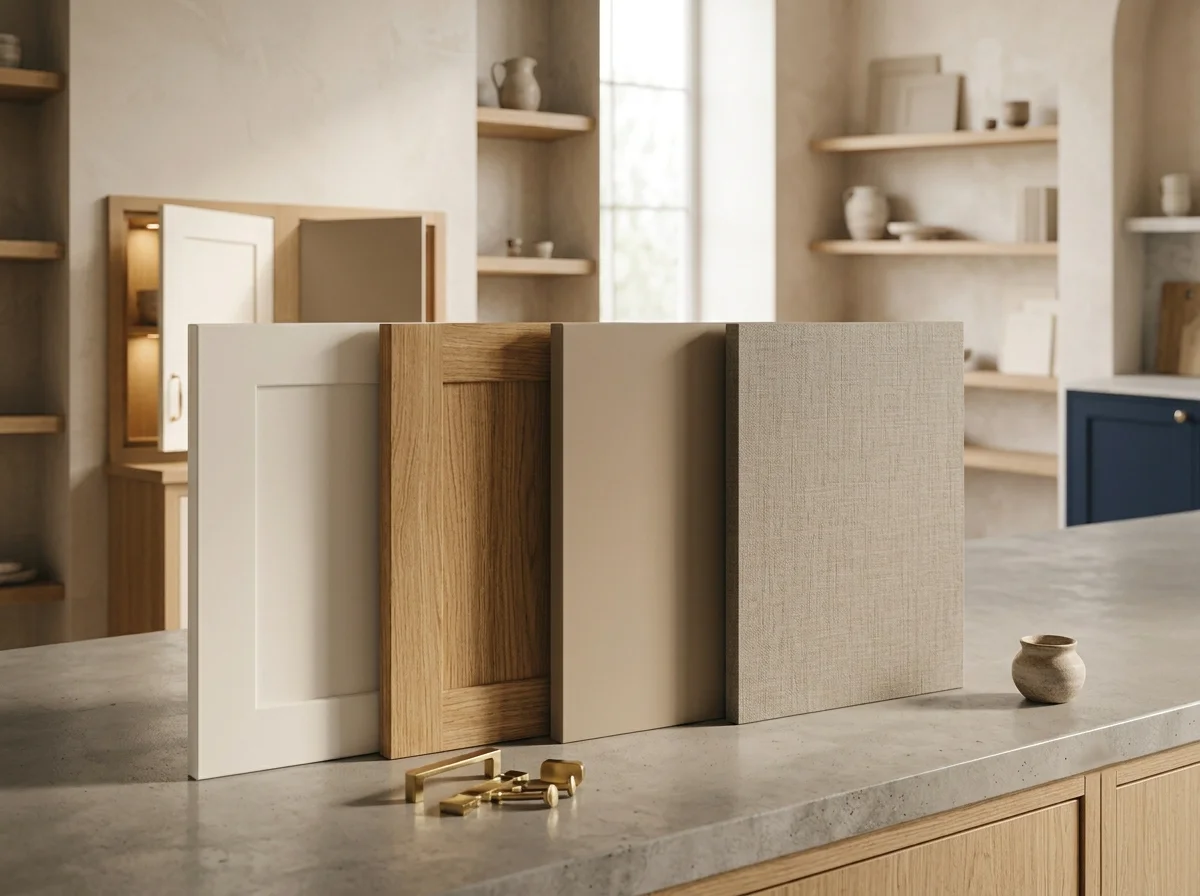
Door style is the personality of the room. The most requested profile in our showroom is the shaker door, a clean, recessed panel that fits both traditional and transitional kitchens. If you want a sleeker, flat look, modern slab doors are a strong fit for contemporary homes. Full-overlay doors cover the cabinet frame for a seamless, furniture-like appearance; inset doors sit flush inside the frame for a more traditional, built-in feel. The right choice depends on your home’s architecture and how much visual texture you want. Compare the details in our shaker vs modern cabinet doors guide.

Materials and finishes that hold up

Cabinet boxes are typically plywood, MDF, or particleboard. Plywood is the most durable and the best choice for full-height pantry units and heavy-use kitchens. Thermofoil wraps are easy to clean and budget-friendly, while painted and stained finishes give you the premium look most homeowners want. On finishes, think about daily life: light colors open up a room but show wear in high-traffic homes, while matte finishes hide fingerprints better than high-gloss. Our cabinet finish durability guide explains how each finish ages so you can match one to your household.

Brands we stock in the Rockville showroom

You should never buy cabinets without knowing the brand and the warranty behind them. At H&C Kitchen & Bath we spec lines builders trust: Forevermark, Fabuwood, Medallion, St. Martin, CNC, Tribeca, Crestwood, Nations, Revola, and Evoke / R.D. Henry. These are distributor-backed lines with ready-to-spec SKUs, which means consistent pricing, real lead times, and support if anything goes wrong, exactly what you will not get buying on the open market alone. You can compare several of these brands side by side on our showroom floor and get honest guidance on which one fits your project and budget. See how the top lines stack up in our cabinet brand comparison guide.

How much should kitchen cabinets cost?

Expect cabinets to run 30% to 45% of a full kitchen remodel. In the D.C. metro, a mid-range kitchen cabinet package typically lands between $15,000 and $30,000 installed, and premium lines push higher. The number depends on lineal footage, door style, finish, and hardware. What matters more than the sticker price is what is included: soft-close hardware, dovetail drawers, plywood boxes, and warranty coverage all change the real value of a quote. Bring your measurements or a rough layout to the showroom and we will help you estimate scope honestly, with no pressure to oversize your order.

How to plan before you visit

A productive showroom visit starts before you walk in. Do this first:

  • [ ] Measure your kitchen, rough ceiling-to-floor and wall lengths are enough to start
  • [ ] Save 5 to 10 kitchen photos you actually like (not dream kitchens)
  • [ ] Note your must-haves: pull-outs, lazy Susans, soft-close, drawer count
  • [ ] Set a budget range before you fall in love with a finish
  • [ ] Decide who installs: your contractor, or a crew we coordinate

The H&C showroom advantage

You can research cabinets for weeks online, but nothing replaces touching the hardware and seeing finishes at full scale. At our showroom at 17620 Redland Rd Ste A, Derwood, MD 20855, you can walk materials with a specialist, compare cabinet lines side by side, and document your selections so your quote and order stay aligned with your decisions. We serve Rockville, Bethesda, Gaithersburg, Silver Spring, Potomac, and the greater D.C. metro, and we work with homeowners and contractors alike.

Ready to plan your kitchen cabinets? Book a free showroom visit or consultation and bring your measurements. Tell us about your project or call (301) 939-0009.

Keep learning:

Posted on — Leave a comment

Shaker vs Modern Cabinet Doors: Which Fits Your Kitchen?

Shaker vs Modern Cabinet Doors: Which Fits Your Kitchen?

Cabinet door style is the single strongest visual cue in a kitchen. Two identical kitchens can look completely different, one warm and classic, one sleek and minimal, just by changing the door profile. If you are remodeling in Rockville or Montgomery County, the shaker versus modern decision is usually the first one you will make. Here is how to choose with confidence, and why seeing both in person changes the answer.

What a shaker door is

A shaker door has a flat recessed center panel framed by a square outer rail and stile. It is simple, versatile, and neutral enough to work in traditional, transitional, and even contemporary kitchens. The style gets its name from the Shaker community, who valued clean lines and honest construction. Today it is the most requested door in our showroom, and the safest recommendation for a resale-ready kitchen.

What a modern slab door is

A modern slab door is a single flat panel with no frame and no recess. The surface is the design. Slab doors read as clean and minimal, which suits open-plan homes, condos, and kitchens where you want the countertop and hardware to do the talking. They are also easier to wipe down because there is no recessed groove to collect grease or crumbs.

How the two compare

Consideration Shaker Modern slab
Best for Traditional, transitional, farmhouse Contemporary, minimal, urban
Visual texture Adds shadow lines and depth Flat, uninterrupted surface
Cleaning Grooves need wiping Smoothest surface to clean
Hardware Works with knobs and pulls Best with integrated or long pulls
Resale Widely liked, safe bet Depends on neighborhood and taste

> The table above is a fast summary, but finishes change everything. A shaker door painted in a matte taupe can look modern; a slab door in warm oak veneer can look warm and organic.

Full overlay vs inset: the second decision

Once you pick a profile, you choose how the door sits on the frame. Full-overlay doors cover the cabinet frame almost completely, leaving a narrow gap between doors for a furniture-like, seamless look. Inset doors sit flush inside the frame, which looks refined and traditional but requires tighter tolerances and typically costs more. For most Maryland homeowners, full overlay is the practical sweet spot.

Finishes that suit each style

  • Shaker, painted whites, warm grays, and two-tone uppers/lowers look outstanding; stain shows the wood grain beautifully
  • Slab, matte laminates, thermofoil, and high-gloss finishes; wood veneer adds warmth without breaking the minimal line

Both styles can be ordered with the durability features that matter: plywood boxes, soft-close hinges, and full-extension drawer glides. See our cabinet finish durability guide before you settle on a color.

The honest answer

There is no universal winner, it depends on your home and your habits. Families with young kids often prefer shaker because it hides fingerprints and crumbs in the shadow lines. Design-forward homeowners who want a calm, gallery-like kitchen usually lean slab. The right move is to look at both on a real cabinet, at full scale, in person.

See both styles in Derwood, MD

At H&C Kitchen & Bath you can compare shaker and modern doors side by side across the lines we stock, Forevermark, Fabuwood, Medallion, St. Martin, and more. Bring a photo of your kitchen and a rough budget, and we will help you shortlist in one visit. We serve Rockville, Bethesda, Gaithersburg, Silver Spring, Potomac, and the D.C. metro.

Not sure which door style is right? Visit the showroom and compare in person. Book your visit or call (301) 939-0009.

Keep learning:

Posted on — Leave a comment

RTA vs Assembled Cabinets: What to Plan For

RTA vs Assembled Cabinets: What to Plan For

Every cabinet buyer hits the same fork in the road: ready-to-assemble (RTA) or fully assembled cabinets. The decision shapes your budget, your install timeline, and the quality you can expect in ten years. This guide explains what each option really means so you can plan a Maryland kitchen remodel without surprises.

What RTA cabinets are

RTA cabinets ship flat-packed in boxes and are assembled on site with screws, cam locks, and a drill. Because they ship flat, freight costs are lower and the price per box is typically the most affordable route into a real cabinet line. Assembly can be done by the homeowner or by a contractor, and modern RTA lines use the same materials and hardware as assembled boxes.

What assembled cabinets are

Assembled cabinets arrive fully built, ready to be set in place. You skip the assembly step entirely, which saves hours on site and removes the risk of a weekend DIY assembly gone wrong. Assembled boxes usually come with stronger warranties and a more finished feel right out of the crate, which is why most trade professionals and homeowners doing a full remodel choose them.

The honest trade-offs

  • Cost, RTA saves 15% to 30% off equivalent assembled lines, but factor in assembly labor
  • Install time, assembled cabinets are ready to hang the same day; RTA adds hours or a full day of assembly
  • Quality, both can use plywood boxes and soft-close hardware; check the spec sheet, not the label
  • Warranty, assembled lines typically carry longer, clearer warranties
  • Hassle, RTA is a real project; assembled is a “set and finish” project

Where RTA genuinely makes sense

RTA is a smart choice for rentals, flips, basements, and utility spaces where you want a quality look on a tight budget. If a tenant or future buyer will treat the cabinets hard, or if you are staging a property quickly, RTA lets you stretch the dollar. Many of our clients buy RTA for secondary spaces and assembled for the main kitchen.

Where assembled cabinets win

For the kitchen you will live in every day, assembled is usually the better long-term value. Cabinets are the hardest-working furniture in your home. Paying a little more up front for a fully assembled plywood box with soft-close hardware and a solid warranty costs far less over twenty years than replacing sagging RTA boxes in eight. That is the honest math we give every homeowner who visits.

How to tell quality apart in person

Labels are not enough. When you compare cabinets in a showroom, check these details:

  • [ ] Box material, plywood sides vs particleboard
  • [ ] Drawer construction, dovetail joints vs stapled corners
  • [ ] Drawer glides, full-extension soft-close vs basic
  • [ ] Hinges, soft-close vs standard
  • [ ] Door and panel thickness, feel the weight
  • [ ] Back panel, is it real wood or cardboard?

Plan the install before you buy

The biggest hidden cost in any cabinet project is installation. Assembled cabinets cut hours off the install, which can offset most of the price gap between RTA and assembled when you factor in labor at D.C. metro rates. Get an install quote alongside your cabinet quote so you compare apples to apples.

Compare both at the H&C showroom

At H&C Kitchen & Bath in Derwood, MD, we show both RTA and assembled lines so you can feel the difference in hinge weight, drawer glide, and box quality before you commit. We serve Rockville, Bethesda, Gaithersburg, Silver Spring, Potomac, and the wider D.C. metro for homeowners and contractors.

Want to compare RTA and assembled in person? Book a showroom visit and bring your measurements. Get started or call (301) 939-0009.

Keep learning:

Posted on — Leave a comment

Cabinet Finish Durability Guide: Painted, Stained & More

Cabinet Finish Durability Guide: Painted, Stained & More

The finish is what you see and touch every day, and it is also what fails first when a cabinet is not built right. Chipping paint, yellowed white, worn edges, and fingerprints are all finish problems, not box problems. This guide compares the main cabinet finish families so you can match one to your Maryland household, your lifestyle, and your budget.

Painted finishes: the most popular, with caveats

Painted cabinets dominate modern kitchens because the color range is endless and the look is clean. The durability depends almost entirely on the paint system: conversion varnish and catalyzed lacquer cure hard and resist chipping; standard latex paints chip at the edges within a few years. Ask what paint system a line uses, not just the color name. Light colors like white and off-white show scuffs more than mid-tone grays or blues, especially in busy family kitchens.

Stained and wood finishes: beauty that ages

Stained cabinets let the wood grain show through and hide everyday wear better than flat paint because scratches blend into the grain. Walnut, oak, maple, and hickory are the classic showroom choices. The trade-off is color consistency: wood is natural, so tone varies between panels. That is part of the charm, but it matters if you want a uniform, gallery-like look.

Thermofoil: budget-friendly and wipeable

Thermofoil is a vinyl wrap bonded over MDF. It is seamless, waterproof, and the easiest surface to wipe down, a strong fit for busy kitchens and bathrooms. The catch is heat and impact: thermofoil can delaminate near ovens and dent under sharp blows. Choose it for secondary spaces or for a budget primary kitchen, and keep it away from the range hood.

Laminate: durable and low maintenance

Laminate cabinets bond a printed resin layer over a core. Modern laminates look convincingly like wood or matte paint, resist moisture, and shrug off daily use. They are a workhorse option for busy households, rentals, and anyone who wants durability without the maintenance of real wood. Expect fewer style options than painted or stained lines, but the gap is closing.

How finishes compare on the things that matter

Finish Cost Durability Maintenance Best for
Painted (conversion varnish) $$ High Wipe clean Modern kitchens
Stained wood $$$ High Re-oil occasionally Warm, traditional looks
Thermofoil $ Medium Easiest to wipe Budget, rentals, baths
Laminate $–$$ High Very low Busy families, rentals

Matching the finish to your household

  • Young kids or pets, matte laminates or mid-tone painted finishes hide fingerprints and scratches
  • Heavy cooking, avoid thermofoil near the range; choose painted or laminate
  • Rental or flip, thermofoil or laminate for maximum durability per dollar
  • Long-term primary kitchen, invest in a catalyzed painted finish or quality wood stain

Ask these questions before you order

  • [ ] What paint or coating system does this line use?
  • [ ] Is the finish resistant to heat near the cooktop?
  • [ ] What does the warranty cover for finish defects?
  • [ ] Can I see a sample that has been handled, not just new?
  • [ ] How do I clean and maintain this finish daily?

See and touch finishes at the showroom

A finish looks different on a computer screen than on a full-size cabinet door. At H&C Kitchen & Bath in Derwood, MD, you can handle painted, stained, thermofoil, and laminate samples across the lines we stock, Forevermark, Fabuwood, Medallion, St. Martin, and more, and get honest guidance on what will hold up in your home. We serve Rockville, Bethesda, Gaithersburg, Silver Spring, Potomac, and the D.C. metro.

Choosing a finish? Compare samples in person and shortlist the right one for your home. Book a consultation or call (301) 939-0009.

Keep learning: