Posted on Leave a comment

Kitchen Cabinet Buying Guide: Rockville, MD Showroom

Kitchen Cabinet Buying Guide: Rockville, MD Showroom

Kitchen cabinets are the biggest investment in any kitchen remodel, and they are also the hardest to reverse. Pick the right construction, door style, and finish and you will enjoy the room for decades. Pick wrong and you are looking at another full renovation. This guide walks you through everything you need to decide before you buy, and it is written for homeowners across Rockville, Montgomery County, and the Washington, D.C. metro who want to see materials in person before they commit.

Why start with the cabinets

Cabinets define the layout, the budget, and the look of a kitchen. Countertops, tile, and flooring all get selected around them, not the other way around. That is why we always tell visitors to our Derwood showroom: start with cabinetry, then build the rest of the palette around it. A cabinet decision fixes your footprint, your storage plan, and roughly a third of your remodel budget, so it deserves the most research time.

Know your cabinet construction: RTA vs assembled

The first fork in the road is how your cabinets are built and delivered. Ready-to-assemble (RTA) cabinets ship flat and get put together on site. Fully assembled cabinets arrive built. Both have a place, but the trade-offs matter for a Maryland remodel. RTA lines can save money and are a legitimate option for rental properties and quick flips. Assembled cabinets cut down install time, reduce the risk of assembly errors, and often carry better warranties. We stock both in the showroom, so you can feel the difference in hinge feel, drawer glide, and panel thickness before you decide. Read our RTA vs assembled cabinet planning guide for the full breakdown.

Door styles: what the profile says about your kitchen

Door style is the personality of the room. The most requested profile in our showroom is the shaker door, a clean, recessed panel that fits both traditional and transitional kitchens. If you want a sleeker, flat look, modern slab doors are a strong fit for contemporary homes. Full-overlay doors cover the cabinet frame for a seamless, furniture-like appearance; inset doors sit flush inside the frame for a more traditional, built-in feel. The right choice depends on your home’s architecture and how much visual texture you want. Compare the details in our shaker vs modern cabinet doors guide.

Materials and finishes that hold up

Cabinet boxes are typically plywood, MDF, or particleboard. Plywood is the most durable and the best choice for full-height pantry units and heavy-use kitchens. Thermofoil wraps are easy to clean and budget-friendly, while painted and stained finishes give you the premium look most homeowners want. On finishes, think about daily life: light colors open up a room but show wear in high-traffic homes, while matte finishes hide fingerprints better than high-gloss. Our cabinet finish durability guide explains how each finish ages so you can match one to your household.

Brands we stock in the Rockville showroom

You should never buy cabinets without knowing the brand and the warranty behind them. At H&C Kitchen & Bath we spec lines builders trust: Forevermark, Fabuwood, Medallion, St. Martin, CNC, Tribeca, Crestwood, Nations, Revola, and Evoke / R.D. Henry. These are distributor-backed lines with ready-to-spec SKUs, which means consistent pricing, real lead times, and support if anything goes wrong, exactly what you will not get buying on the open market alone. You can compare several of these brands side by side on our showroom floor and get honest guidance on which one fits your project and budget. See how the top lines stack up in our cabinet brand comparison guide.

How much should kitchen cabinets cost?

Expect cabinets to run 30% to 45% of a full kitchen remodel. In the D.C. metro, a mid-range kitchen cabinet package typically lands between $15,000 and $30,000 installed, and premium lines push higher. The number depends on lineal footage, door style, finish, and hardware. What matters more than the sticker price is what is included: soft-close hardware, dovetail drawers, plywood boxes, and warranty coverage all change the real value of a quote. Bring your measurements or a rough layout to the showroom and we will help you estimate scope honestly, with no pressure to oversize your order.

How to plan before you visit

A productive showroom visit starts before you walk in. Do this first:

  • [ ] Measure your kitchen, rough ceiling-to-floor and wall lengths are enough to start
  • [ ] Save 5 to 10 kitchen photos you actually like (not dream kitchens)
  • [ ] Note your must-haves: pull-outs, lazy Susans, soft-close, drawer count
  • [ ] Set a budget range before you fall in love with a finish
  • [ ] Decide who installs: your contractor, or a crew we coordinate

The H&C showroom advantage

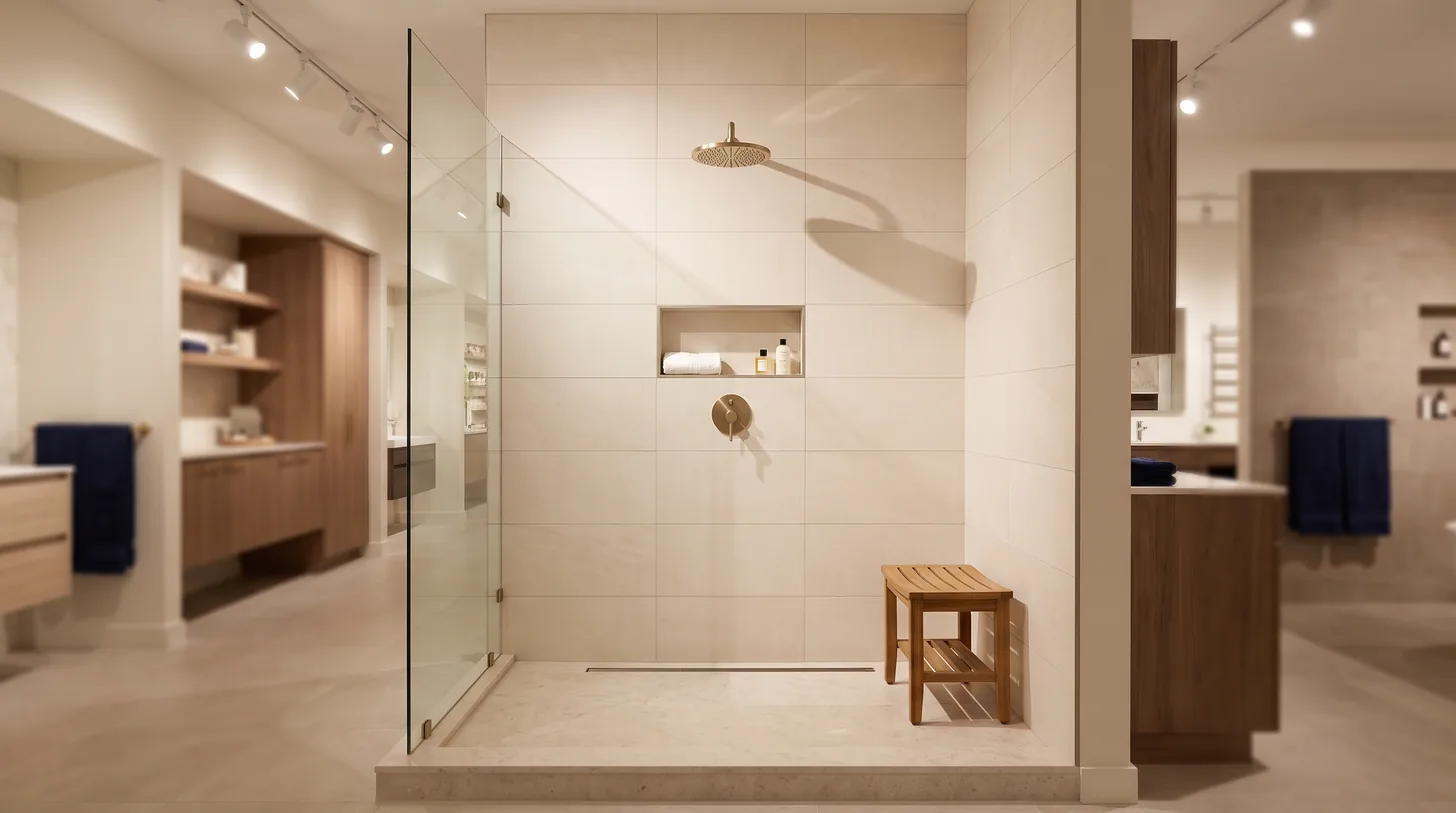
You can research cabinets for weeks online, but nothing replaces touching the hardware and seeing finishes at full scale. At our showroom at 17620 Redland Rd Ste A, Derwood, MD 20855, you can walk materials with a specialist, compare cabinet lines side by side, and document your selections so your quote and order stay aligned with your decisions. We serve Rockville, Bethesda, Gaithersburg, Silver Spring, Potomac, and the greater D.C. metro, and we work with homeowners and contractors alike.

Ready to plan your kitchen cabinets? Book a free showroom visit or consultation and bring your measurements. Tell us about your project or call (301) 939-0009.

Keep learning:

Posted on Leave a comment

Shaker vs Modern Cabinet Doors: Which Fits Your Kitchen?

Shaker vs Modern Cabinet Doors: Which Fits Your Kitchen?

Cabinet door style is the single strongest visual cue in a kitchen. Two identical kitchens can look completely different, one warm and classic, one sleek and minimal, just by changing the door profile. If you are remodeling in Rockville or Montgomery County, the shaker versus modern decision is usually the first one you will make. Here is how to choose with confidence, and why seeing both in person changes the answer.

What a shaker door is

A shaker door has a flat recessed center panel framed by a square outer rail and stile. It is simple, versatile, and neutral enough to work in traditional, transitional, and even contemporary kitchens. The style gets its name from the Shaker community, who valued clean lines and honest construction. Today it is the most requested door in our showroom, and the safest recommendation for a resale-ready kitchen.

What a modern slab door is

A modern slab door is a single flat panel with no frame and no recess. The surface is the design. Slab doors read as clean and minimal, which suits open-plan homes, condos, and kitchens where you want the countertop and hardware to do the talking. They are also easier to wipe down because there is no recessed groove to collect grease or crumbs.

How the two compare

Consideration Shaker Modern slab
Best for Traditional, transitional, farmhouse Contemporary, minimal, urban
Visual texture Adds shadow lines and depth Flat, uninterrupted surface
Cleaning Grooves need wiping Smoothest surface to clean
Hardware Works with knobs and pulls Best with integrated or long pulls
Resale Widely liked, safe bet Depends on neighborhood and taste

> The table above is a fast summary, but finishes change everything. A shaker door painted in a matte taupe can look modern; a slab door in warm oak veneer can look warm and organic.

Full overlay vs inset: the second decision

Once you pick a profile, you choose how the door sits on the frame. Full-overlay doors cover the cabinet frame almost completely, leaving a narrow gap between doors for a furniture-like, seamless look. Inset doors sit flush inside the frame, which looks refined and traditional but requires tighter tolerances and typically costs more. For most Maryland homeowners, full overlay is the practical sweet spot.

Finishes that suit each style

  • Shaker, painted whites, warm grays, and two-tone uppers/lowers look outstanding; stain shows the wood grain beautifully
  • Slab, matte laminates, thermofoil, and high-gloss finishes; wood veneer adds warmth without breaking the minimal line

Both styles can be ordered with the durability features that matter: plywood boxes, soft-close hinges, and full-extension drawer glides. See our cabinet finish durability guide before you settle on a color.

The honest answer

There is no universal winner, it depends on your home and your habits. Families with young kids often prefer shaker because it hides fingerprints and crumbs in the shadow lines. Design-forward homeowners who want a calm, gallery-like kitchen usually lean slab. The right move is to look at both on a real cabinet, at full scale, in person.

See both styles in Derwood, MD

At H&C Kitchen & Bath you can compare shaker and modern doors side by side across the lines we stock, Forevermark, Fabuwood, Medallion, St. Martin, and more. Bring a photo of your kitchen and a rough budget, and we will help you shortlist in one visit. We serve Rockville, Bethesda, Gaithersburg, Silver Spring, Potomac, and the D.C. metro.

Not sure which door style is right? Visit the showroom and compare in person. Book your visit or call (301) 939-0009.

Keep learning:

Posted on Leave a comment

RTA vs Assembled Cabinets: What to Plan For

RTA vs Assembled Cabinets: What to Plan For

Every cabinet buyer hits the same fork in the road: ready-to-assemble (RTA) or fully assembled cabinets. The decision shapes your budget, your install timeline, and the quality you can expect in ten years. This guide explains what each option really means so you can plan a Maryland kitchen remodel without surprises.

What RTA cabinets are

RTA cabinets ship flat-packed in boxes and are assembled on site with screws, cam locks, and a drill. Because they ship flat, freight costs are lower and the price per box is typically the most affordable route into a real cabinet line. Assembly can be done by the homeowner or by a contractor, and modern RTA lines use the same materials and hardware as assembled boxes.

What assembled cabinets are

Assembled cabinets arrive fully built, ready to be set in place. You skip the assembly step entirely, which saves hours on site and removes the risk of a weekend DIY assembly gone wrong. Assembled boxes usually come with stronger warranties and a more finished feel right out of the crate, which is why most trade professionals and homeowners doing a full remodel choose them.

The honest trade-offs

  • Cost, RTA saves 15% to 30% off equivalent assembled lines, but factor in assembly labor
  • Install time, assembled cabinets are ready to hang the same day; RTA adds hours or a full day of assembly
  • Quality, both can use plywood boxes and soft-close hardware; check the spec sheet, not the label
  • Warranty, assembled lines typically carry longer, clearer warranties
  • Hassle, RTA is a real project; assembled is a “set and finish” project

Where RTA genuinely makes sense

RTA is a smart choice for rentals, flips, basements, and utility spaces where you want a quality look on a tight budget. If a tenant or future buyer will treat the cabinets hard, or if you are staging a property quickly, RTA lets you stretch the dollar. Many of our clients buy RTA for secondary spaces and assembled for the main kitchen.

Where assembled cabinets win

For the kitchen you will live in every day, assembled is usually the better long-term value. Cabinets are the hardest-working furniture in your home. Paying a little more up front for a fully assembled plywood box with soft-close hardware and a solid warranty costs far less over twenty years than replacing sagging RTA boxes in eight. That is the honest math we give every homeowner who visits.

How to tell quality apart in person

Labels are not enough. When you compare cabinets in a showroom, check these details:

  • [ ] Box material, plywood sides vs particleboard
  • [ ] Drawer construction, dovetail joints vs stapled corners
  • [ ] Drawer glides, full-extension soft-close vs basic
  • [ ] Hinges, soft-close vs standard
  • [ ] Door and panel thickness, feel the weight
  • [ ] Back panel, is it real wood or cardboard?

Plan the install before you buy

The biggest hidden cost in any cabinet project is installation. Assembled cabinets cut hours off the install, which can offset most of the price gap between RTA and assembled when you factor in labor at D.C. metro rates. Get an install quote alongside your cabinet quote so you compare apples to apples.

Compare both at the H&C showroom

At H&C Kitchen & Bath in Derwood, MD, we show both RTA and assembled lines so you can feel the difference in hinge weight, drawer glide, and box quality before you commit. We serve Rockville, Bethesda, Gaithersburg, Silver Spring, Potomac, and the wider D.C. metro for homeowners and contractors.

Want to compare RTA and assembled in person? Book a showroom visit and bring your measurements. Get started or call (301) 939-0009.

Keep learning:

Posted on Leave a comment

Cabinet Finish Durability Guide: Painted, Stained & More

Cabinet Finish Durability Guide: Painted, Stained & More

The finish is what you see and touch every day, and it is also what fails first when a cabinet is not built right. Chipping paint, yellowed white, worn edges, and fingerprints are all finish problems, not box problems. This guide compares the main cabinet finish families so you can match one to your Maryland household, your lifestyle, and your budget.

Painted finishes: the most popular, with caveats

Painted cabinets dominate modern kitchens because the color range is endless and the look is clean. The durability depends almost entirely on the paint system: conversion varnish and catalyzed lacquer cure hard and resist chipping; standard latex paints chip at the edges within a few years. Ask what paint system a line uses, not just the color name. Light colors like white and off-white show scuffs more than mid-tone grays or blues, especially in busy family kitchens.

Stained and wood finishes: beauty that ages

Stained cabinets let the wood grain show through and hide everyday wear better than flat paint because scratches blend into the grain. Walnut, oak, maple, and hickory are the classic showroom choices. The trade-off is color consistency: wood is natural, so tone varies between panels. That is part of the charm, but it matters if you want a uniform, gallery-like look.

Thermofoil: budget-friendly and wipeable

Thermofoil is a vinyl wrap bonded over MDF. It is seamless, waterproof, and the easiest surface to wipe down, a strong fit for busy kitchens and bathrooms. The catch is heat and impact: thermofoil can delaminate near ovens and dent under sharp blows. Choose it for secondary spaces or for a budget primary kitchen, and keep it away from the range hood.

Laminate: durable and low maintenance

Laminate cabinets bond a printed resin layer over a core. Modern laminates look convincingly like wood or matte paint, resist moisture, and shrug off daily use. They are a workhorse option for busy households, rentals, and anyone who wants durability without the maintenance of real wood. Expect fewer style options than painted or stained lines, but the gap is closing.

How finishes compare on the things that matter

Finish Cost Durability Maintenance Best for
Painted (conversion varnish) $$ High Wipe clean Modern kitchens
Stained wood $$$ High Re-oil occasionally Warm, traditional looks
Thermofoil $ Medium Easiest to wipe Budget, rentals, baths
Laminate $–$$ High Very low Busy families, rentals

Matching the finish to your household

  • Young kids or pets, matte laminates or mid-tone painted finishes hide fingerprints and scratches
  • Heavy cooking, avoid thermofoil near the range; choose painted or laminate
  • Rental or flip, thermofoil or laminate for maximum durability per dollar
  • Long-term primary kitchen, invest in a catalyzed painted finish or quality wood stain

Ask these questions before you order

  • [ ] What paint or coating system does this line use?
  • [ ] Is the finish resistant to heat near the cooktop?
  • [ ] What does the warranty cover for finish defects?
  • [ ] Can I see a sample that has been handled, not just new?
  • [ ] How do I clean and maintain this finish daily?

See and touch finishes at the showroom

A finish looks different on a computer screen than on a full-size cabinet door. At H&C Kitchen & Bath in Derwood, MD, you can handle painted, stained, thermofoil, and laminate samples across the lines we stock, Forevermark, Fabuwood, Medallion, St. Martin, and more, and get honest guidance on what will hold up in your home. We serve Rockville, Bethesda, Gaithersburg, Silver Spring, Potomac, and the D.C. metro.

Choosing a finish? Compare samples in person and shortlist the right one for your home. Book a consultation or call (301) 939-0009.

Keep learning:

Posted on Leave a comment

Cabinet Brand Comparison Guide for Maryland

Cabinet Brand Comparison Guide for Maryland

There are dozens of cabinet brands sold in the D.C. metro, and most look similar in a catalog photo. The differences that matter, construction quality, finish durability, warranty coverage, and real lead times, only show up when you compare lines properly. This guide explains how to compare cabinet brands like a pro, and which lines we stock in our Maryland showroom so you can see them side by side.

Why brand matters in cabinetry

Cabinets are a twenty-year purchase. The brand behind the box determines the materials, the hardware, the finish system, and, critically, whether anyone will honor a warranty claim in year four. Buying a no-name line from the open market saves pennies and costs dollars when a drawer box fails or a finish peels. Distributor-backed lines, the kind we spec at H&C Kitchen & Bath, carry real support you can stand behind on bid and in the field.

The cabinet brands we carry

We stock and specify the lines builders trust across Maryland:

  • Forevermark, a strong-value line with broad style coverage and reliable lead times
  • Fabuwood, known for plywood construction, soft-close hardware, and a wide finish palette
  • Medallion, a premium custom-capable line with extensive door and finish options
  • St. Martin, solid construction with a strong reputation in mid- and upper-tier projects
  • CNC, Tribeca, Crestwood, dependable lines that cover classic and transitional styles
  • Nations Tidewell & Nations Dreamcraft, value-focused lines for whole-home and rental work
  • Revola & Evoke / R.D. Henry, stylish options for design-forward kitchens

You can walk all of these on our showroom floor at 17620 Redland Rd Ste A, Derwood, MD 20855.

How to compare brands fairly

  • [ ] Box construction, plywood vs particleboard sides and back panels
  • [ ] Drawer boxes, dovetail joints and full-extension glides vs stapled and basic
  • [ ] Hinges, soft-close on every door vs standard hinges
  • [ ] Finish system, catalyzed paints vs basic latex; real wood vs printed veneer
  • [ ] Warranty, what is covered, for how long, and who honors it
  • [ ] Lead time, weeks vs months, and how firm the date is

The trick is to compare the same feature across brands, not the same door style. A cheap line can copy a shaker door; it cannot copy a dovetail drawer or a catalyzed finish.

What the price difference really buys

Entry lines save you up front, but the delta shows up in hardware feel, panel weight, and edge wear. Mid-tier and premium lines buy plywood boxes, better glides, thicker doors, and finishes that resist chipping. For a kitchen you will live in daily, that difference is worth real money. Our honest rule: spend on construction first, style second.

Comparing our two most-requested lines

Two names come up constantly in our showroom: Forevermark and Fabuwood. Both are popular for good reasons, but they suit different buyers. We break down the specifics in our Forevermark vs Fabuwood comparison, and we cover the premium end in Medallion vs St. Martin and the value end in Nations Tidewater vs Dreamcraft.

Lead times and ordering in the D.C. metro

Ordering cabinets is not like buying from a warehouse. Every line has a lead time, and in the D.C. metro, scheduling installers and countertop templating around that date is where projects go sideways. A good showroom keeps your selections, quotes, ordering, and shipping aligned from first walkthrough to install-ready delivery, which is exactly how our process works. Ask about lead times up front, not after you have paid a deposit.

The showroom advantage for brand selection

You cannot judge cabinet brands from a screen. Hinges, drawer glide, panel weight, and finish texture are all physical. At H&C Kitchen & Bath, we stage cabinet lines at full scale so you can compare them the way you will live with them, and we give you honest guidance on fit, not the most expensive option. We serve Rockville, Bethesda, Gaithersburg, Silver Spring, Potomac, and the D.C. metro for homeowners and trade partners.

Want to compare cabinet brands in person? Book a showroom visit and we will walk the lines with you. Get started or call (301) 939-0009.

Keep learning:

Posted on Leave a comment

Forevermark vs Fabuwood: Which Cabinet Line Is Right?

Forevermark vs Fabuwood: Which Cabinet Line Is Right?

Forevermark and Fabuwood are two of the most popular cabinet lines we stock, and for good reason: both deliver strong value, reliable lead times, and a finish palette that covers most kitchens. But they are not the same line, and the right choice depends on your project. Here is how to decide.

Positioning at a glance

Forevermark is built as a dependable value line, broad style coverage, solid construction, and consistent pricing that makes it a favorite for whole kitchens and renovation programs. Fabuwood is known for plywood construction, soft-close hardware as standard, and one of the widest finish and door selections in its price band. Both are distributor-backed, which is exactly what you want behind a twenty-year purchase.

Construction and hardware

The honest way to compare any two lines is on the spec sheet and the showroom floor:

  • Box material, both offer plywood construction on key lines; confirm the spec for the specific series you price
  • Drawers, look for full-extension soft-close glides and dovetail-style joints
  • Hinges, soft-close hinges change the feel of every door you open
  • Finish, compare the paint system and the number of color options

Bring this checklist when you visit and ask us to show you the difference on real boxes, hinge weight and drawer glide tell you more than a brochure.

Finish and style coverage

Fabuwood is famous for finish variety, which matters if you have a specific color in mind or want a trendy two-tone look. Forevermark covers the essentials well and keeps the catalog focused, which speeds up decision-making and keeps pricing predictable. If you know exactly what you want, Forevermark gets you there efficiently. If you want to explore, Fabuwood gives you more palette to play with.

Lead times and availability

In the D.C. metro, lead time is part of the decision. Both lines generally ship on reliable schedules, but availability shifts with demand. When you order through a showroom, not the open market, you get realistic dates up front and a coordinator who keeps ordering and shipping aligned through delivery. Ask about current lead times for the exact series and finish you want; stock finishes always move faster.

Budget considerations

Forevermark tends to land at a slightly friendlier price point for equivalent scope, which makes it a strong pick for budget-conscious whole-kitchen remodels. Fabuwood’s construction and finish breadth often justify its position for homeowners who want more color and door options without jumping to premium pricing. Both beat generic open-market lines on support and warranty.

The honest recommendation

  • Choose Forevermark if you want dependable value, predictable pricing, and a clean path from selection to order
  • Choose Fabuwood if you want a wider finish palette and soft-close, plywood-built construction as your priority
  • Visit the showroom before you decide, the right line is the one whose hardware feels right to you

Compare both at the showroom

At H&C Kitchen & Bath in Derwood, MD, Forevermark and Fabuwood are staged side by side so you can open the doors, pull the drawers, and compare finishes at full scale. We serve Rockville, Bethesda, Gaithersburg, Silver Spring, Potomac, and the D.C. metro, and we work with homeowners and contractors.

Not sure between Forevermark and Fabuwood? Compare them in person. Book your showroom visit or call (301) 939-0009.

Keep learning:

Posted on Leave a comment

Medallion vs St. Martin Cabinetry Compared

Medallion vs St. Martin Cabinetry Compared

When a kitchen needs more than a standard catalog line, homeowners and designers in Maryland start looking at Medallion and St. Martin. Both sit above entry-level lines in construction and customization, but they serve slightly different projects. Here is how to choose.

What sets these lines apart

Medallion is a premium line with extensive door and finish options and a real custom feel, it is the go-to when you want a kitchen that does not look like anyone else’s. St. Martin is a solid, well-built line that excels at classic and transitional style with dependable construction and strong value at its price point. Both are lines builders specify with confidence.

Customization and design flexibility

  • Medallion, wide-ranging door profiles, finishes, and options that let you tailor sizes and details; ideal for kitchens with unusual dimensions or a specific designer vision
  • St. Martin, a curated but versatile selection that covers most projects cleanly, with consistent options that keep ordering straightforward

If your project has tricky corners, odd widths, or a strong architectural style, Medallion’s flexibility earns its keep. If you have a standard footprint and want proven style with predictable options, St. Martin gets you there.

Construction quality

Both lines use quality materials you can verify on the showroom floor: plywood boxes, smooth-glide drawers, and soft-close hardware. The difference is in the level of detail and the range of interior options, think pull-outs, inserts, and specialty units. Ask us to open the same cabinet in both lines side by side; the feel of the drawer and the weight of the door tells the story.

Finishes and style range

Medallion offers one of the broadest finish palettes in its class, which matters if you are chasing a specific color or a two-tone combination. St. Martin keeps a strong, well-edited range that covers the timeless neutrals most Maryland homes want. For trend-forward palettes, Medallion leads; for reliable classic finishes, St. Martin delivers.

Lead times and ordering

Premium lines carry longer lead times than entry lines, and that is a feature, not a flaw, the extra weeks buy better materials and more options. The key is planning: know your timeline before you commit, and order through a showroom that coordinates from selection to delivery. We keep your selections, quotes, ordering, and shipping aligned so the premium line you choose actually arrives on schedule.

Which one should you pick?

  • Choose Medallion for a custom-feel kitchen with maximum door, finish, and interior options
  • Choose St. Martin for dependable premium construction and classic style at strong value
  • Let your kitchen’s footprint and your timeline settle it, then confirm the feel in person

See both at the Derwood showroom

At H&C Kitchen & Bath, Medallion and St. Martin are staged so you can compare premium lines the way you will live with them. Bring your layout and a shortlist of finishes, and we will help you decide with honest guidance. We serve Rockville, Bethesda, Gaithersburg, Silver Spring, Potomac, and the D.C. metro.

Considering a premium cabinet line? Compare Medallion and St. Martin in person. Book a consultation or call (301) 939-0009.

Keep learning:

Posted on Leave a comment

Nations Tidewater vs Dreamcraft Cabinets

Nations Tidewater vs Dreamcraft Cabinets

Not every project needs a premium custom line. For whole-home builds, rentals, flips, and secondary spaces, value-focused lines like Nations Tidewater and Nations Dreamcraft deliver quality cabinetry at a price that makes the numbers work. Here is how the two compare and when to choose each.

The Nations value line

Nations is a builder-friendly value brand with two lines we stock: Tidewater and Dreamcraft. Both are designed to stretch the budget while keeping construction solid enough for real daily use. The difference between the two is in positioning, Tidewater and Dreamcraft each have their own door and finish selection, and the right pick depends on the style you need and the volume you are planning.

Comparing the two lines

  • Tidewater, a dependable line with a broad door and finish selection suited to both kitchens and full-home rollouts; strong for contractors ordering across multiple units
  • Dreamcraft, a value-focused line that covers classic styles efficiently, ideal when you want proven cabinetry at the leanest budget

Both share the Nations commitment to consistent sizing, reliable ordering, and distributor-backed support, the safety net you will not get buying no-name cabinets online.

Construction you can verify

Value lines still deserve a real check, and we show you exactly what to look for:

  • [ ] Plywood or quality composite box construction
  • [ ] Full-extension drawer glides
  • [ ] Soft-close hardware where it matters
  • [ ] Consistent color matching across boxes
  • [ ] Flat, true doors with no warping

We open the boxes in the showroom so you can verify every point before you commit, no guessing from photos.

Best fits for each line

  • Tidewater, whole-home builds, large kitchen remodels on a budget, multi-unit projects
  • Dreamcraft, rentals, flips, basements, laundry rooms, and any space where durability per dollar wins

Why buy value lines through a showroom

The price of value cabinetry is only worth it if the ordering goes right. Ordering dozens of boxes with consistent sizing, correct hardware, and reliable lead times is exactly what a showroom does well. At H&C Kitchen & Bath, we keep your selections, quotes, ordering, and shipping aligned from first walkthrough to install-ready delivery, for one kitchen or a whole development.

The honest take

If you need to make a budget work across many boxes, Nations Tidewater and Dreamcraft are the right conversation. If you are remodeling the one kitchen you will cook in for twenty years and can stretch the budget, an assembled mid-tier line is usually the better long-term value. Come compare both worlds in the showroom and get an honest recommendation.

Plan your value build at the showroom

At H&C Kitchen & Bath in Derwood, MD, you can compare Nations Tidewater and Dreamcraft alongside mid-tier and premium lines so you see exactly what your budget buys at each step. We serve Rockville, Bethesda, Gaithersburg, Silver Spring, Potomac, and the D.C. metro for homeowners and trade partners.

Planning a budget-savvy build? Compare value lines in person and lock in real pricing. Book your visit or call (301) 939-0009.

Keep learning:

Posted on Leave a comment

Countertop Material Guide: Quartz, Granite & More

Countertop Material Guide: Quartz, Granite & More

The countertop is the workhorse and the showpiece of a kitchen, the surface you set hot pans on, prep food on, and look at every single day. Picking the right material is a balance of durability, maintenance, and style. This guide compares the main countertop families so you can choose with confidence at our Rockville-area showroom.

Quartz: low maintenance, endless style

Quartz is an engineered stone made from crushed natural quartz bound with resin. It is non-porous, which means it never needs sealing and resists stains and bacteria, the closest thing to a “set it and forget it” countertop. Because it is engineered, colors and patterns are consistent and range from marble-look to solid tones. Leading lines like MSI Q Quartz are a staple in our showroom for exactly this reason. The trade-offs: quartz is not completely heat-proof (use trivets), and direct sunlight can fade some colors over time. See our quartz vs granite comparison for the full face-off.

Granite: natural and durable

Granite is a natural stone that has been the classic choice for decades. Each slab is unique, which gives your kitchen one-of-a-kind character. It handles heat beautifully and stands up to daily cooking, but because it is porous it needs periodic sealing to resist stains. Maintenance is simple, reseal every year or two, and the durability is proven over a lifetime of kitchens. If you want natural movement and don’t mind a little upkeep, granite is a reliable, beautiful choice.

Quartzite: the premium natural stone

Quartzite starts as sandstone and is transformed by heat and pressure into one of the hardest natural stones available. It offers marble-like veining with granite-level durability, the closest thing to marble that can take real kitchen abuse. It is more expensive and demands skilled fabrication, and it still needs sealing. For a statement kitchen in Bethesda or Potomac, quartzite is a standout. Read our marble vs quartzite guide to see how it compares to the softer classic.

Marble: beauty that needs care

Marble is the look everyone loves and the upkeep everyone should know about. It etches when acidic foods and cleaners touch it, and it stains easily, which is why marble is better suited to baking areas, islands used for display, and bathrooms than to a busy family prep zone. If you want marble aesthetics with fewer worries, quartz can replicate the veining, or quartzite delivers the real stone with far more toughness.

Comparing the top four

Material Durability Maintenance Heat Cost Best for
Quartz Very high None (no sealing) Medium $$–$$$ Busy families, low upkeep
Granite High Seal yearly High $$–$$$ Natural look, cooking-heavy
Quartzite Very high Seal periodically Very high $$$$ Premium natural statement
Marble Low–medium High Medium $$$$ Display islands, baths, baking

How to choose for a Maryland kitchen

  • Family kitchen, daily cooking, quartz or granite
  • Premium remodel, natural statement, quartzite
  • Baking kitchen or display island, marble or marble-look quartz
  • Rental or flip, quartz for durability and resale value

Budget and value

Countertop pricing depends on material, thickness, edge profile, and fabrication. Engineered quartz offers consistent pricing; natural stone varies by slab. In the D.C. metro, fabrication and installation often rival the material cost, so compare installed quotes, not just per-square-foot slab prices. A showroom that coordinates selection, templating, and install keeps the total honest.

See materials in person at the showroom

A countertop looks completely different in a photograph than in gallery light at full scale. At H&C Kitchen & Bath in Derwood, MD, you can compare quartz, granite, quartzite, and marble slabs in person and get honest guidance on durability, care, and fit. We serve Rockville, Bethesda, Gaithersburg, Silver Spring, Potomac, and the D.C. metro.

Choosing a countertop material? Compare slabs in person at the showroom. Book a visit or call (301) 939-0009.

Keep learning:

Posted on Leave a comment

Quartz vs Granite Countertops: Honest Comparison

Quartz vs Granite Countertops: Honest Comparison

The quartz versus granite debate is the most common countertop question we get in the showroom, and the honest answer is: both are excellent, and the right one depends on your lifestyle. Here is a no-nonsense comparison so you can decide.

The one-sentence difference

Granite is natural stone, unique, heat-tolerant, and porous. Quartz is engineered, consistent, non-porous, and maintenance-free. Everything else follows from that difference.

Maintenance and daily life

  • Quartz, never needs sealing; wipes clean; resists stains, bacteria, and most acids. The low-maintenance champion.
  • Granite, needs periodic sealing (typically every 1 to 2 years) and quick cleanup of acidic spills like lemon juice and wine to avoid etching.

If you want to think about your countertop as little as possible, quartz wins. If you are fine with a yearly seal and careful cleanup, granite is no burden.

Heat and cooking

Granite handles hot pans directly from the stove with ease. Quartz is heat-tolerant but not heat-proof, a hot pan can scorch or crack the resin binder, so you need trivets. For heavy, high-heat cooking, granite is the safer surface. For everyday cooking with normal care, quartz is fine.

Appearance and uniqueness

Every granite slab is a one-of-a-kind natural formation with movement, veins, and speckle. Quartz offers consistent patterns you can match across large kitchens, with marble-look options that fool most eyes. If you want a unique natural statement, granite. If you want a predictable, coordinated look, quartz.

Durability and repair

Both are durable, but they fail differently. Granite can chip at edges and crack under stress, repairable with epoxy but not invisible. Quartz resists chipping well and scratches less easily, but a deep scratch cannot be polished out the way stone can. Neither should be cut on directly; use a cutting board.

Cost in the D.C. metro

Quartz pricing is consistent and predictable; granite varies by slab and rarity. In Maryland, both land in a similar mid-range band for most projects, with exotic granite or premium quartz lines pushing higher. Get installed quotes from the same fabricator to compare fairly.

Which should you choose?

  • Choose quartz for low maintenance, consistent design, and family-friendly durability, especially with young kids
  • Choose granite for unique natural beauty, high-heat cooking, and a classic look you are happy to care for
  • See both in person before deciding, the texture difference is real

Compare them at the showroom

At H&C Kitchen & Bath in Derwood, MD, quartz and granite are displayed at full scale in gallery light so you can see the difference in movement, texture, and finish, and ask a specialist the questions that matter for your kitchen. We serve Rockville, Bethesda, Gaithersburg, Silver Spring, Potomac, and the D.C. metro.

Still deciding between quartz and granite? Compare both in person. Book your consultation or call (301) 939-0009.

Keep learning: