Posted on Leave a comment

Countertop Material Guide: Quartz, Granite & More

Countertop Material Guide: Quartz, Granite & More

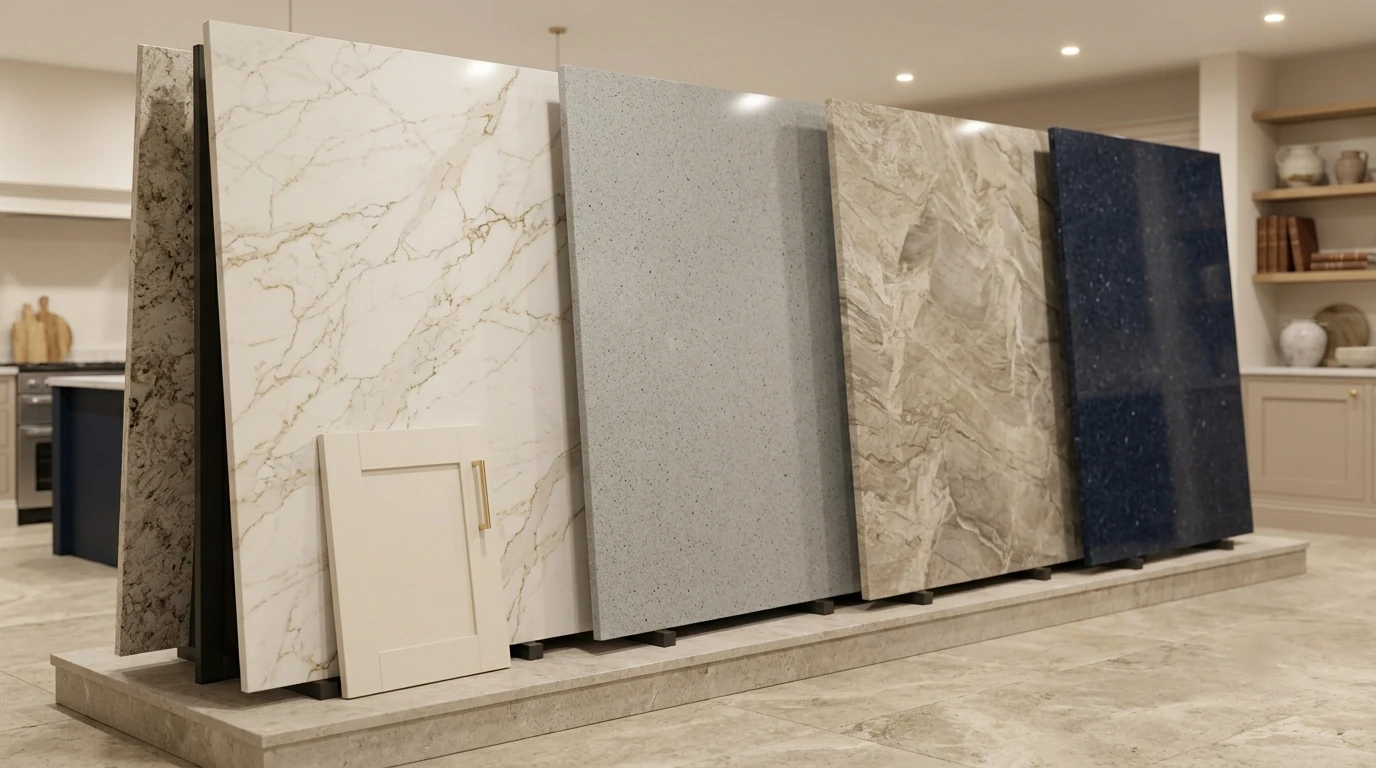
The countertop is the workhorse and the showpiece of a kitchen, the surface you set hot pans on, prep food on, and look at every single day. Picking the right material is a balance of durability, maintenance, and style. This guide compares the main countertop families so you can choose with confidence at our Rockville-area showroom.

Quartz: low maintenance, endless style

Quartz is an engineered stone made from crushed natural quartz bound with resin. It is non-porous, which means it never needs sealing and resists stains and bacteria, the closest thing to a “set it and forget it” countertop. Because it is engineered, colors and patterns are consistent and range from marble-look to solid tones. Leading lines like MSI Q Quartz are a staple in our showroom for exactly this reason. The trade-offs: quartz is not completely heat-proof (use trivets), and direct sunlight can fade some colors over time. See our quartz vs granite comparison for the full face-off.

Granite: natural and durable

Granite is a natural stone that has been the classic choice for decades. Each slab is unique, which gives your kitchen one-of-a-kind character. It handles heat beautifully and stands up to daily cooking, but because it is porous it needs periodic sealing to resist stains. Maintenance is simple, reseal every year or two, and the durability is proven over a lifetime of kitchens. If you want natural movement and don’t mind a little upkeep, granite is a reliable, beautiful choice.

Quartzite: the premium natural stone

Quartzite starts as sandstone and is transformed by heat and pressure into one of the hardest natural stones available. It offers marble-like veining with granite-level durability, the closest thing to marble that can take real kitchen abuse. It is more expensive and demands skilled fabrication, and it still needs sealing. For a statement kitchen in Bethesda or Potomac, quartzite is a standout. Read our marble vs quartzite guide to see how it compares to the softer classic.

Marble: beauty that needs care

Marble is the look everyone loves and the upkeep everyone should know about. It etches when acidic foods and cleaners touch it, and it stains easily, which is why marble is better suited to baking areas, islands used for display, and bathrooms than to a busy family prep zone. If you want marble aesthetics with fewer worries, quartz can replicate the veining, or quartzite delivers the real stone with far more toughness.

Comparing the top four

Material Durability Maintenance Heat Cost Best for
Quartz Very high None (no sealing) Medium $$–$$$ Busy families, low upkeep
Granite High Seal yearly High $$–$$$ Natural look, cooking-heavy
Quartzite Very high Seal periodically Very high $$$$ Premium natural statement
Marble Low–medium High Medium $$$$ Display islands, baths, baking

How to choose for a Maryland kitchen

  • Family kitchen, daily cooking, quartz or granite
  • Premium remodel, natural statement, quartzite
  • Baking kitchen or display island, marble or marble-look quartz
  • Rental or flip, quartz for durability and resale value

Budget and value

Countertop pricing depends on material, thickness, edge profile, and fabrication. Engineered quartz offers consistent pricing; natural stone varies by slab. In the D.C. metro, fabrication and installation often rival the material cost, so compare installed quotes, not just per-square-foot slab prices. A showroom that coordinates selection, templating, and install keeps the total honest.

See materials in person at the showroom

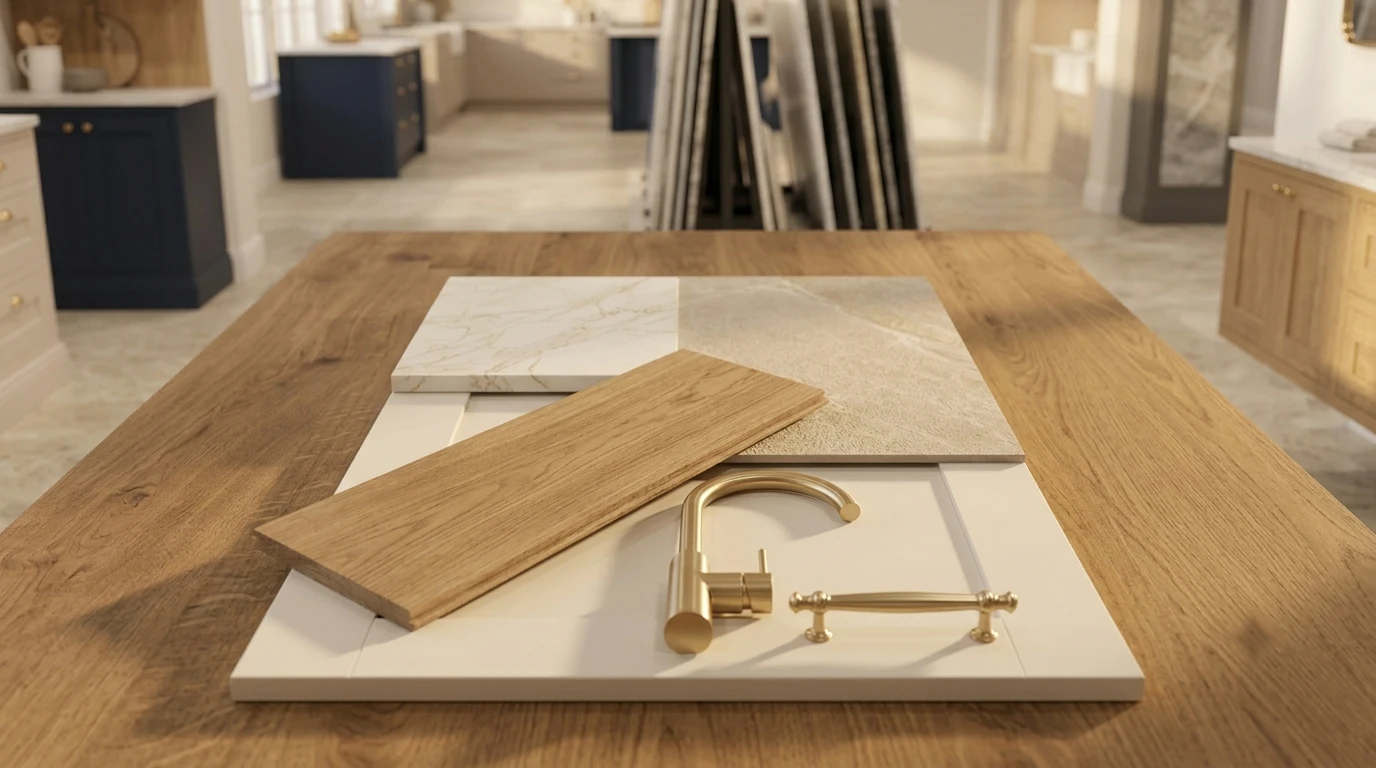
A countertop looks completely different in a photograph than in gallery light at full scale. At H&C Kitchen & Bath in Derwood, MD, you can compare quartz, granite, quartzite, and marble slabs in person and get honest guidance on durability, care, and fit. We serve Rockville, Bethesda, Gaithersburg, Silver Spring, Potomac, and the D.C. metro.

Choosing a countertop material? Compare slabs in person at the showroom. Book a visit or call (301) 939-0009.

Keep learning:

Posted on Leave a comment

Quartz vs Granite Countertops: Honest Comparison

Quartz vs Granite Countertops: Honest Comparison

The quartz versus granite debate is the most common countertop question we get in the showroom, and the honest answer is: both are excellent, and the right one depends on your lifestyle. Here is a no-nonsense comparison so you can decide.

The one-sentence difference

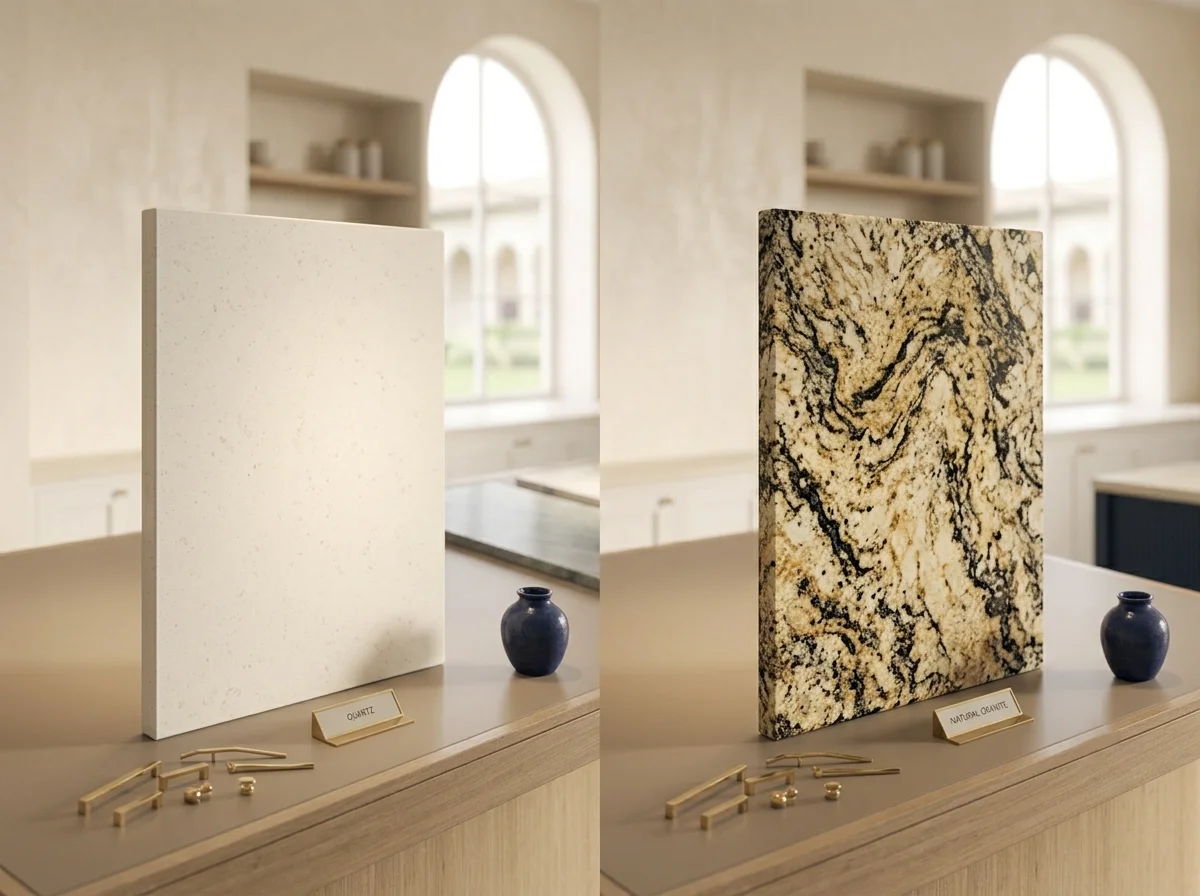
Granite is natural stone, unique, heat-tolerant, and porous. Quartz is engineered, consistent, non-porous, and maintenance-free. Everything else follows from that difference.

Maintenance and daily life

  • Quartz, never needs sealing; wipes clean; resists stains, bacteria, and most acids. The low-maintenance champion.
  • Granite, needs periodic sealing (typically every 1 to 2 years) and quick cleanup of acidic spills like lemon juice and wine to avoid etching.

If you want to think about your countertop as little as possible, quartz wins. If you are fine with a yearly seal and careful cleanup, granite is no burden.

Heat and cooking

Granite handles hot pans directly from the stove with ease. Quartz is heat-tolerant but not heat-proof, a hot pan can scorch or crack the resin binder, so you need trivets. For heavy, high-heat cooking, granite is the safer surface. For everyday cooking with normal care, quartz is fine.

Appearance and uniqueness

Every granite slab is a one-of-a-kind natural formation with movement, veins, and speckle. Quartz offers consistent patterns you can match across large kitchens, with marble-look options that fool most eyes. If you want a unique natural statement, granite. If you want a predictable, coordinated look, quartz.

Durability and repair

Both are durable, but they fail differently. Granite can chip at edges and crack under stress, repairable with epoxy but not invisible. Quartz resists chipping well and scratches less easily, but a deep scratch cannot be polished out the way stone can. Neither should be cut on directly; use a cutting board.

Cost in the D.C. metro

Quartz pricing is consistent and predictable; granite varies by slab and rarity. In Maryland, both land in a similar mid-range band for most projects, with exotic granite or premium quartz lines pushing higher. Get installed quotes from the same fabricator to compare fairly.

Which should you choose?

  • Choose quartz for low maintenance, consistent design, and family-friendly durability, especially with young kids
  • Choose granite for unique natural beauty, high-heat cooking, and a classic look you are happy to care for
  • See both in person before deciding, the texture difference is real

Compare them at the showroom

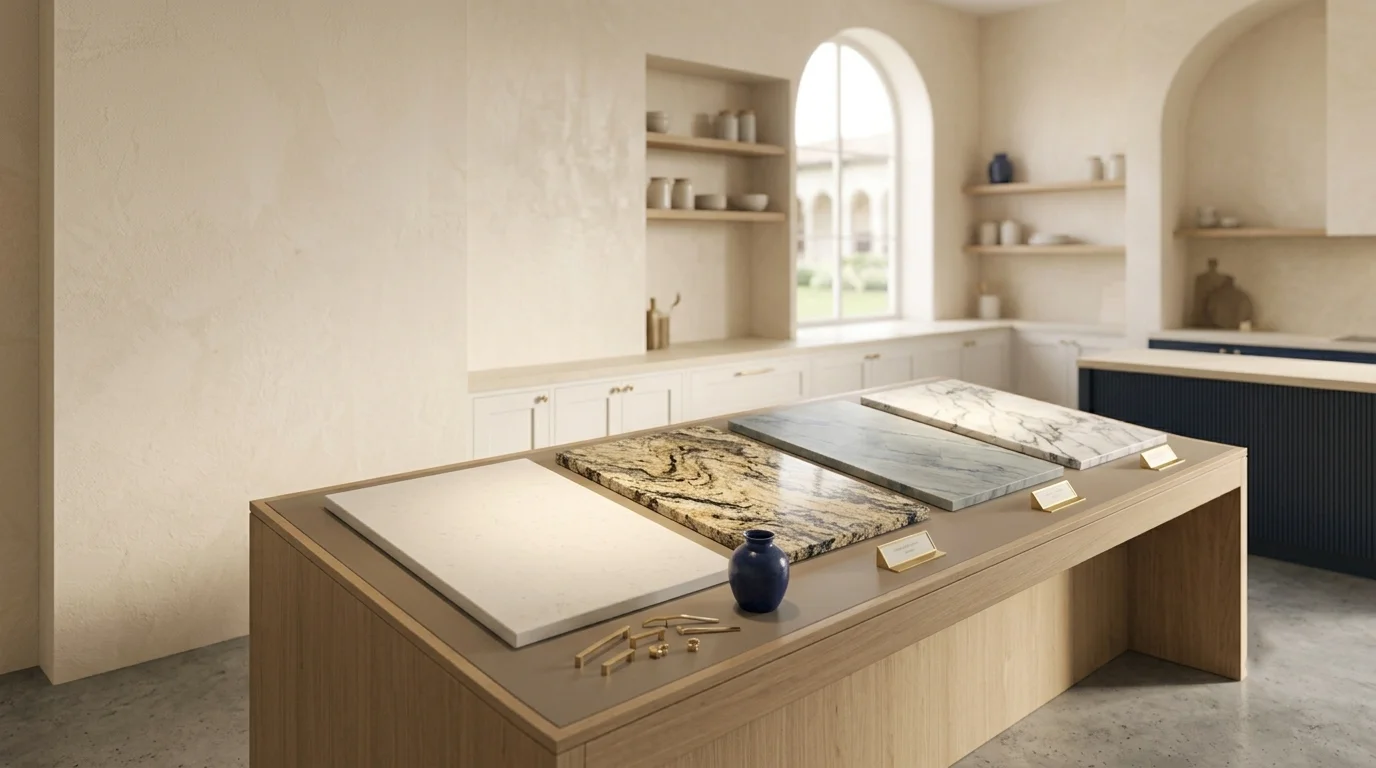
At H&C Kitchen & Bath in Derwood, MD, quartz and granite are displayed at full scale in gallery light so you can see the difference in movement, texture, and finish, and ask a specialist the questions that matter for your kitchen. We serve Rockville, Bethesda, Gaithersburg, Silver Spring, Potomac, and the D.C. metro.

Still deciding between quartz and granite? Compare both in person. Book your consultation or call (301) 939-0009.

Keep learning:

Posted on Leave a comment

Marble vs Quartzite Countertops: Which to Choose

Marble vs Quartzite Countertops: Which to Choose

Marble and quartzite look similar at a glance, both carry elegant veining and a high-end presence, but they could not be more different under daily use. One is delicate; the other is one of the hardest stones you can install. Here is what you need to know before you choose for your Maryland kitchen or bath.

The core difference

Marble is a metamorphic stone made from recrystallized limestone. It is soft enough to etch and stain, which is why it demands care. Quartzite begins as sandstone and is transformed by intense heat and pressure into a stone harder than granite, with marble-like veining and none of marble’s fragility. In short: marble is the look; quartzite is the look that can take a beating.

Etching and staining: the marble problem

Marble’s Achilles’ heel is etching. Acidic foods, lemon juice, tomato sauce, wine, and even some cleaners dissolve the surface and leave dull marks that are very hard to remove. Marble also stains easily and needs immediate cleanup. Quartzite resists acids and handles the everyday chaos of a kitchen without etching, you still seal it, but you do not live in fear of a splash of lemon.

Durability and heat

Quartzite is harder and more durable than granite, so it shrugs off scratches and handles heat well. Marble is softer, scratches more easily, and can be damaged by hot pans. For a busy family kitchen, that difference decides the argument on its own.

Where marble genuinely belongs

Marble is not wrong, it is just misplaced in the wrong room. It shines in:

  • Display islands and counters used for serving, not prep
  • Bathroom vanities, where traffic is lighter
  • Baking stations, where the cool surface is actually an advantage
  • Any space where you will treat it like the fine material it is

Where quartzite wins

  • Primary kitchen prep surfaces
  • Kitchen islands that do double duty as breakfast bars
  • High-use bathrooms
  • Any home where “low worry” matters more than tradition

Cost and value

Both are premium materials, and quartzite typically costs more because it is harder to source and fabricate. In the D.C. metro, expect to pay a premium for both, and for quartzite’s harder fabrication. The value question is simple: quartzite’s durability per dollar is far better in a working kitchen; marble’s value is aesthetic, not practical.

Making the call

  • Choose marble if you love the authentic stone and the surface will be used gently, think display island, baking, or a bath vanity
  • Choose quartzite if you want the marble look in a working kitchen with real durability
  • If you want marble aesthetics with zero maintenance, a marble-look quartz is the practical alternative

See both stones at the showroom

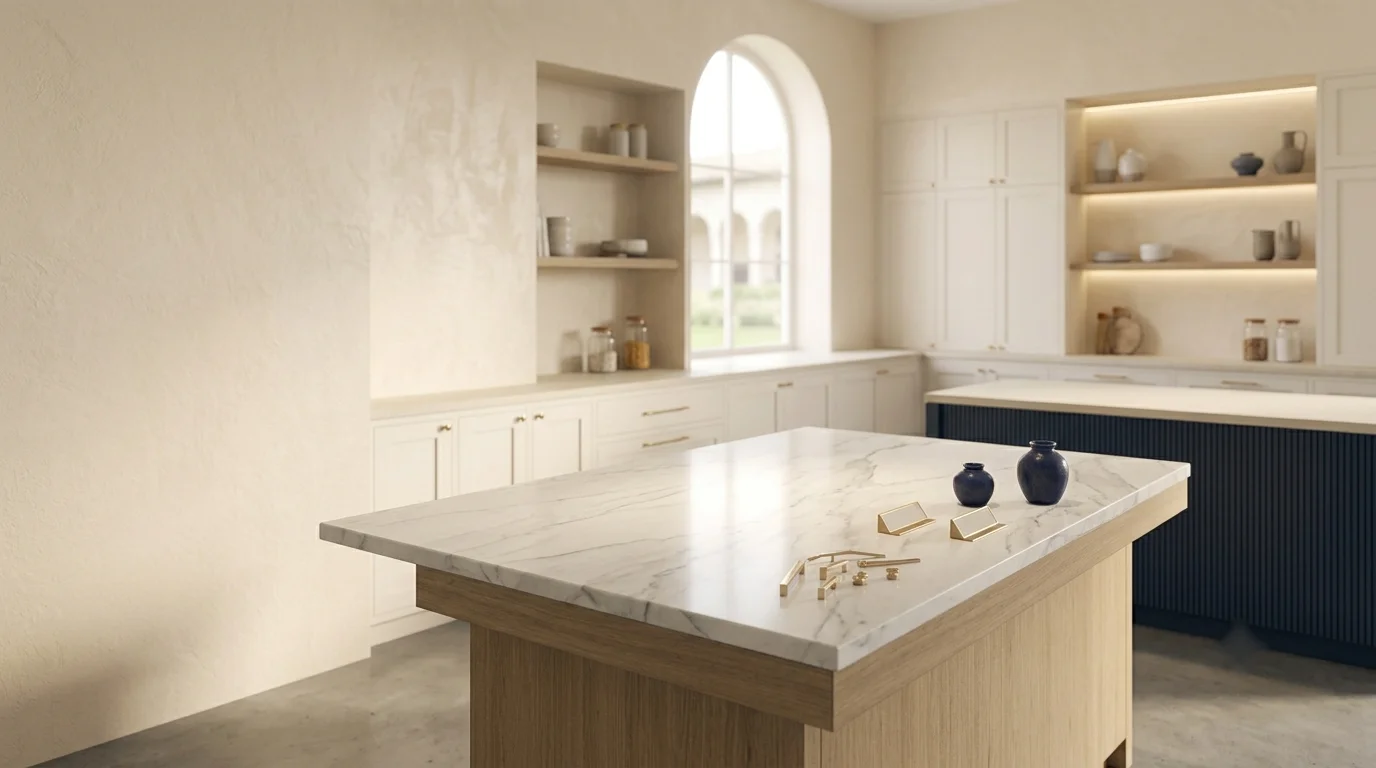
At H&C Kitchen & Bath in Derwood, MD, we display marble and quartzite slabs in person so you can see the veining, feel the surface, and get honest guidance on where each stone belongs in your home. We serve Rockville, Bethesda, Gaithersburg, Silver Spring, Potomac, and the D.C. metro.

Deciding between marble and quartzite? Compare the stones in person. Book your visit or call (301) 939-0009.

Keep learning:

Posted on Leave a comment

Countertop Edge Profiles & Finishes Guide

Countertop Edge Profiles & Finishes Guide

Edge profile is the detail people notice last and feel first. It is the line your hand runs along every time you lean on the island, and it quietly sets the style of the whole kitchen. This guide covers the most popular edge profiles and finishes so you can spec the right one for your Maryland project.

What an edge profile is

The edge profile is the shape cut into the perimeter of the countertop where it meets the air, the transition from the top surface to the side. It is a small detail with a big visual impact, and it is one of the least expensive upgrades you can make during fabrication.

The classic edge profiles

  • Eased edge, a simple squared edge with slightly rounded corners; clean, modern, and the most common choice
  • Beveled edge, a squared edge with a flat angled cut; adds a subtle, tailored line that catches light
  • Bullnose edge, a fully rounded top-to-bottom profile; soft and classic, friendly for busy kitchens
  • Half-bullnose, rounded top with a flat bottom; a refined compromise between modern and traditional
  • Ogee edge, an S-curved profile; ornate and traditional, best for formal, classic kitchens
  • Waterfall edge, the countertop material continues down the side of the island to the floor; a dramatic, furniture-like statement

Choosing by kitchen style

Edge Style Best for
Eased Modern, minimal Contemporary and transitional kitchens
Beveled Tailored, elegant Adding light and line without fuss
Bullnose Soft, classic Family kitchens, kid-friendly
Ogee Formal, ornate Traditional, luxury kitchens
Waterfall Statement, sculptural Islands in modern kitchens

Finishes: the surface matters too

Beyond the edge, the finish changes how the stone behaves:

  • Polished, glossy, reflective, shows movement; the standard for granite and quartz
  • Honed, matte, soft, low-glare; hides fingerprints but shows water spots more
  • Leathered, textured, satin feel; hides smudges beautifully, great for busy islands

Honed and leathered finishes are increasingly popular for family kitchens because they feel softer and hide daily wear. Ask to touch the options, the tactile difference is exactly why you should choose in person.

How to pick the right edge

  • Keep it simple, eased or beveled edges suit most homes and never date
  • Choose the edge to match the cabinetry: clean lines with shaker doors, softer profiles with traditional raised-panel doors
  • Reserve statement edges (ogee, waterfall) for the surfaces you want to draw attention to, typically the island
  • Confirm the edge profile in your quote; it is a line item that varies by fabricator

What affects cost

Edge profile affects fabrication time, and complex edges like ogee or waterfall cost more than eased or beveled. The waterfall edge in particular adds material and labor because it uses additional slab. It is worth every dollar on the right island, but budget for it consciously.

See edges and finishes at the showroom

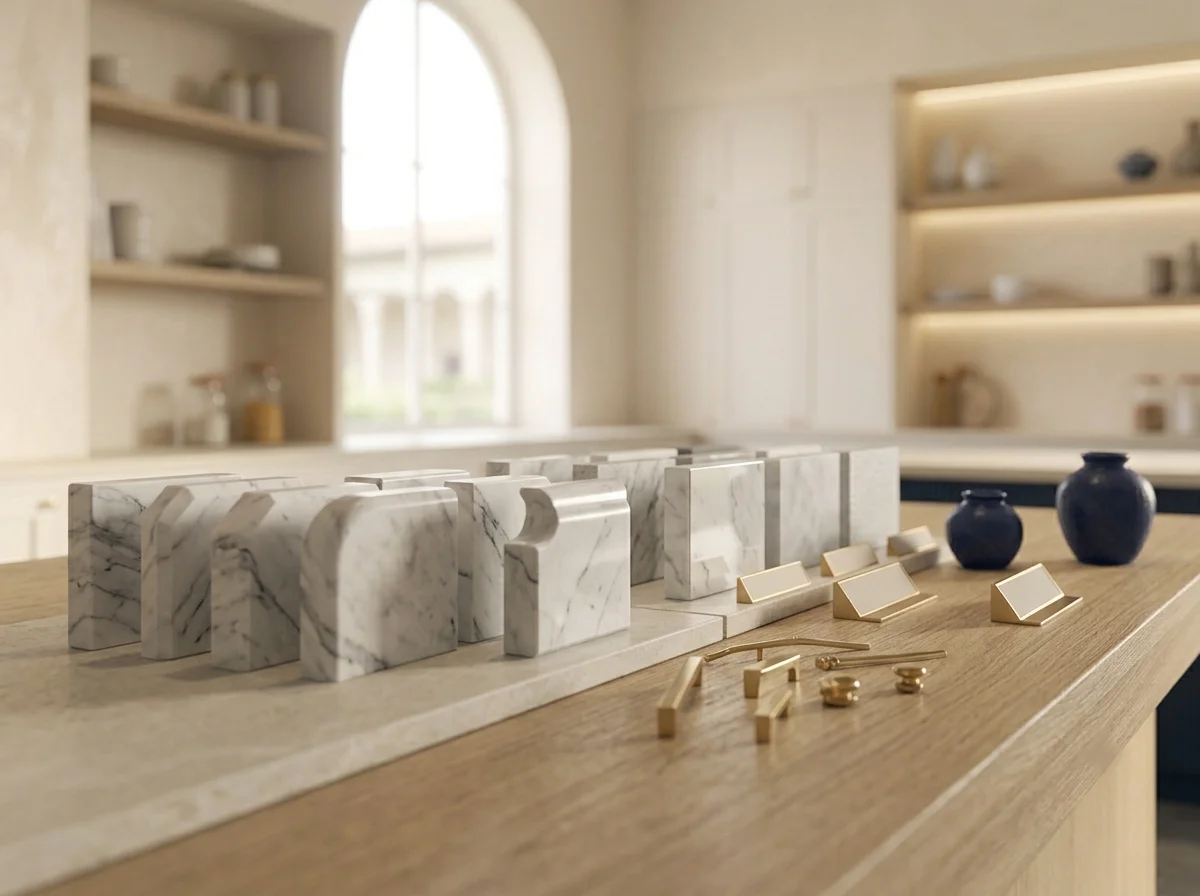
At H&C Kitchen & Bath in Derwood, MD, you can view edge profile samples and touch polished, honed, and leathered finishes across quartz, granite, and natural stone lines. Bring a photo of your kitchen and we will help you shortlist the edge and finish that fit your style. We serve Rockville, Bethesda, Gaithersburg, Silver Spring, Potomac, and the D.C. metro.

Ready to pick your edge and finish? See the options in person at the showroom. Book a consultation or call (301) 939-0009.

Keep learning: