A mid-range kitchen renovation in Montgomery County, Maryland typically costs $55,000 to $95,000 in 2026. Cabinets consume about 30 percent of that budget, labor about 22 percent, and countertops about 11 percent. A cosmetic refresh runs $25,000 to $45,000. A full custom renovation with structural changes runs $100,000 to $180,000 or more.
Most cost articles are written by people who sell one half of the job. Contractors quote labor and guess at materials. Retailers quote materials and wave at labor. H&C Kitchen & Bath sits on both sides: we are a Derwood showroom that supplies cabinets, countertops, tile, and flooring, and our sister company H&C Construction executes the remodel. The numbers below come from seeing both invoices on the same project.
The three budget tiers, and what actually separates them
| Tier | Range | What you get | What stays |
|---|---|---|---|
| Cosmetic refresh | $25,000 to $45,000 | Cabinet refacing or new doors, new countertops, backsplash, hardware, paint, lighting | Layout, boxes, plumbing, electrical |
| Mid-range full | $55,000 to $95,000 | New semi-custom cabinets, quartz or granite, new flooring, appliances, fixtures, some electrical | Walls, window and door openings, main plumbing stacks |
| Upscale or custom | $100,000 to $180,000+ | Custom cabinetry, premium stone, moved walls, relocated plumbing, new windows, high-end appliances | Foundation |
The jump from tier one to tier two is not luxury. It is whether you replace the cabinet boxes. Once boxes come out, countertops, backsplash, flooring, and often electrical come with them. That single decision roughly doubles the project.
The jump from tier two to tier three is almost always moving something that carries water or weight. Relocating a sink, moving a gas line, or taking out a load-bearing wall adds permits, engineering, and trades. In Montgomery County that also adds review time.
Line by line: where $70,000 actually goes
This is a representative mid-range kitchen of roughly 200 square feet in a Montgomery County home, with semi-custom cabinets and quartz counters.
| Line item | Typical share | Dollar range |
|---|---|---|
| Cabinetry | 30% | $18,000 to $24,000 |
| Labor and installation | 22% | $14,000 to $18,000 |
| Countertops | 11% | $6,500 to $9,500 |
| Appliances | 12% | $7,000 to $12,000 |
| Flooring | 7% | $4,000 to $6,500 |
| Plumbing and electrical | 7% | $4,000 to $6,000 |
| Lighting and fixtures | 4% | $2,000 to $3,500 |
| Backsplash and tile | 3% | $1,500 to $3,000 |
| Permits, design, contingency | 4% | $2,500 to $4,500 |
Two of these deserve attention because they are where budgets actually break.
Cabinetry is not one price, it is four decisions
Cabinet cost is driven by construction, door style, finish, and configuration, roughly in that order.
- Construction. Plywood box versus particleboard changes cost by 15 to 25 percent and changes lifespan by a decade. Full-overlay versus partial-overlay changes both look and price.
- Door style. A flat slab and a five-piece shaker cost differently to manufacture. Inset doors, where the door sits flush inside the frame, can add 20 to 35 percent over overlay.
- Finish. Painted costs more than stained on the same box, typically 10 to 20 percent, because painted finishes show every imperfection and require more prep.
- Configuration. Drawer banks cost more than door bases. Every pull-out, lazy susan, and trash pull-out is a line item.
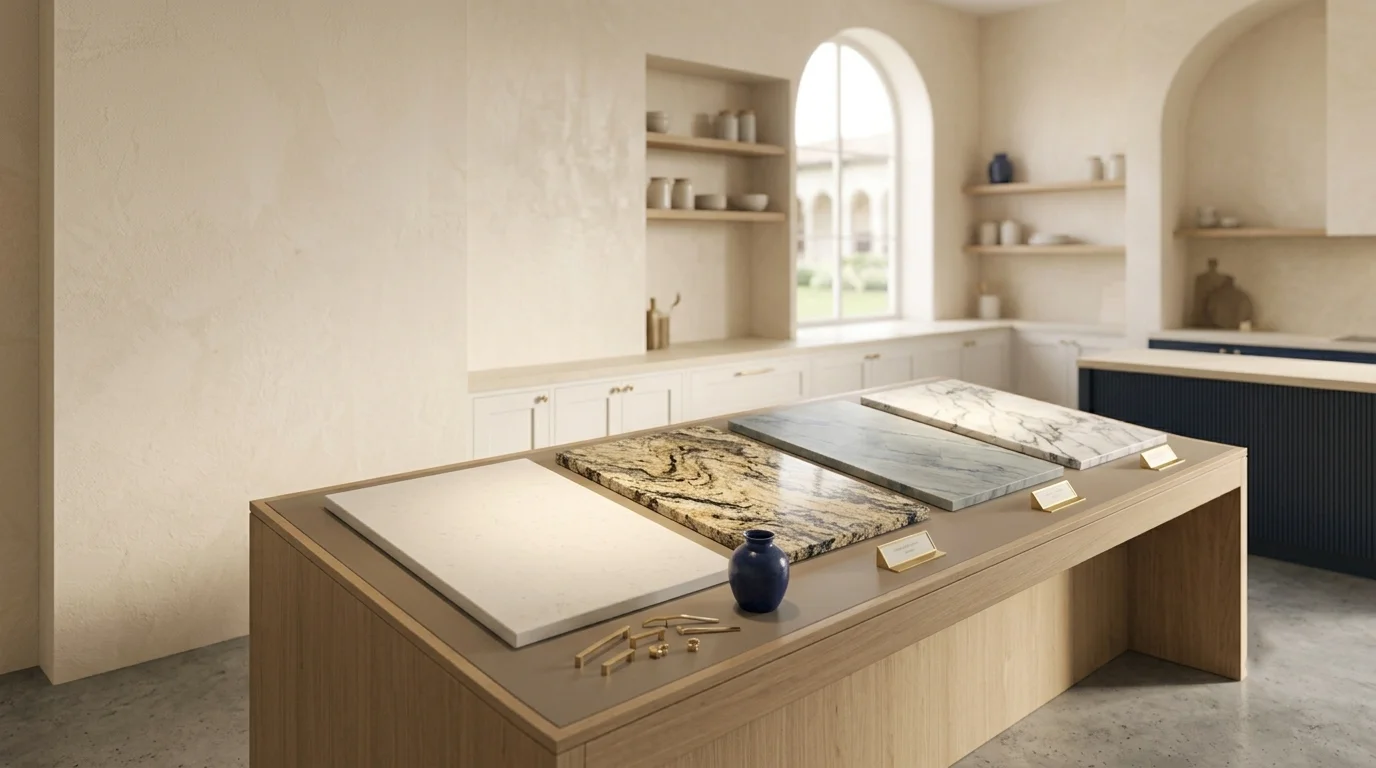
Lines we stock, including Fabuwood, Forevermark, Cubitac, Medallion, and St. Martin, span this whole range. You can see the boxes side by side at the showroom, which is the only reliable way to understand what you are paying for. Compare options on our kitchen cabinets in Maryland page before you visit.
Labor is priced on complexity, not hours
A common misread: homeowners assume labor scales with kitchen size. It scales with complexity and condition. The same 200 square foot kitchen can carry $12,000 or $22,000 of labor depending on:
- Whether walls are plumb and floors are level, which older Montgomery County housing stock frequently is not
- Whether plumbing and electrical stay in place
- Whether the countertop template requires seams or an unusual overhang
- Whether demolition uncovers knob-and-tube wiring, galvanized pipe, or asbestos tile, common in homes built before 1978
Homes in Bethesda, Silver Spring, and Kensington built in the 1940s through 1960s reliably produce at least one of these. That is why our estimates carry a contingency line rather than pretending they will not.
What drives cost up that nobody warns you about
Moving the sink. Relocating a sink means new supply lines, new drain, and a vent. In a slab-on-grade home this can mean cutting concrete. Budget $2,500 to $6,000 before finishes.
Load-bearing walls. Opening a kitchen to a family room is the single most requested change we see and the most underbudgeted. Engineering, a beam, temporary support, and permit review typically add $8,000 to $20,000.
Appliance upgrades late in the process. A 36 inch professional range needs different ventilation, a different cabinet opening, and often a dedicated circuit. Changing this after cabinets are ordered means re-ordering cabinets.
Countertop material chosen after cabinet order. Some stones need additional support. Some overhangs need corbels or steel. Deciding the slab first prevents this.
What drives cost down without cheapening the kitchen
- Keep the plumbing where it is. This is the highest leverage decision in the entire budget.
- Reface instead of replace when boxes are solid plywood and the layout works. Refacing is genuinely good value when the bones are good and genuinely a waste when they are not.
- Choose quartz in a simpler pattern. Dramatic veining costs more per slab and often requires slab matching across seams.
- Spend on what you touch. Hinges, glides, and faucet quality are felt daily. Interior cabinet accessories are frequently over-specified.
- Buy where material and installation are coordinated. Split responsibility is where change orders are born.
The Maryland factor
Montgomery County costs run roughly 15 to 25 percent above national averages. The drivers are labor rates in the DC metro, permit requirements, and housing stock age.
Permits matter more here than most homeowners expect. In Montgomery County, a kitchen renovation that involves electrical, plumbing, or structural work requires permits, and inspections are scheduled at defined stages. A contractor who suggests skipping permits is creating a problem for your eventual sale, not saving you money. Verify current requirements with the Montgomery County Department of Permitting Services before you finalize a schedule.
Why we can quote both halves
Most showrooms hand you a materials number and send you to find a contractor. Most contractors hand you a labor number and send you to pick materials. The gap between those two conversations is where projects lose money, because nobody owns the seam.
H&C runs both. The showroom in Derwood specifies the materials. H&C Construction executes the work. That means the cabinet order and the install schedule are built against the same plan, and when a slab is delayed the crew calendar moves with it instead of sitting idle on your dime.
If you want a real number for your kitchen, the fastest path is bringing your dimensions and a few photos to the showroom.
Frequently asked questions
How much does a kitchen renovation cost in Maryland?
A mid-range kitchen renovation in Maryland typically costs $55,000 to $95,000 in 2026. Cosmetic refreshes start around $25,000 and custom renovations with structural changes commonly exceed $100,000. Montgomery County projects run 15 to 25 percent above national averages.
What is the most expensive part of a kitchen renovation?
Cabinetry is the largest single line item, typically 30 percent of the total budget, followed by labor at about 22 percent. Together they account for more than half of a typical kitchen renovation.
Is it cheaper to reface or replace kitchen cabinets?
Refacing typically costs 40 to 60 percent of replacement and makes sense when the cabinet boxes are structurally sound plywood and the existing layout works. Replacement is the better value when boxes are particleboard, damaged, or when the layout needs to change.
How long does a kitchen renovation take in Montgomery County?
Plan on 8 to 14 weeks from demolition to completion for a mid-range kitchen, plus 4 to 10 weeks before that for design, selections, and cabinet lead time. Permit review adds time and should be started early.
Do I need a permit for a kitchen remodel in Maryland?
Yes, in most cases. Montgomery County requires permits for kitchen work involving electrical, plumbing, or structural changes. Cosmetic work such as painting, refacing, and countertop replacement generally does not require a permit. Confirm current requirements with the county before scheduling.
—
Ready for a real number? Bring your kitchen dimensions to our Derwood showroom and we will walk you through cabinet lines, countertop options, and what the install actually involves. Call (301) 939-0009 or book a showroom visit.