
Posted on Leave a comment

Shaker vs Modern Cabinet Doors: Which Fits Your Kitchen?

Shaker vs Modern Cabinet Doors: Which Fits Your Kitchen?

Cabinet door style is the single strongest visual cue in a kitchen. Two identical kitchens can look completely different, one warm and classic, one sleek and minimal, just by changing the door profile. If you are remodeling in Rockville or Montgomery County, the shaker versus modern decision is usually the first one you will make. Here is how to choose with confidence, and why seeing both in person changes the answer.

What a shaker door is

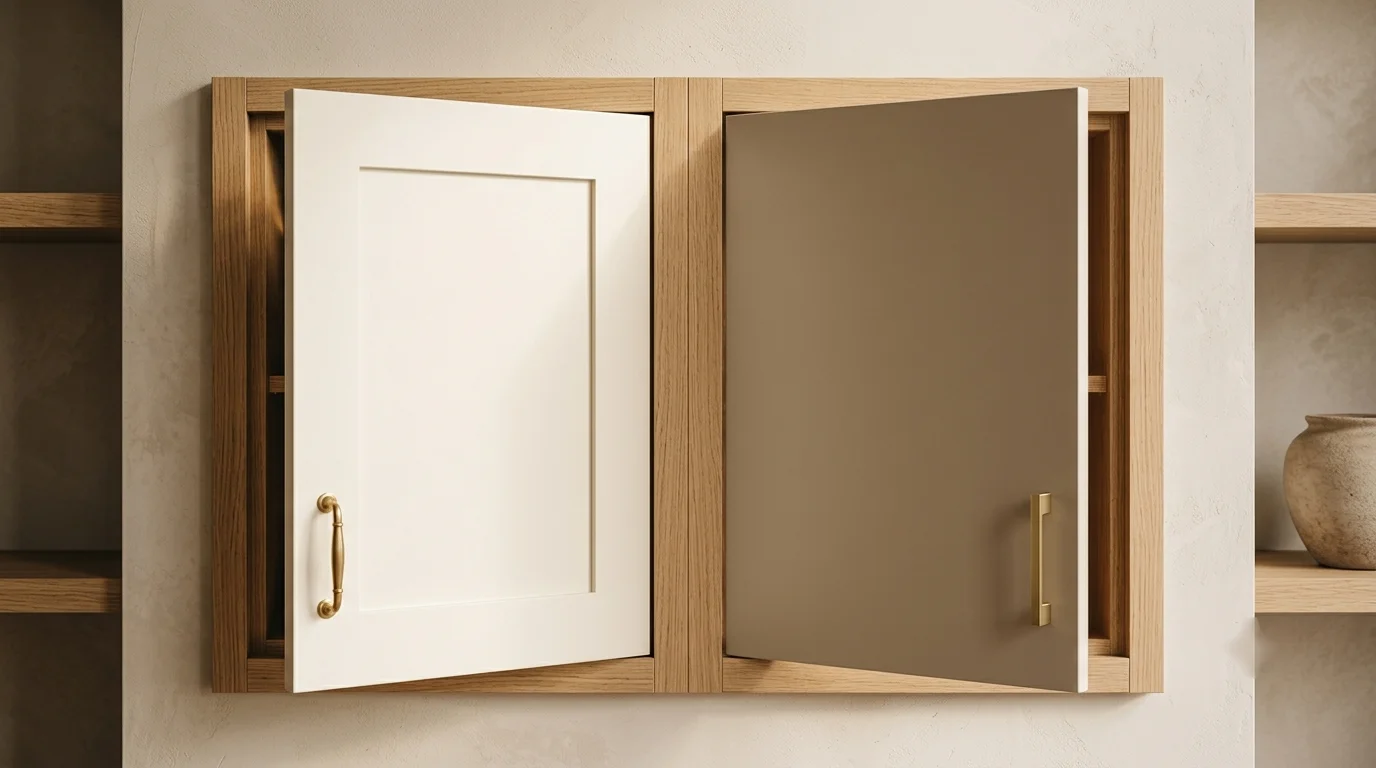
A shaker door has a flat recessed center panel framed by a square outer rail and stile. It is simple, versatile, and neutral enough to work in traditional, transitional, and even contemporary kitchens. The style gets its name from the Shaker community, who valued clean lines and honest construction. Today it is the most requested door in our showroom, and the safest recommendation for a resale-ready kitchen.

What a modern slab door is

A modern slab door is a single flat panel with no frame and no recess. The surface is the design. Slab doors read as clean and minimal, which suits open-plan homes, condos, and kitchens where you want the countertop and hardware to do the talking. They are also easier to wipe down because there is no recessed groove to collect grease or crumbs.

How the two compare

Consideration Shaker Modern slab
Best for Traditional, transitional, farmhouse Contemporary, minimal, urban
Visual texture Adds shadow lines and depth Flat, uninterrupted surface
Cleaning Grooves need wiping Smoothest surface to clean
Hardware Works with knobs and pulls Best with integrated or long pulls
Resale Widely liked, safe bet Depends on neighborhood and taste

> The table above is a fast summary, but finishes change everything. A shaker door painted in a matte taupe can look modern; a slab door in warm oak veneer can look warm and organic.

Full overlay vs inset: the second decision

Once you pick a profile, you choose how the door sits on the frame. Full-overlay doors cover the cabinet frame almost completely, leaving a narrow gap between doors for a furniture-like, seamless look. Inset doors sit flush inside the frame, which looks refined and traditional but requires tighter tolerances and typically costs more. For most Maryland homeowners, full overlay is the practical sweet spot.

Finishes that suit each style

  • Shaker, painted whites, warm grays, and two-tone uppers/lowers look outstanding; stain shows the wood grain beautifully
  • Slab, matte laminates, thermofoil, and high-gloss finishes; wood veneer adds warmth without breaking the minimal line

Both styles can be ordered with the durability features that matter: plywood boxes, soft-close hinges, and full-extension drawer glides. See our cabinet finish durability guide before you settle on a color.

The honest answer

There is no universal winner, it depends on your home and your habits. Families with young kids often prefer shaker because it hides fingerprints and crumbs in the shadow lines. Design-forward homeowners who want a calm, gallery-like kitchen usually lean slab. The right move is to look at both on a real cabinet, at full scale, in person.

See both styles in Derwood, MD

At H&C Kitchen & Bath you can compare shaker and modern doors side by side across the lines we stock, Forevermark, Fabuwood, Medallion, St. Martin, and more. Bring a photo of your kitchen and a rough budget, and we will help you shortlist in one visit. We serve Rockville, Bethesda, Gaithersburg, Silver Spring, Potomac, and the D.C. metro.

Not sure which door style is right? Visit the showroom and compare in person. Book your visit or call (301) 939-0009.

Keep learning:
Posted on Leave a comment

Countertop Edge Profiles & Finishes Guide

Countertop Edge Profiles & Finishes Guide

Edge profile is the detail people notice last and feel first. It is the line your hand runs along every time you lean on the island, and it quietly sets the style of the whole kitchen. This guide covers the most popular edge profiles and finishes so you can spec the right one for your Maryland project.

What an edge profile is

The edge profile is the shape cut into the perimeter of the countertop where it meets the air, the transition from the top surface to the side. It is a small detail with a big visual impact, and it is one of the least expensive upgrades you can make during fabrication.

The classic edge profiles

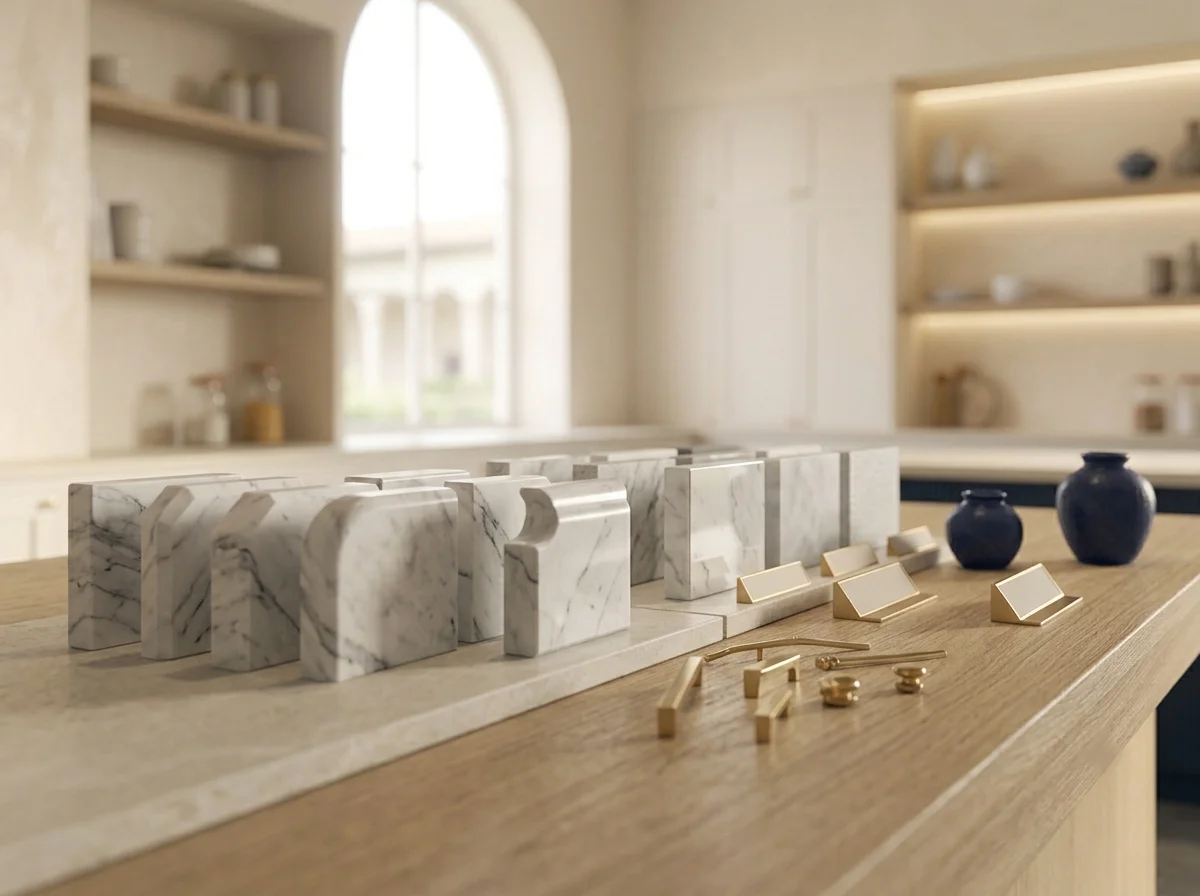
  • Eased edge, a simple squared edge with slightly rounded corners; clean, modern, and the most common choice
  • Beveled edge, a squared edge with a flat angled cut; adds a subtle, tailored line that catches light
  • Bullnose edge, a fully rounded top-to-bottom profile; soft and classic, friendly for busy kitchens
  • Half-bullnose, rounded top with a flat bottom; a refined compromise between modern and traditional
  • Ogee edge, an S-curved profile; ornate and traditional, best for formal, classic kitchens
  • Waterfall edge, the countertop material continues down the side of the island to the floor; a dramatic, furniture-like statement

Choosing by kitchen style

Edge Style Best for
Eased Modern, minimal Contemporary and transitional kitchens
Beveled Tailored, elegant Adding light and line without fuss
Bullnose Soft, classic Family kitchens, kid-friendly
Ogee Formal, ornate Traditional, luxury kitchens
Waterfall Statement, sculptural Islands in modern kitchens

Finishes: the surface matters too

Beyond the edge, the finish changes how the stone behaves:

  • Polished, glossy, reflective, shows movement; the standard for granite and quartz
  • Honed, matte, soft, low-glare; hides fingerprints but shows water spots more
  • Leathered, textured, satin feel; hides smudges beautifully, great for busy islands

Honed and leathered finishes are increasingly popular for family kitchens because they feel softer and hide daily wear. Ask to touch the options, the tactile difference is exactly why you should choose in person.

How to pick the right edge

  • Keep it simple, eased or beveled edges suit most homes and never date
  • Choose the edge to match the cabinetry: clean lines with shaker doors, softer profiles with traditional raised-panel doors
  • Reserve statement edges (ogee, waterfall) for the surfaces you want to draw attention to, typically the island
  • Confirm the edge profile in your quote; it is a line item that varies by fabricator

What affects cost

Edge profile affects fabrication time, and complex edges like ogee or waterfall cost more than eased or beveled. The waterfall edge in particular adds material and labor because it uses additional slab. It is worth every dollar on the right island, but budget for it consciously.

See edges and finishes at the showroom

At H&C Kitchen & Bath in Derwood, MD, you can view edge profile samples and touch polished, honed, and leathered finishes across quartz, granite, and natural stone lines. Bring a photo of your kitchen and we will help you shortlist the edge and finish that fit your style. We serve Rockville, Bethesda, Gaithersburg, Silver Spring, Potomac, and the D.C. metro.

Ready to pick your edge and finish? See the options in person at the showroom. Book a consultation or call (301) 939-0009.

Keep learning:
Posted on Leave a comment

Coordinating Tile, Flooring & Cabinetry: A Simple System

Coordinating Tile, Flooring & Cabinetry: A Simple System

The fastest way to ruin a beautiful kitchen is to pick each surface in isolation. Beautiful cabinets, a gorgeous countertop, and a lovely floor can still clash when they were never designed as a set. This guide gives you a simple, repeatable system for coordinating tile, flooring, and cabinetry, the way we do it in the showroom.

The order of decisions

Coordinating is easier when you pick in the right order:

  • [ ] 1. Choose the floor first, it is the largest surface and anchors the room
  • [ ] 2. Choose the cabinetry, the second-largest surface and the style driver
  • [ ] 3. Choose the countertop, relates to both floor and cabinets
  • [ ] 4. Choose tile and backsplash last, the accent that ties it together

> Picking the floor first is the single most effective habit. Everything else can then relate to one fixed anchor instead of four moving targets.

Use undertones, not exact matches

The number one mistake is trying to match colors exactly. Surfaces rarely match in the real world, wood tones, stone veins, and paint colors all shift under light. Instead, coordinate by undertone: warm (gold, beige, cream) or cool (gray, blue, taupe). Pick a dominant undertone and let every surface belong to that family. Exact matching looks flat; coordinated undertones look designed.

The 60-30-10 approach

A quick framework borrowed from interior design:

  • 60% dominant, the floor and large wall surfaces
  • 30% secondary, the cabinetry and countertop
  • 10% accent, the backsplash tile, hardware, and details

When in doubt, let the accent (tile) do the talking and keep the big surfaces calm.

Concrete pairings that always work

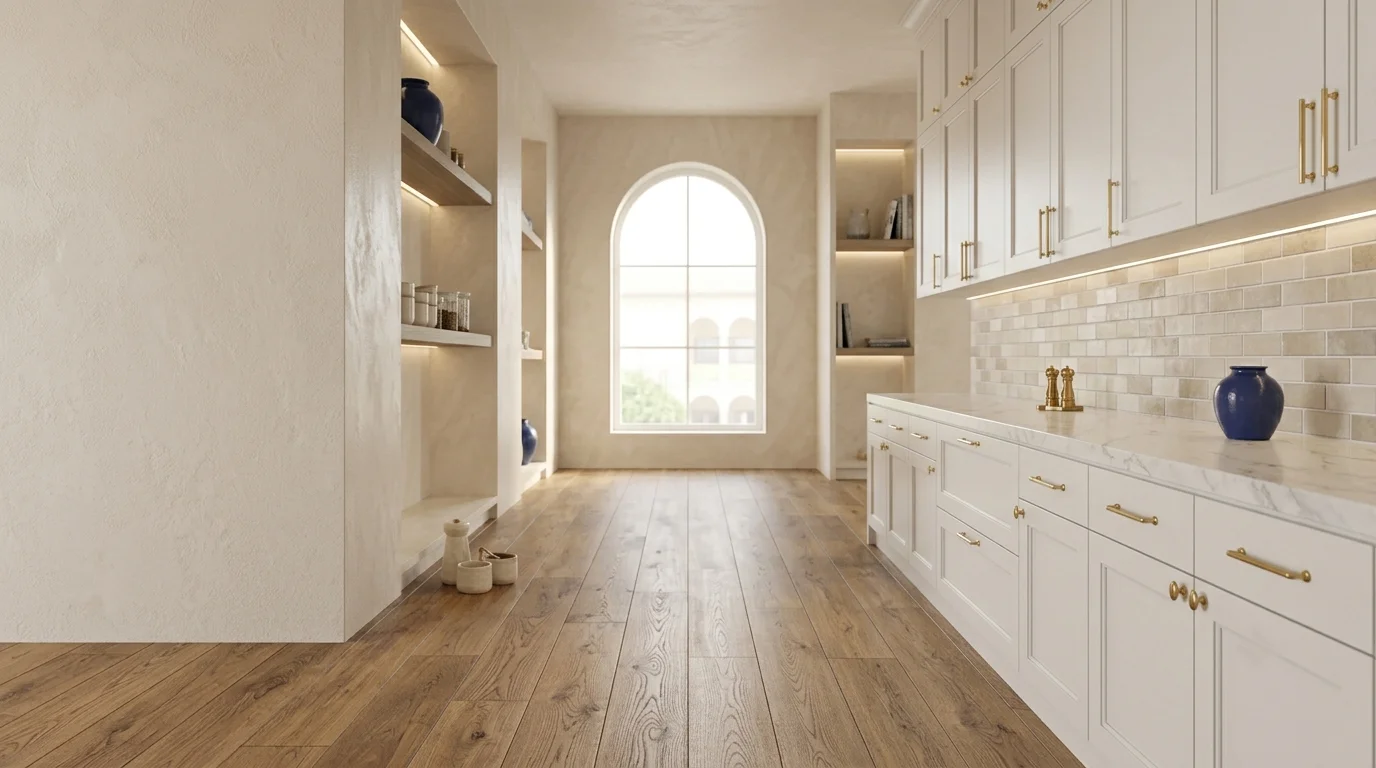
  • Warm oak or hickory floor + white shaker cabinets + warm cream countertop, classic, bright, timeless
  • Gray wood-look LVP + painted navy or gray cabinets + white quartz, modern and calm
  • Porcelain wood-look tile + walnut cabinets + leathered granite, natural and rich
  • Large-format marble-look tile + white cabinets + honed quartz, spa-like and airy

Contrast vs blend

  • Blend, floor and cabinets in the same undertone for a seamless, open, calm feel
  • Contrast, a light floor with dark cabinets (or vice versa) for definition and drama
  • Use the backsplash as the bridge: pull one tone from the floor and one from the cabinets

Bring samples and see them together

The only reliable way to coordinate is to see materials side by side in the same light. That is exactly what a showroom is for. At H&C Kitchen & Bath, we bring your shortlist together, cabinet doors, countertop samples, tile, and flooring, so you can confirm the palette before you order, not after.

Plan your palette at the showroom

At H&C Kitchen & Bath in Derwood, MD, you can build your whole palette in one visit: cabinets, countertops, tile, and flooring compared at full scale with specialist guidance. We serve Rockville, Bethesda, Gaithersburg, Silver Spring, Potomac, and the D.C. metro.

Ready to build a coordinated palette? Book a design consultation and bring your ideas. Get started or call (301) 939-0009.

Keep learning: