
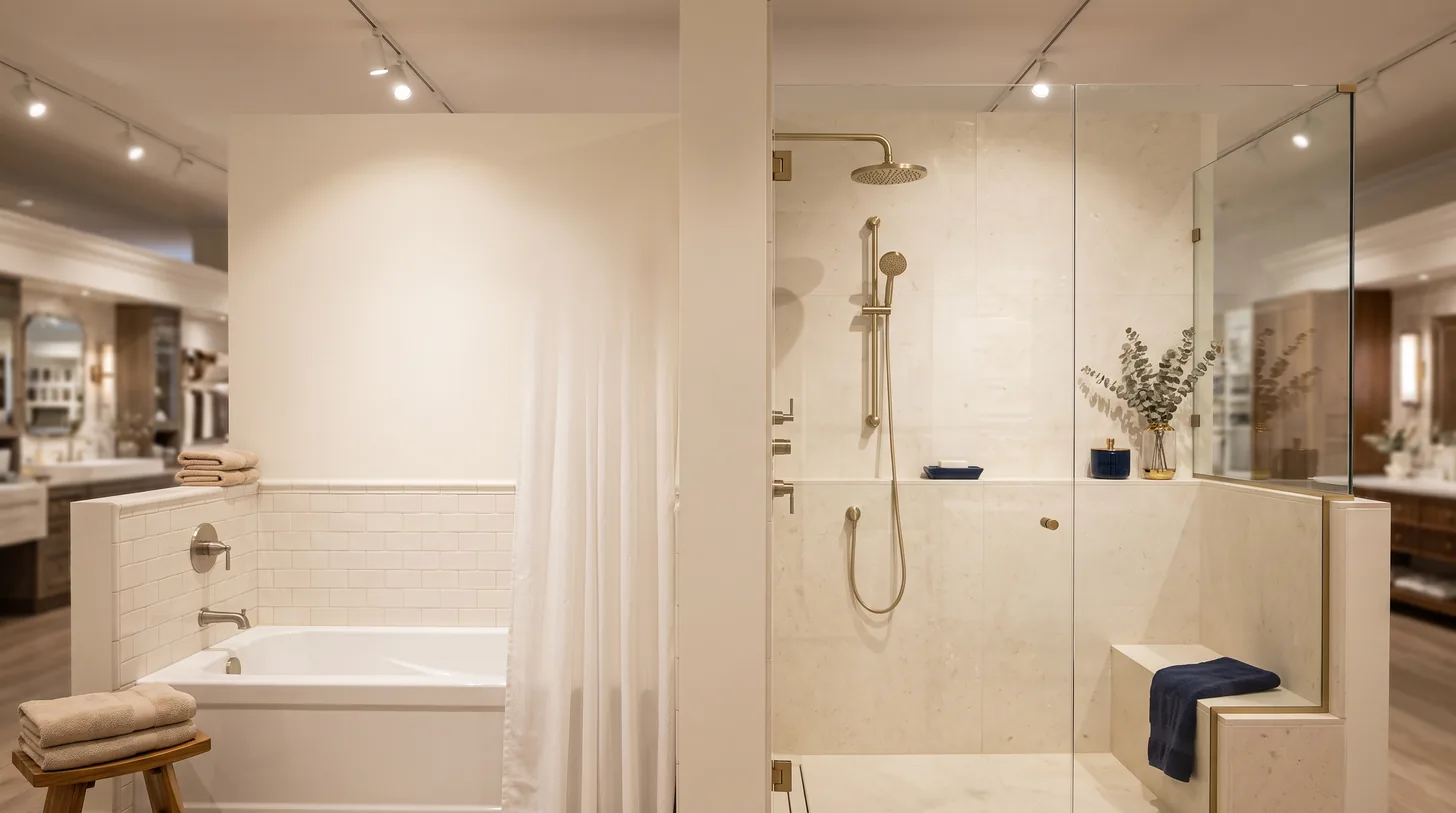
Removing a tub and installing a shower costs $6,000 to $14,000 for a tiled shower and $3,500 to $7,000 for an acrylic surround. The conversion itself, meaning demolition, framing the new opening and wall repair, adds $900 to $2,000 over the cost of simply replacing a shower that was already there. The plumbing usually stays put, and that is what keeps the number down.
We supply the tile, fixtures and glass for this job from our Derwood showroom, and our sister company H&C Construction does the demolition and build. The figures below separate the two sides, because when one company quotes the whole job you rarely get to see the split.
What the conversion costs, by finish
| Finish | Range | Includes | Timeline |
|---|---|---|---|
| Acrylic surround | $3,500 to $7,000 | Tub removal, framing, acrylic wall set, base, framed glass | 3 to 5 days |
| Standard tiled | $6,000 to $14,000 | Tub removal, framing, waterproofing, tiled walls, pan, semi-frameless glass | 2 to 3 weeks |
| Curbless tiled | $12,000 to $22,000 | All of the above plus recessed subfloor and linear drain | 3 to 4 weeks |
In Montgomery County these land roughly 8 to 12 percent above the national mid-point, and the gap is labor, not material.
The conversion premium, line by line
| Item | Cost | Why |
|---|---|---|
| Tub removal and disposal | $300 to $700 | Cast iron tubs must be broken up in place; acrylic lifts out |
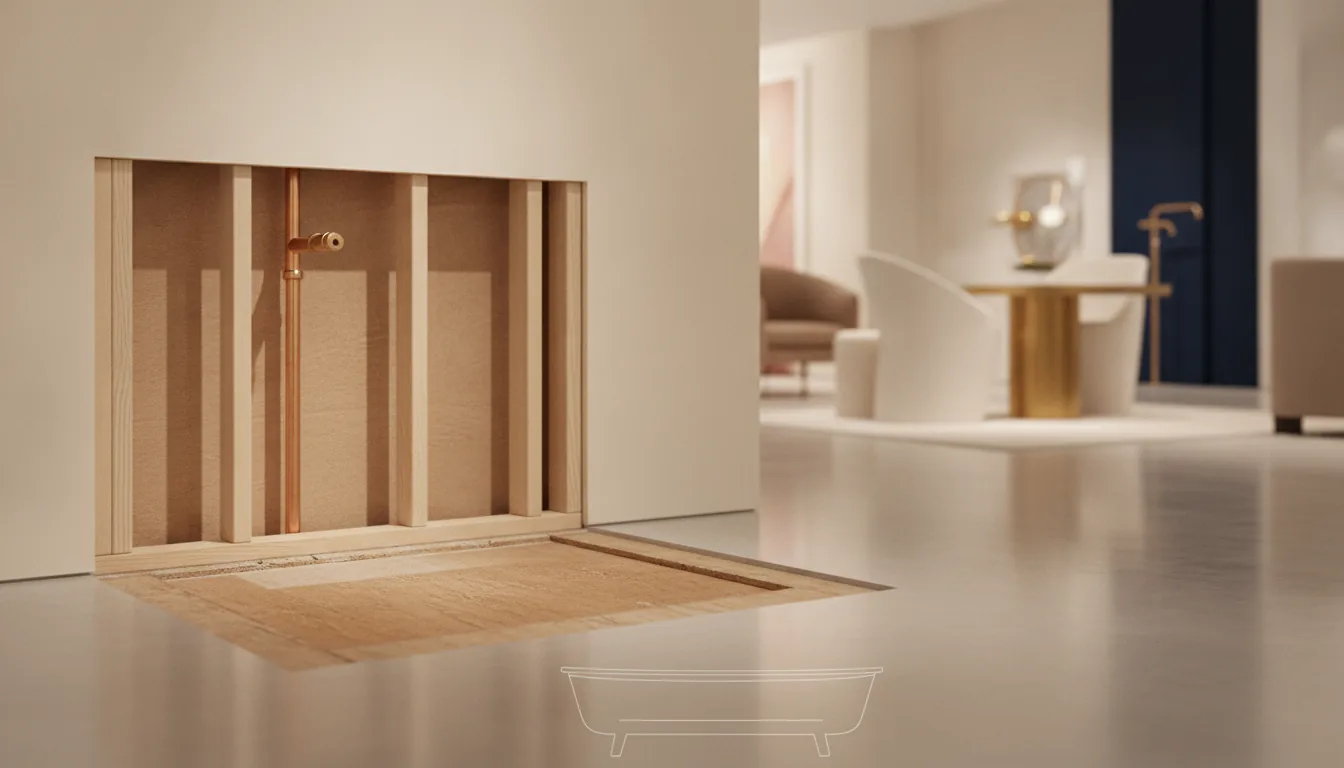
| Framing the new opening | $300 to $800 | The tub deck comes out and the opening is squared for glass |
| Wall and floor repair | $300 to $900 | Old tub flange leaves a scar in the drywall and the floor |
| Drain adjustment | $0 to $600 | A tub drain sits lower and further from the wall than a shower drain |
A cast iron tub against an exterior wall with a window above it is the expensive version of this job. The tub is heavy, the window needs a waterproof detail or removal, and the exterior wall often reveals surprises. An acrylic tub on an interior wall is the cheap version.
When the plumbing moves, and when it does not
A standard conversion keeps the valve on the same wall and reuses the existing drain line, shifting only the trap. That is a half-day of plumbing. Moving the shower to a different wall means opening the floor to re-route the drain, and on a concrete slab that means cutting and patching concrete. Budget $1,500 to $4,000 for that decision alone.
Ask your bidder directly whether the quote assumes the drain stays. A quote that is silent on it is a quote with a change order waiting inside.
When you should keep the tub
We sell showers, and we still talk people out of this job regularly.
If it is the only tub in the house, removing it narrows your buyer pool with families who need to bathe small children. In a second or third bathroom it almost never matters.
If the tub is cast iron and in good condition, a refinish costs $400 to $800 and buys ten more years. That is a tenth of a conversion.
If the bathroom is under 40 square feet, a walk-in shower can make the room feel tighter, not bigger, because the glass enclosure reads as a wall where the tub read as a low open surface.
For the full picture on what the shower itself costs once the tub is gone, see our breakdown of walk-in shower remodel cost.
Frequently asked questions
How much does it cost to convert a tub to a shower?
$6,000 to $14,000 for a tiled shower and $3,500 to $7,000 for an acrylic surround. The conversion work itself, meaning demolition, framing and wall repair, accounts for $900 to $2,000 of that.
Is it cheaper to replace a tub or convert it to a shower?
Replacing a tub with another tub is usually cheaper, often $2,500 to $6,000, because the opening, the plumbing and the surround stay the same. Converting changes the opening and the waterproofing, which is where the extra cost sits.
Does removing a bathtub hurt resale value?
Only if it leaves the house with no tub at all. Buyers with small children screen for at least one tub. If another bathroom has one, converting a secondary bathroom to a shower generally helps rather than hurts.
How long does a tub-to-shower conversion take?
Three to five days for an acrylic surround and two to three weeks for a tiled shower. The tile setting and curing schedule, not the demolition, is what sets the timeline.
Do you need a permit to convert a tub to a shower?
In most Maryland jurisdictions yes, because the work touches plumbing. If the drain and valve stay in place the review is usually straightforward. Moving either one makes the permit a bigger deal.
Not sure whether your tub should go? Send us a photo of the wall behind it, or bring your dimensions to our Derwood showroom, and we will tell you which version of this job you have. Call (301) 939-0009 or book a showroom visit.