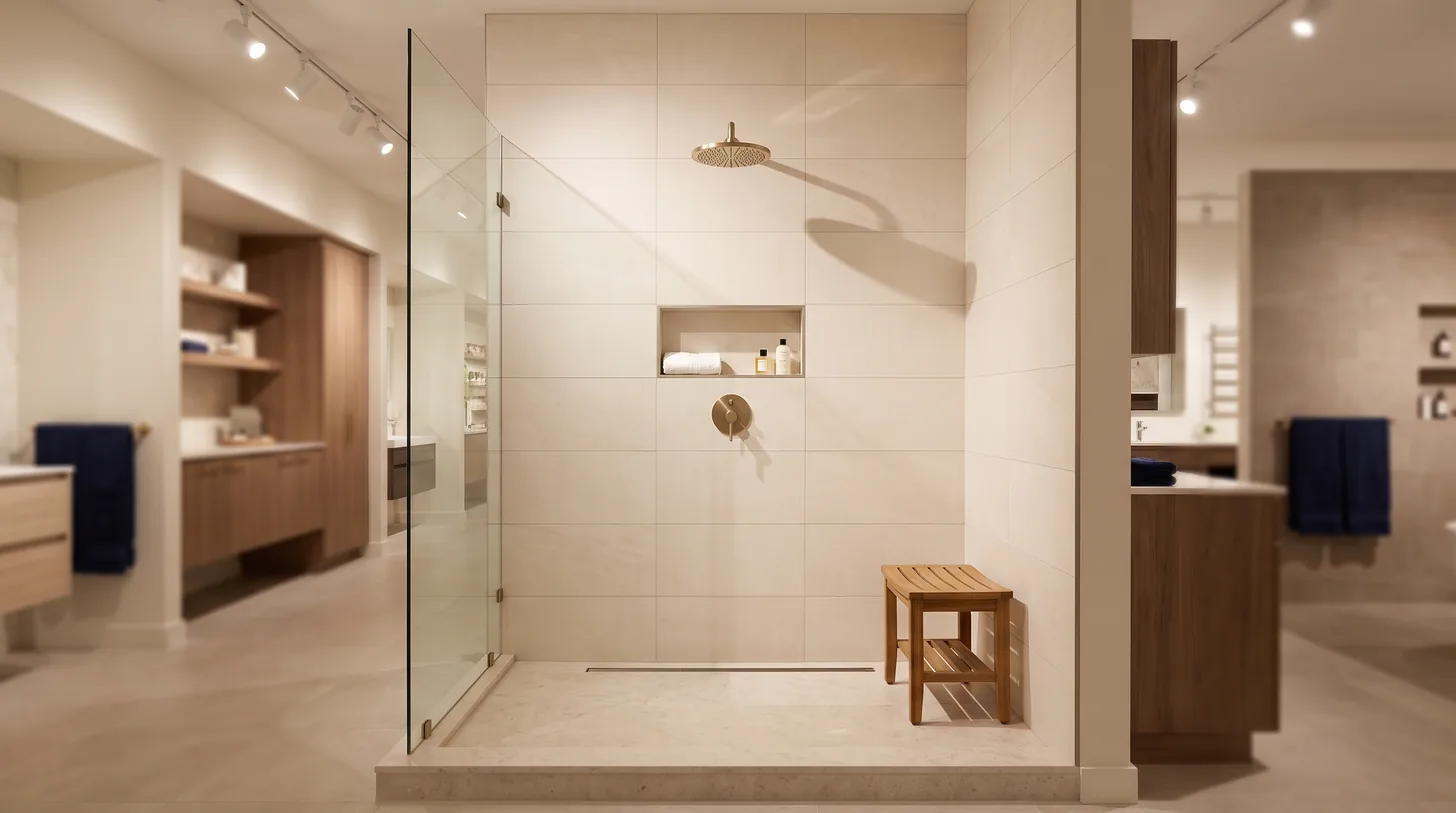
A walk-in shower remodel costs $8,000 to $15,000 for a standard tiled shower and $4,000 to $7,000 for an acrylic surround. A curbless shower with a linear drain runs $14,000 to $25,000. In every tiled version, labor is roughly 55 percent of the total and tile is about 12 percent, which is why two showers with the same tile can be quoted $6,000 apart.
Most shower cost articles are written by somebody who sells one half of the job. The tile shop quotes material and waves at installation. The contractor quotes labor and guesses at material. H&C Kitchen & Bath sits on both sides: we are a Derwood showroom that supplies tile, fixtures and glass, and our sister company H&C Construction executes the work. The split below comes from seeing both invoices on the same job.
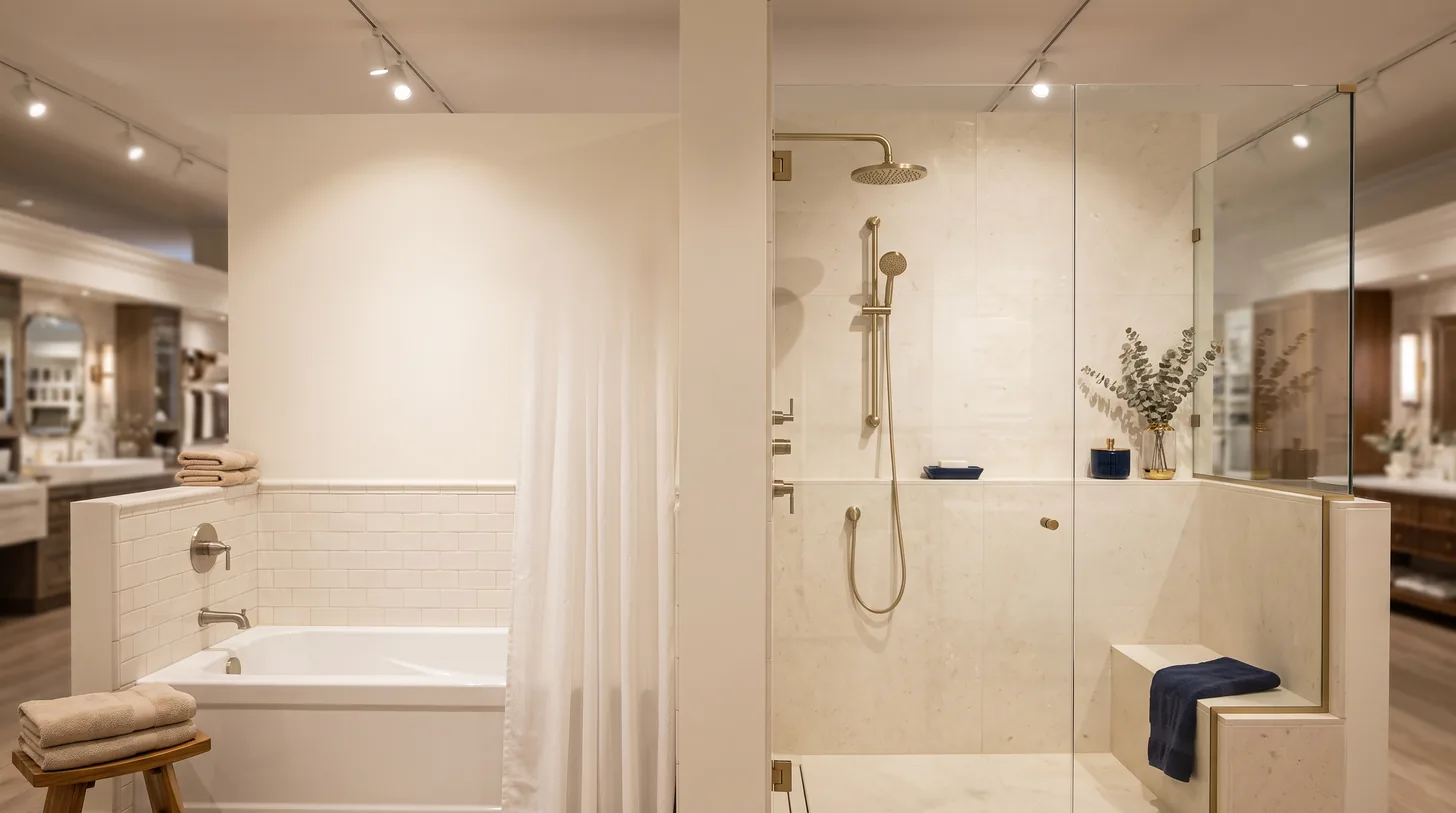
What a walk-in shower costs, by type
| Type | Range | What it is | Typical timeline |
|---|---|---|---|
| Acrylic surround | $4,000 to $7,000 | Three-piece or single-piece acrylic wall set, standard pan, framed glass | 3 to 5 days |
| Standard tiled | $8,000 to $15,000 | Tiled walls over waterproofing, preformed or mud-set pan, semi-frameless glass | 2 to 3 weeks |
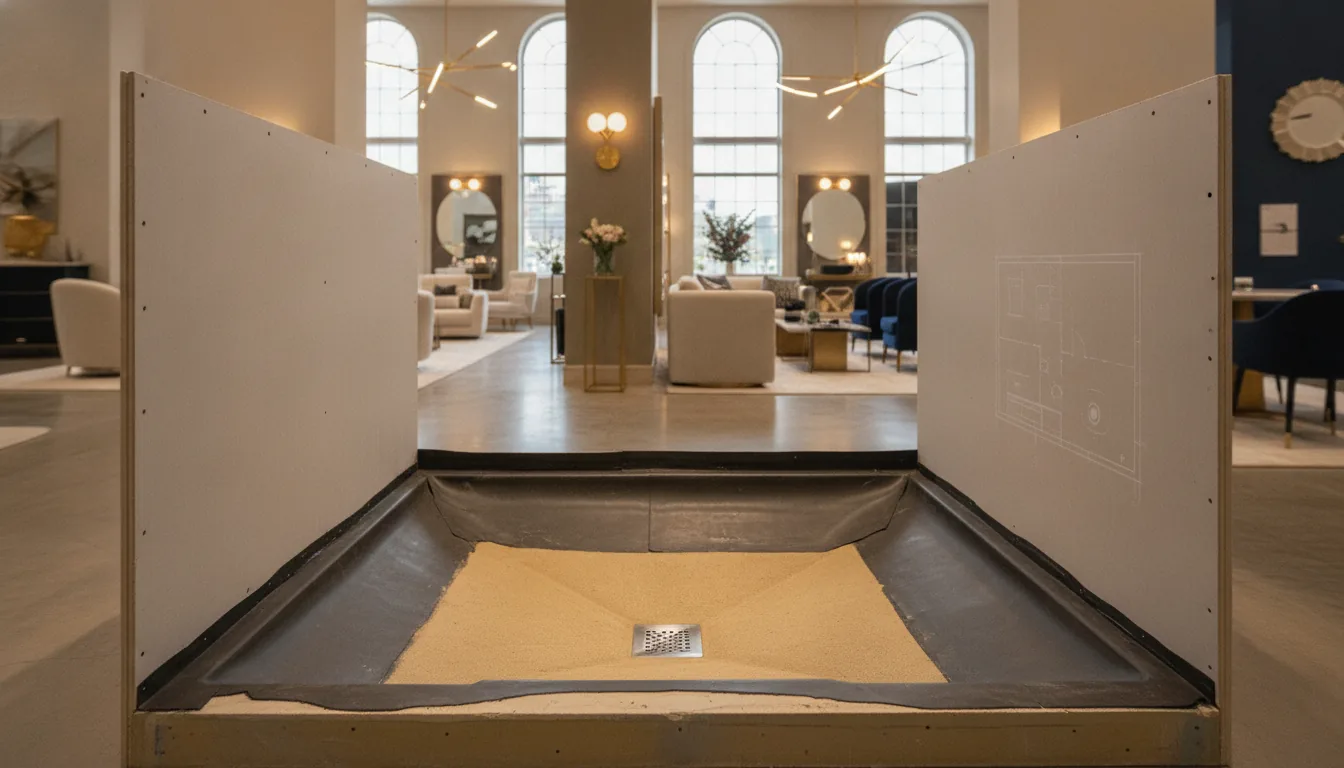
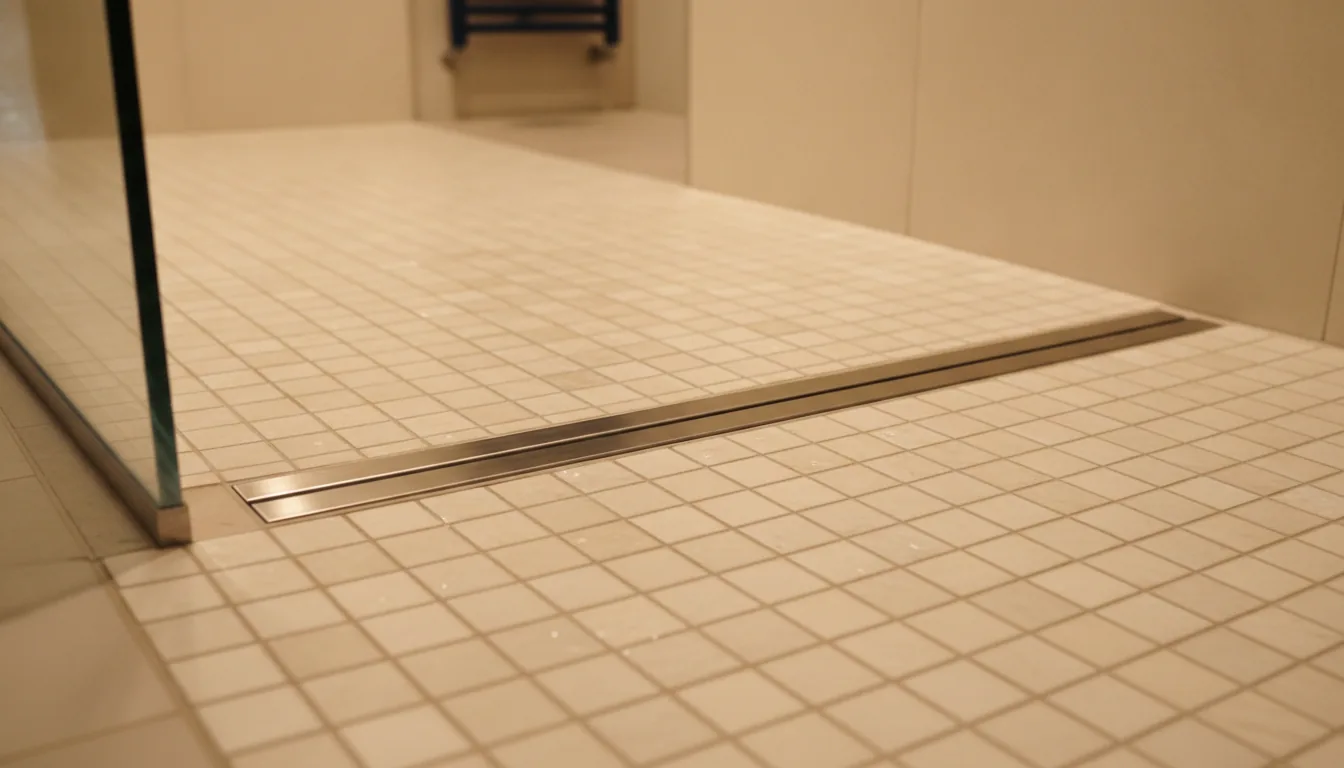
| Curbless, linear drain | $14,000 to $25,000 | Recessed subfloor, sloped mud bed, linear drain, frameless glass | 3 to 4 weeks |
| Wet room or custom stone | $25,000+ | Full enclosure waterproofed, large-format stone, body sprays, bench | 4 to 6 weeks |
In the Montgomery County, Maryland market these ranges land about 8 to 12 percent above the national mid-point, driven by labor rates and permit review time, not by material prices.
Where the money actually goes
This is the table nobody publishes, because it requires seeing both invoices. Percentages are for a standard tiled walk-in shower in the $8,000 to $15,000 band.
| Line item | Share of total | Notes |
|---|---|---|
| Labor, all trades | 55% | Demo, framing, plumbing, waterproofing, setting, grouting, glass install |
| Glass enclosure | 14% | Semi-frameless $900 to $1,800, frameless $1,800 to $3,500 |
| Tile | 12% | The line everyone shops, and the smallest one that matters |
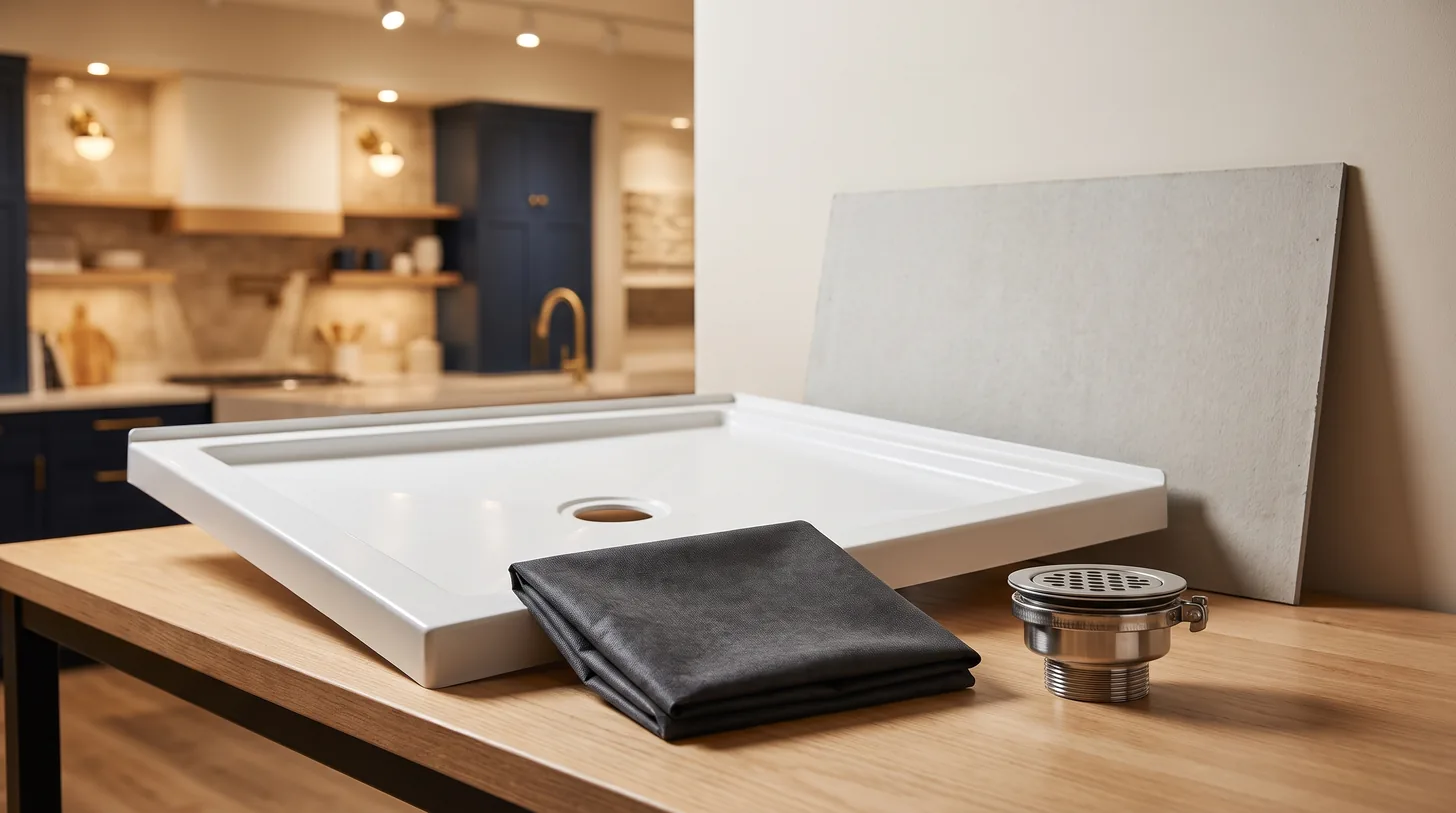
| Waterproofing and substrate | 8% | Membrane, backer board, pan assembly, corners |
| Plumbing fixtures | 7% | Valve, trim, head, diverter |
| Permits, disposal, misc | 4% | Higher where plan review is slow |
The practical consequence: upgrading your tile from $4 to $9 per square foot adds about $450 to a shower. Moving the valve wall three feet adds about $2,200. People spend weeks on the first decision and minutes on the second.
The four decisions that move the number
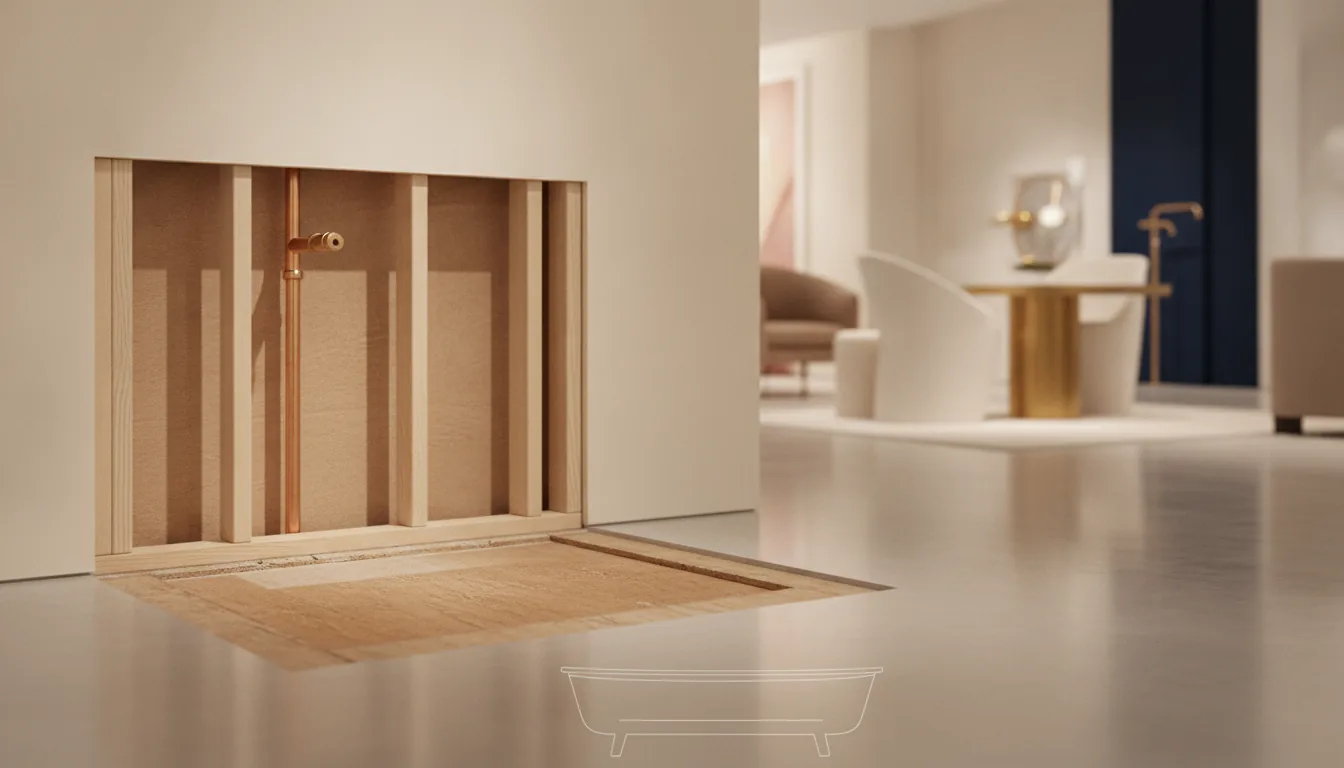
Does the drain stay where it is. A shower that reuses the existing drain location is a straightforward job. Relocating it means opening the floor, and on a slab that means cutting concrete. This single decision is worth $1,500 to $4,000.
Curb or curbless. Curbless looks simple and is not. The subfloor has to be recessed or the whole bathroom floor raised so the shower can slope to drain. Budget $3,000 to $6,000 over a curbed equivalent and expect the schedule to grow by a week.
Tile size. Large-format tile uses less grout and reads more expensive, but it needs a flatter substrate and more labor to set. Mosaic on a shower floor is the opposite: cheap material, slow to set. The install cost moves more than the tile cost does.
Glass. Semi-frameless and frameless look similar in a photo and are not similar in price. Frameless needs thicker glass, heavier hardware and a second visit to template after the tile is set.
Tub to shower, specifically
If you are converting rather than replacing, the demo and plumbing change. Removing a tub and framing the new opening runs $900 to $2,000 on top of the shower itself, and if the tub was fiberglass against a window, expect wall repair. We cover that job separately in what it costs to remove a tub and install a shower.
One thing worth knowing before you decide: in a one-bathroom house, removing the only tub can affect resale with families. In a second bathroom it almost never does.
Why quotes differ so much
Three showers with identical tile can be quoted $9,000, $12,000 and $18,000, and all three can be honest. The differences are usually waterproofing method, glass spec and whether the quote includes the trades the showroom cannot do. Ask every bidder the same three questions: what waterproofing system, what glass thickness and framing, and is plumbing rough-in included or excluded.
A quote that is 30 percent below the others is usually not a better deal. It is a different scope.
Frequently asked questions
How much does a walk-in shower cost on average?
A standard tiled walk-in shower averages $8,000 to $15,000 installed. An acrylic surround averages $4,000 to $7,000. A curbless shower with a linear drain averages $14,000 to $25,000. Labor is roughly 55 percent of a tiled job.
Is a walk-in shower cheaper than a tub?
No. A basic alcove tub with a tile surround is usually cheaper than a comparable tiled walk-in shower, because the tub replaces the pan assembly and part of the waterproofing. A walk-in shower costs more and is chosen for use, not for price.
How long does a walk-in shower remodel take?
Three to five days for an acrylic surround, two to three weeks for a standard tiled shower, and three to four weeks for curbless. Tile setting and curing, not demolition, set the schedule.
Does a walk-in shower add value to a home?
In a primary bathroom, generally yes, and it is one of the more reliable bathroom upgrades for resale. In a single-bathroom house, removing the only tub can narrow your buyer pool with young families, which offsets the gain.
What is the cheapest way to redo a shower?
Keep the drain where it is, keep the valve on the same wall, choose an acrylic surround over tile, and accept a framed or semi-frameless door. Those four choices together are the difference between roughly $4,500 and roughly $12,000.
Want a real number for your bathroom? Bring your dimensions to our Derwood showroom and we will price the same shower in acrylic, standard tile and curbless so you can see exactly what each step up buys. Call (301) 939-0009 or book a showroom visit.