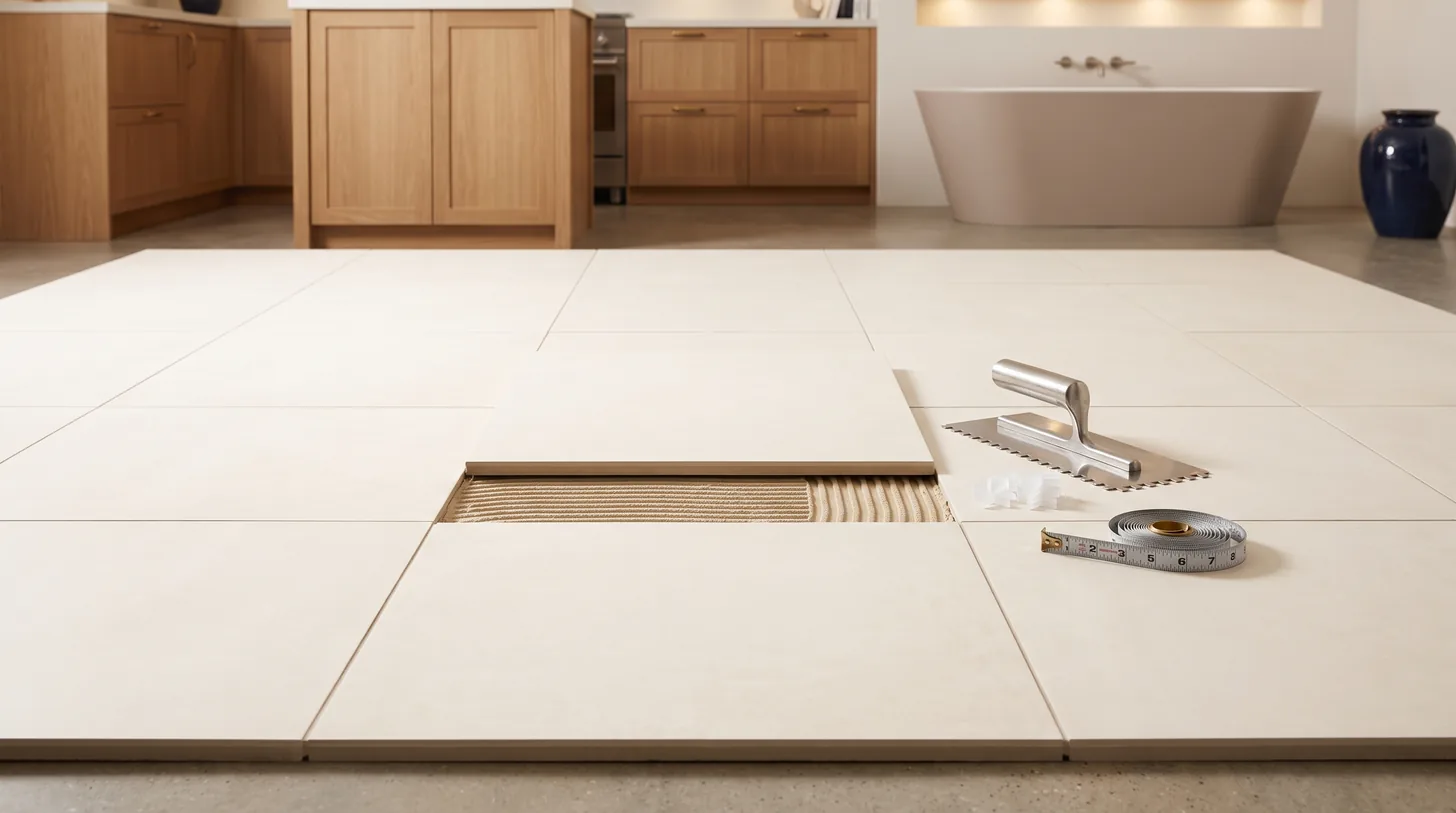
Tile floor installation costs $10 to $25 per square foot installed. Labor is $6 to $15 of that and tile is $2 to $8. Because labor is roughly 60 percent, the layout you choose moves the total more than the tile you choose: a diagonal or herringbone pattern adds 15 to 30 percent to the labor on the same tile.
The breakdown
| Line item | Per sq ft | Notes |
|---|---|---|
| Tile | $2 to $8 | Porcelain, ceramic or stone-look |
| Thin-set, grout, sealer | $0.75 to $2.00 | Large-format needs a medium-bed mortar |
| Backer board or uncoupling membrane | $1.50 to $3.50 | Not optional over wood subfloors |
| Demolition and disposal | $1.50 to $4.00 | Mortared tile is the expensive removal |
| Installation labor | $6 to $15 | Driven by tile size and pattern |
| Transitions and trim | $100 to $400 per room | Per doorway |
In Montgomery County, labor sits in the upper half of that band. Material does not vary much by region.
What actually moves the labor
Pattern. A straight grid is the baseline. Offset or brick-set adds a little. Diagonal adds 15 to 20 percent. Herringbone or basketweave adds 25 to 30 percent, because every tile is cut and every cut is a chance to be wrong.
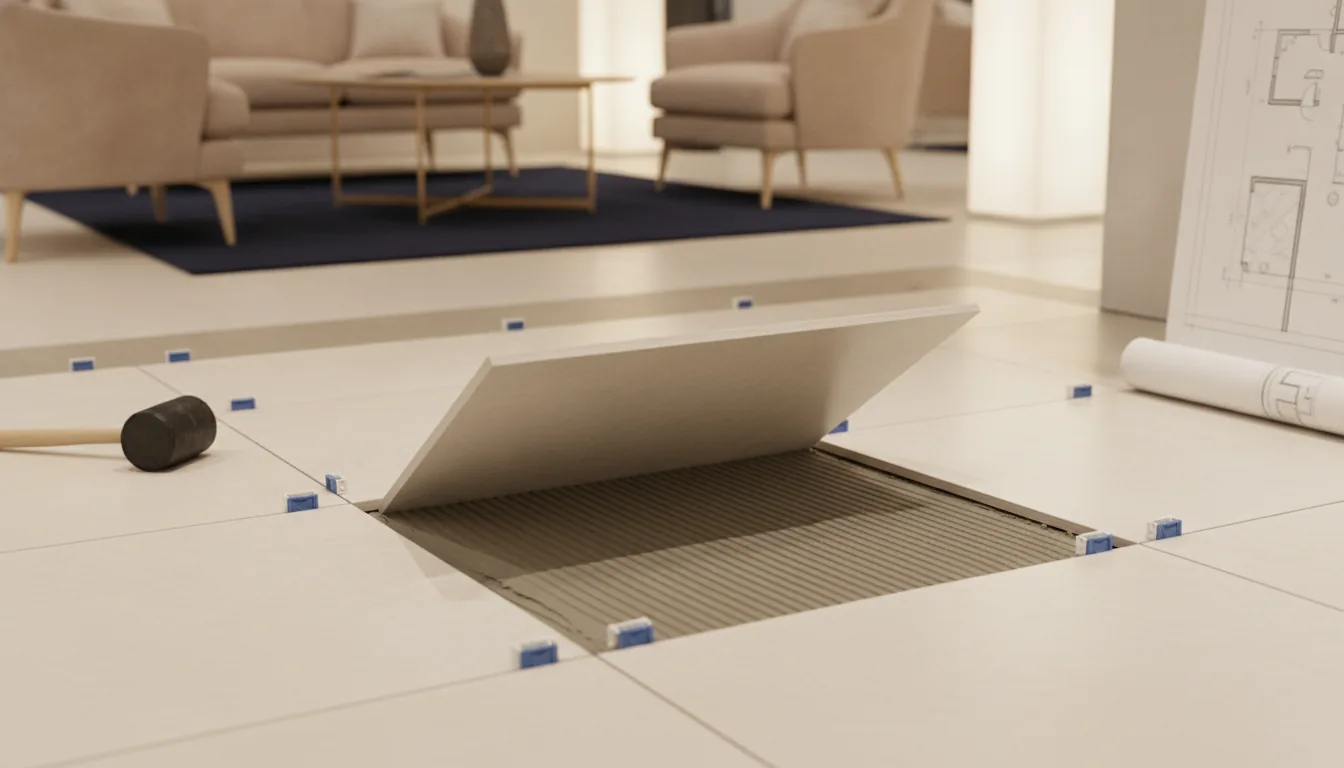
Tile size. Very large tiles need a flatter substrate and often a levelling clip system, which adds labor even though it uses less grout. Very small mosaic uses far more labor per square foot for the opposite reason. The cheapest tile to install sits in the middle, around 12 by 24 inches.
Room shape. A square room with four straight walls is the baseline. Every jog, closet, threshold and toe kick is a set of cuts.
What is underneath. Over a concrete slab you tile directly after prep. Over a wood subfloor you need backer board or an uncoupling membrane, and if the floor deflects you need to address that first or the grout will crack.
Where people overspend and underspend
People overspend on tile and underspend on the substrate. A $9 per square foot tile on a deflecting floor will crack. A $3 tile over a properly prepared floor with an uncoupling membrane will outlast the kitchen it is in.
For the bathroom equivalent see bathroom tile installation and replacement cost, and for the vinyl alternative, vinyl tile installation labor cost.
Frequently asked questions
How much does it cost to install tile floor per square foot?
$10 to $25 per square foot installed. Labor is $6 to $15 of that and the tile itself is usually $2 to $8.
Why is tile labor so expensive?
It is skilled, slow work: substrate preparation, layout, cutting, setting, then grouting as a separate visit. Labor is about 60 percent of the installed price, and pattern and tile size change it substantially.
Does a diagonal tile pattern cost more?
Yes, 15 to 20 percent more labor than a straight grid, and herringbone adds 25 to 30 percent. The tile cost is the same; the cutting and waste are not.
Is large-format tile cheaper to install?
Not necessarily. It uses less grout and covers faster, but it demands a flatter substrate and usually a levelling clip system, which adds back much of the saving.
Do you need backer board under floor tile?
Over a wood subfloor, yes, backer board or an uncoupling membrane. Over a sound concrete slab, no. Skipping it over wood is the most common cause of cracked grout lines.
Want the layout priced before you pick the tile? Bring your room dimensions to our Derwood showroom and we will price the same tile in three patterns. Call (301) 939-0009 or book a showroom visit.