
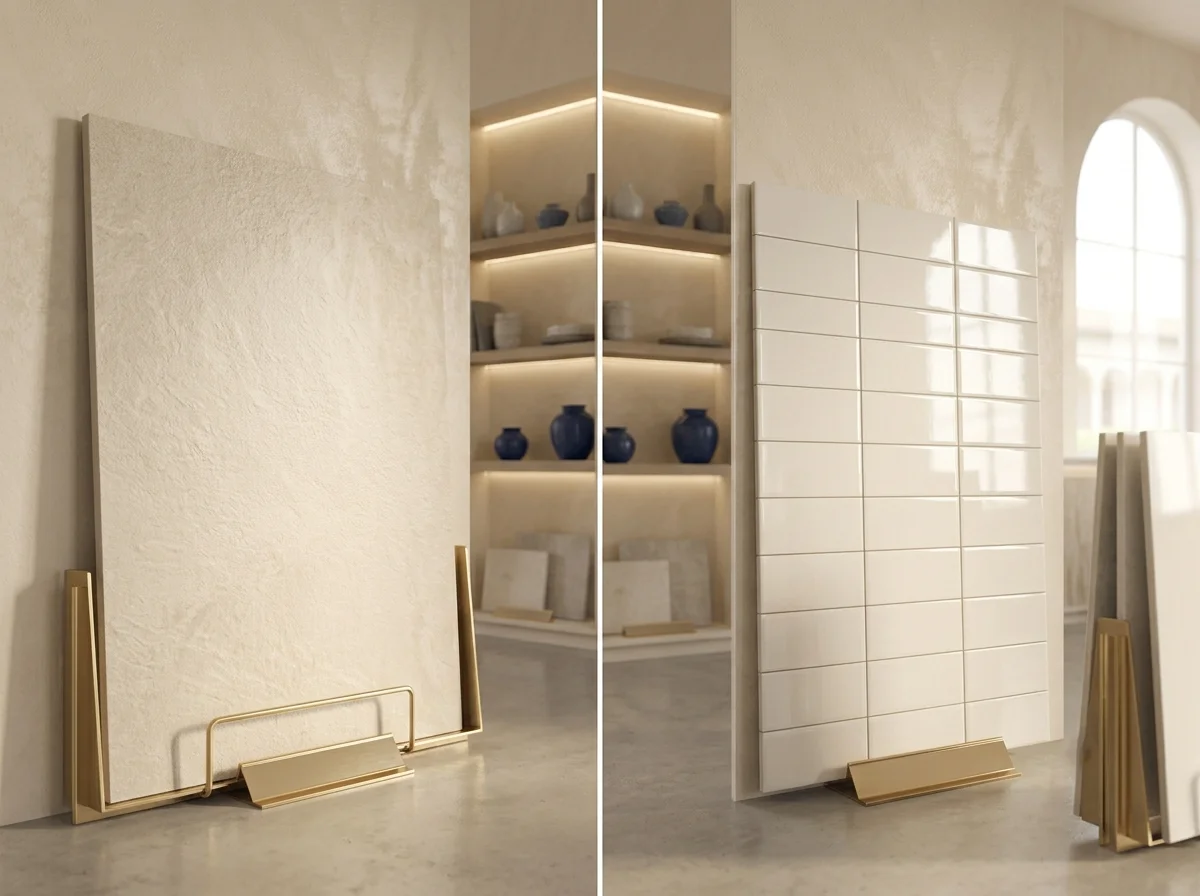
Porcelain and ceramic look similar on a wall and behave very differently under your feet. Both are clay-based tiles fired at high temperature, but porcelain is denser, harder, and less porous, which changes where each belongs in your home. Here is the honest guide.
The core difference
Ceramic tile is made from clay that is fired once and then glazed; it is more porous and slightly softer. Porcelain tile is made from a denser clay fired at higher temperatures, which makes it harder, heavier, and far more water-resistant. The practical result: porcelain belongs on floors and in wet areas; ceramic is ideal for walls and backsplashes where water and traffic are lighter.
Durability and water resistance
- Porcelain, very high density; resists water, stains, and heavy foot traffic; the standard for bathroom floors, showers, entries, and kitchens
- Ceramic, good durability for walls and moderate traffic, but its porosity makes it a poor choice for floors in wet zones
For a bathroom floor or shower surround, choose porcelain without hesitation. For a kitchen backsplash or a feature wall, ceramic delivers beautiful results at a lower price.
Slip resistance: a detail that matters
In bathrooms, check the tile’s coefficient of friction (COF) rating. Glossy tiles can be dangerously slippery when wet. For bathroom floors, look for matte or textured finishes and tiles rated for floor use. This is one of those details people learn after the install, we help you check it before you order.
Appearance and style
Both materials come in endless colors, sizes, and finishes: large-format porcelain slabs that minimize grout lines, classic subway ceramic, wood-look planks, and stone-look mosaics. Porcelain now convincingly mimics wood and marble, which makes it a favorite for bathrooms and wet areas that want a warm or luxe look without the upkeep.
Cost
Ceramic is generally the more budget-friendly option. Porcelain costs more per square foot, but its durability in wet, high-traffic areas usually wins on value over time, you do not want to replace a bathroom floor in five years. Compare installed prices, since layout and grout affect the total more than the tile itself.
Which should you choose?
- Choose porcelain for bathroom floors, showers, kitchen floors, entries, and any wet area
- Choose ceramic for backsplashes, feature walls, and dry-wall applications where budget matters
- Match the tile size to the room: large-format makes small spaces feel bigger
Compare tile in person at the showroom
At H&C Kitchen & Bath in Derwood, MD, you can view porcelain and ceramic options side by side, compare finishes, and check slip resistance and grout colors with a specialist. We serve Rockville, Bethesda, Gaithersburg, Silver Spring, Potomac, and the D.C. metro for homeowners and trade.
Picking tile? Compare porcelain and ceramic in person. Book your visit or call (301) 939-0009.
Keep learning: