Quartz Countertop Thickness: 2 cm vs 3 cm
Quartz countertops come in 2 cm, about 3/4 inch, and 3 cm, about 1¼ inches. How each thickness is installed, what it costs and when the thinner slab makes sense.
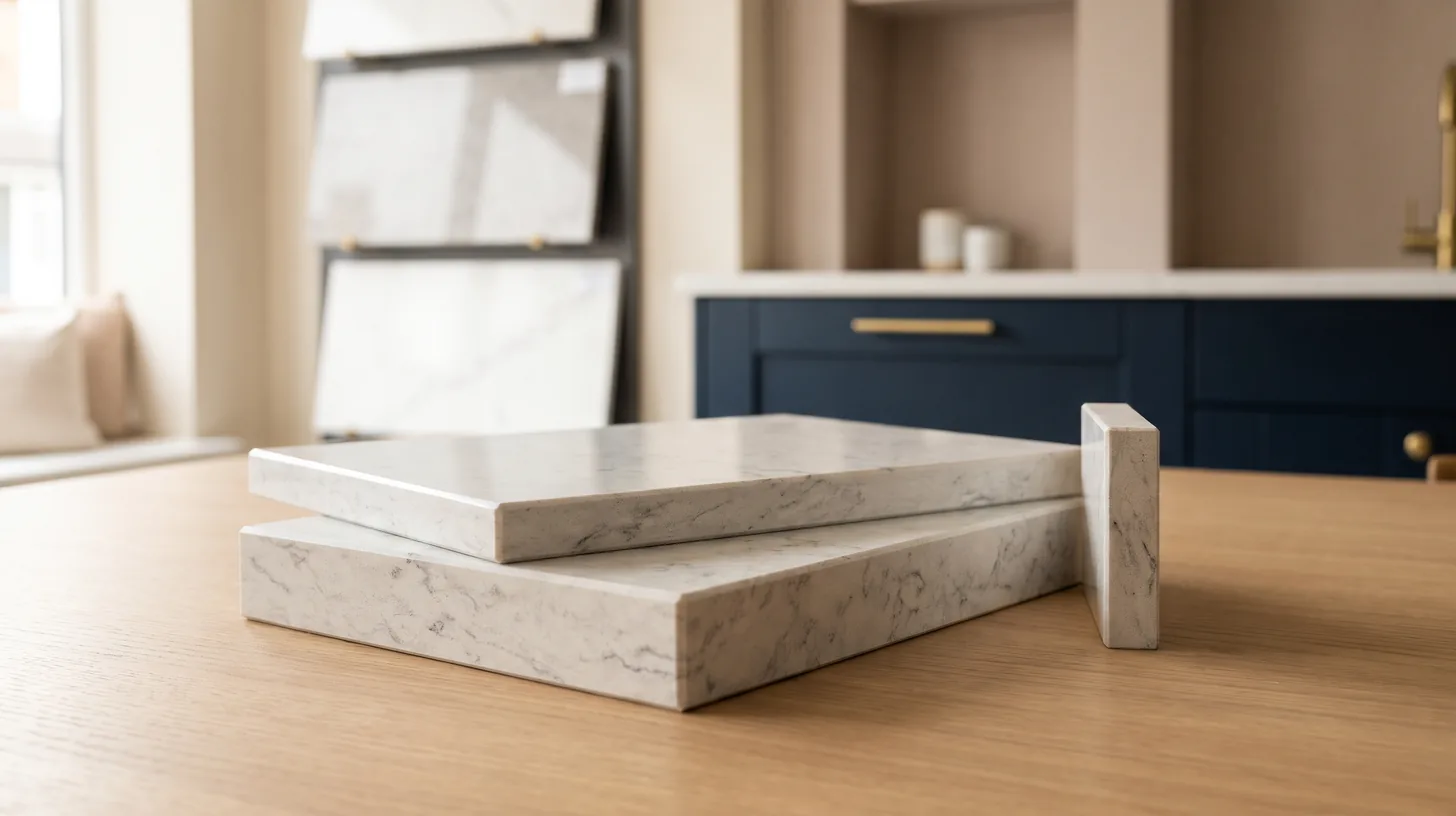
Quartz countertops come in two thicknesses: 2 cm, about 3/4 inch, and 3 cm, about 1¼ inches. In most Mid-Atlantic kitchens 3 cm is the default because it sits directly on the cabinets and spans longer overhangs. For the same color, 3 cm runs 10 to 20 percent more, but 2 cm needs a plywood sub-top or a built-up edge that narrows the saving.
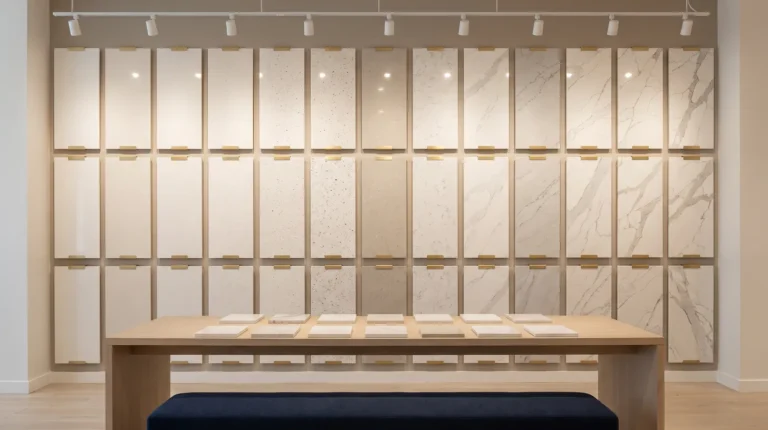
Thickness is hard to judge from a 4 inch sample and obvious on a finished island. It changes the countertop height, the edges you can have, how far the stone can overhang and how the sink is hung. H&C Kitchen & Bath is a Derwood showroom with quartz samples in both thicknesses side by side, and our sister company H&C Construction installs both, so we see where each one works and where it causes trouble.
2 cm vs 3 cm at a glance
| Feature | 2 cm | 3 cm |
|---|---|---|
| Actual thickness | 0.79 inch, about 3/4 inch | 1.18 inches, about 1¼ inches |
| Weight | Lighter | About 50 percent heavier |
| On the cabinets | Usually over a 3/4 inch plywood sub-top | Directly on the cabinets |
| Unsupported overhang | Up to about 6 inches | Up to about 10 inches |
| Typical edge | Laminated or mitered to look thicker | Eased, beveled or bullnose, cut from the slab |
| Cost, same color | Base price | 10 to 20 percent more |
| Common uses | Vanities, backsplashes, wall cladding | Kitchen countertops and islands |
Some brands also make a 1.2 cm slab, about 1/2 inch, for full-height backsplashes, shower walls and cladding, where low weight matters more than stiffness. It is not meant to be used as a kitchen countertop, and our backsplash installation cost guide shows what a slab backsplash costs against tile.
Why 3 cm is the standard in most kitchens
The reason starts with the cabinets. Standard base cabinets are 34.5 inches tall, built on the assumption that about 1.5 inches of countertop will bring the work surface to 36 inches. A 3 cm slab gets you to about 35¾ inches with nothing in between. A 2 cm slab leaves you near 35¼, so fabricators add a 3/4 inch plywood sub-top to bring it up and to give the sink and the dishwasher brackets something to fasten to.
Beyond height, 3 cm is simply stiffer. It spans longer overhangs, survives the trip from the shop with a sink cutout in it, and lets the fabricator cut an eased, beveled or bullnose edge straight from the slab. That is why 3 cm has long been the norm on the East Coast, while 2 cm with a built-up edge has been more common in parts of the West.
Making 2 cm look and work like 3 cm
A 2 cm countertop on its own reads thin on a kitchen cabinet, so fabricators thicken the visible edge in one of two ways.
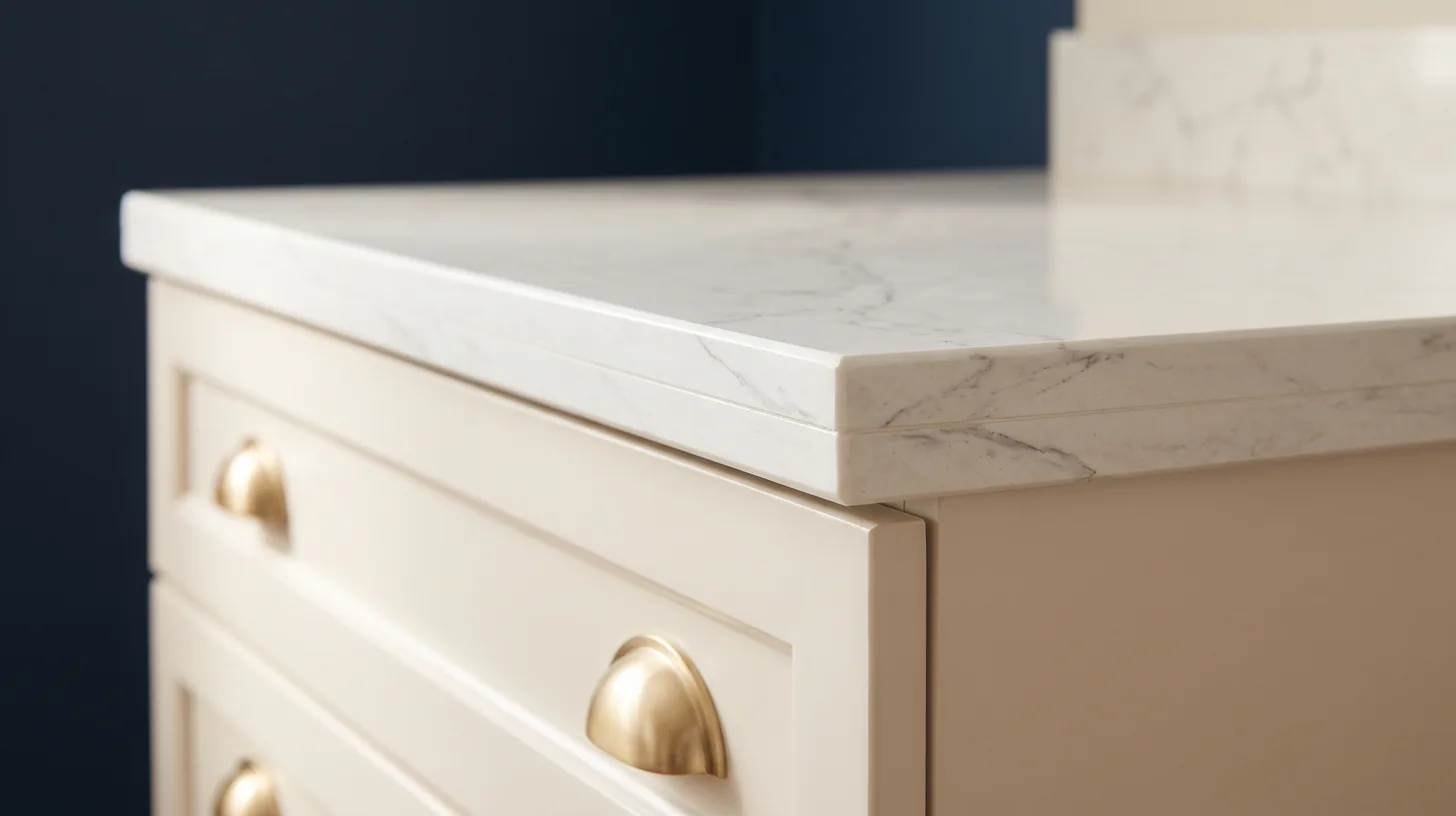
Laminated, or built-up, edge. A strip of the same 2 cm material is bonded under the front edge, so the edge reads about 1½ inches thick. On solid colors the joint is nearly invisible. On veined patterns there is a fine line where the veining stops and restarts, which some people never notice and others cannot stop seeing. Expect $15 to $35 per linear foot.
Mitered edge. The edge strip is joined at 45 degrees, so the pattern wraps continuously around the corner. It is the cleanest look and the one used on waterfall islands, and it costs more, often $25 to $60 per linear foot. Our edge profiles guide covers which profiles suit each style of kitchen.
What thickness does to the price
On paper, 2 cm is cheaper. In a kitchen, the saving often disappears once the sub-top and the edge are added. Here is a 45 square foot kitchen in a mid-range quartz with about 20 linear feet of exposed edge.
| Line item | 3 cm | 2 cm with built-up edge |
|---|---|---|
| Slab, fabrication and install, 45 sq ft | $4,275 | $3,600 |
| Plywood sub-top | Not needed | $200 to $500 |
| Laminated front edge, 20 linear ft | Not needed | $300 to $700 |
| Total | $4,275 | $4,100 to $4,800 |
Where 2 cm does win on price is where neither extra is needed: bathroom vanities with short spans, backsplashes, and modern designs where a thin, crisp profile is the look you want. For the price of each quartz tier at the standard 3 cm, see our quartz countertops cost guide.
Strength, overhangs and sinks
Both thicknesses are strong once fully supported, and quartz does not crack under normal use on a flat, level cabinet. Problems start where the stone is unsupported. 3 cm quartz can overhang about 10 inches without brackets and 2 cm about 6, which is why a seating island in 2 cm almost always needs steel. Our countertop overhang guide gives the full set of dimensions.
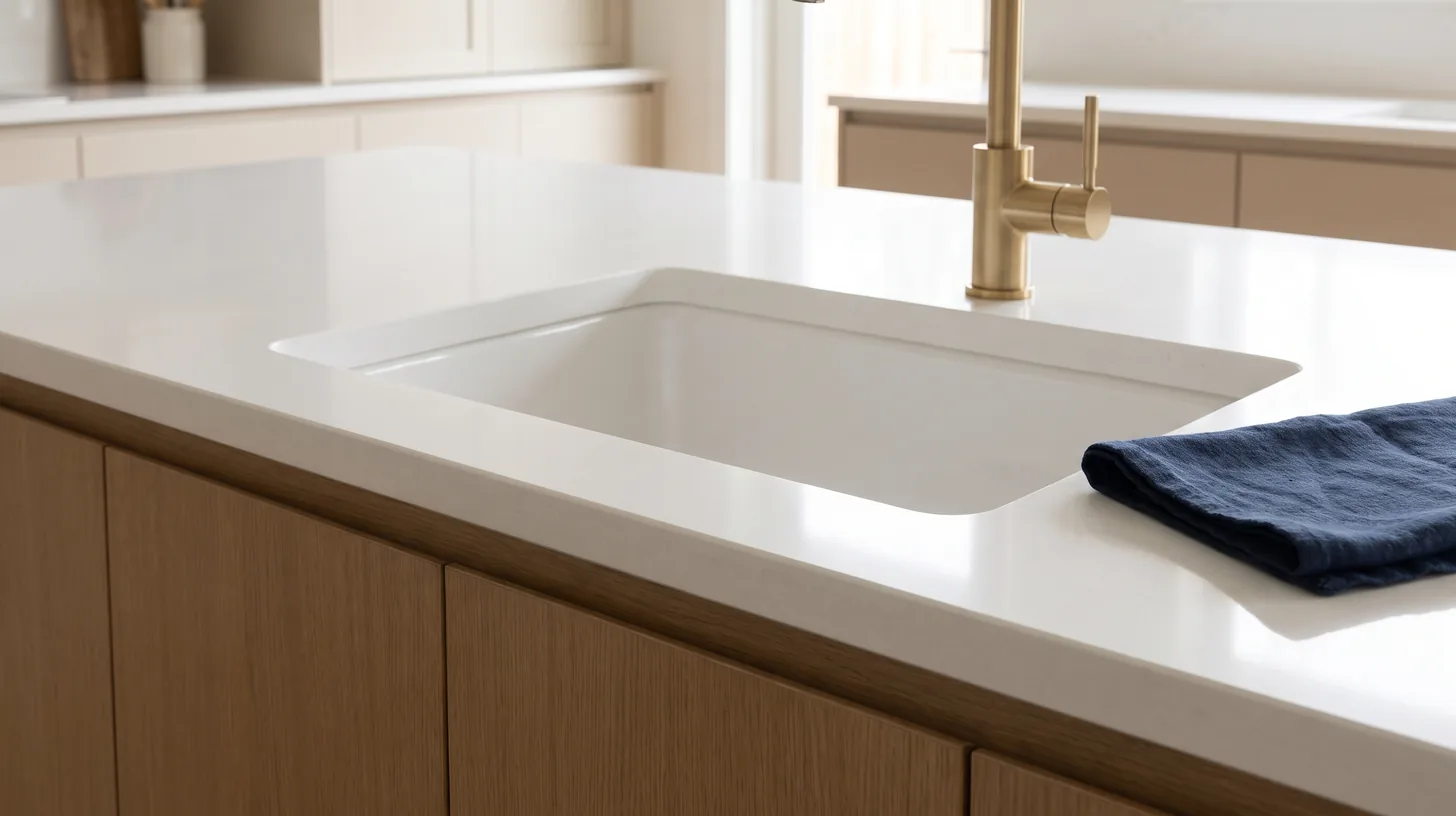
Sinks follow the same logic. An undermount sink hangs from the underside of a 3 cm top on clips and adhesive, and the polished edge of the cutout becomes part of the look. On 2 cm, the sub-top carries most of the sink’s weight. The narrow strips in front of and behind a sink or cooktop cutout are the most fragile part of any countertop, and they are noticeably more fragile in 2 cm, especially during transport.
The Maryland factor
Many fabricators in the DC metro stock 3 cm in nearly every color and 2 cm in fewer, so choosing 2 cm can narrow your color choice or add lead time. Labor here runs 15 to 25 percent above national averages, which makes the extra sub-top and edge work on a 2 cm job cost a little more than national figures suggest.
Frequently asked questions
How thick are quartz countertops?
Standard quartz countertops are 2 cm, about 3/4 inch, or 3 cm, about 1¼ inches thick. Kitchens in the Mid-Atlantic use 3 cm by default. Some brands also make a 1.2 cm slab for backsplashes and walls.
Is 2 cm quartz strong enough for a kitchen?
Yes, when it is installed over a plywood sub-top and its overhangs stay within about 6 inches or are supported. It is more vulnerable during fabrication and transport, and around sink and cooktop cutouts.
Does 3 cm quartz need a plywood base?
No. A 3 cm slab sits directly on standard base cabinets and brings the counter to about 36 inches. A 2 cm slab usually needs a 3/4 inch plywood sub-top to reach the same height and to support the sink.
How much more does 3 cm quartz cost than 2 cm?
For the same color, 3 cm usually runs 10 to 20 percent more installed. Once a 2 cm job adds a sub-top and a laminated edge, the two totals often end up within a few hundred dollars of each other.
What thickness is best for a bathroom vanity?
Either works. 2 cm is common on vanities because spans are short and overhangs are small, and it keeps the top light. Choose 3 cm if you want the vanity to match a thicker kitchen edge elsewhere in the house.
Not sure which thickness you want? Our Derwood showroom has quartz in both thicknesses side by side, edges included, so you can see and feel the difference and price your kitchen both ways. Call (301) 939-0009 or book a showroom visit.
See the slabs in person at our showroom
Book a free showroom visit and compare your options in person under real lighting.
Book Showroom Visit →