What Is Dekton? Pros, Cons and Price vs Quartz
Dekton is an ultra-compact surface by Cosentino that shrugs off heat, sunlight and scratches. Its real pros and cons, and what it costs installed against quartz.

Dekton is an ultra-compact surface made by Cosentino, the Spanish company behind Silestone. It is a blend of the minerals used in porcelain, glass and quartz, pressed and fired at extreme heat into a dense, non-porous slab. It never needs sealing and handles heat, sunlight and scratches better than quartz. Installed, it costs about $90 to $190 per square foot.
Dekton is often sold as indestructible, and that is the wrong way to think about it. It is extremely hard, which is its great strength and also the source of its main weakness. H&C Kitchen & Bath carries Dekton at our Derwood showroom alongside quartz and natural stone, and our sister company H&C Construction installs it, so this is the same explanation we give homeowners standing in front of the slabs.
What Dekton is made of
Quartz countertops are mostly crushed quartz held together with resin. Dekton contains no resin at all. Cosentino describes it as a blend of the raw materials used to make glass, porcelain and quartz surfaces, compacted in a very high pressure press and fired at more than 2,000 degrees Fahrenheit, a process it calls sinterized particle technology. The result is closer to an extremely dense porcelain than to engineered quartz, which is why it belongs to its own category: ultra-compact, or sintered, surfaces.
A few practical facts:
- Thickness. Kitchen countertops are most often 2 cm, or 1.2 cm with a mitered edge that makes it read thicker. A 3 cm version exists, and thinner formats are used for walls and furniture.
- Slab size. Cosentino lists its standard slab at roughly 126 by 56 inches, large enough for most islands without a seam.
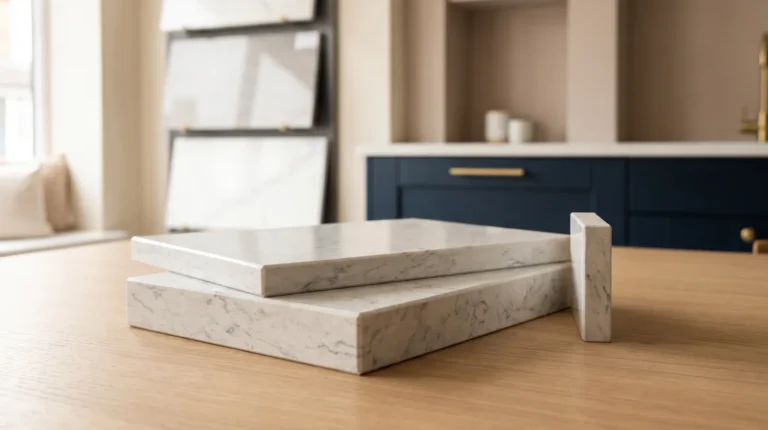
- Pattern. In many colors the design is strongest on the top surface, so a cut edge or a chip can look plainer than the face. Ask to see a finished edge in the color you like.
Dekton pros
The case for Dekton comes down to the things quartz cannot do.
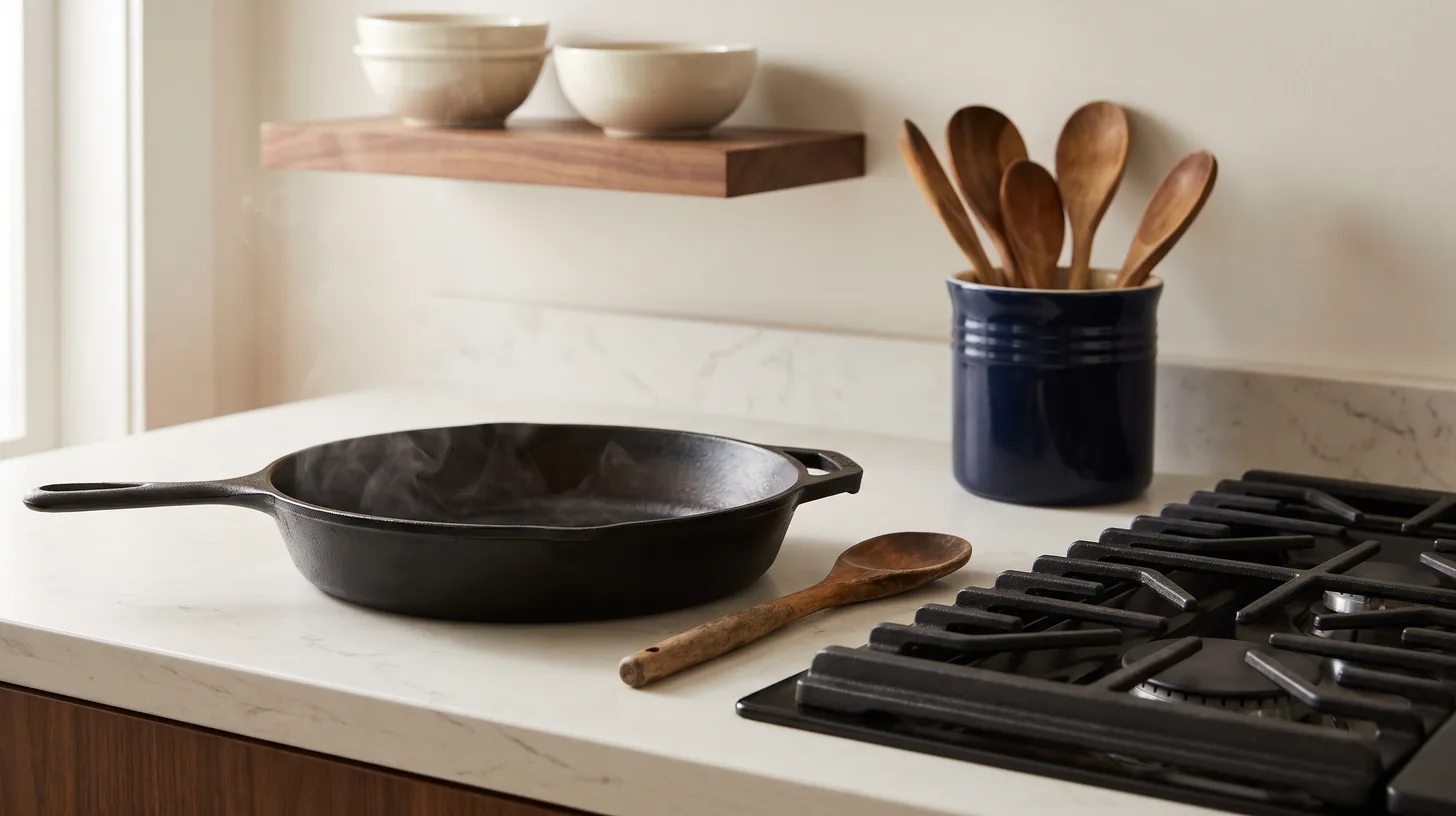
Heat. With no resin to scorch, Dekton tolerates hot pans far better than quartz. A trivet is still good practice, mainly to avoid thermal shock near edges and seams.
Sunlight and weather. Cosentino rates Dekton for UV exposure and for freeze and thaw cycles, so it works in outdoor kitchens and in rooms with strong sun, where some quartz colors can discolor over time.
Scratches and stains. Everyday utensils rarely mark it, although high-gloss finishes show wear more easily, and it is nearly non-porous. Wine, coffee and oil wipe off, and it never needs sealing.
Large, thin formats. The same material comes in big, light slabs for full-height backsplashes, fireplace surrounds and wall cladding, so one surface can run through the whole room.
Dekton cons
Hardness comes with brittleness, and the drawbacks are real enough that Dekton is not the right surface for every kitchen.
Edges can chip. A heavy pot knocked against an edge can take out a chip, and repairs with color-matched resin are visible up close. Eased and mitered edges hold up best, and ornate profiles such as ogee are rarely offered.
Patterns at the edge. Because many colors carry their design on the surface, edges are often mitered so the face pattern wraps over the corner, which adds fabrication cost.
Fabrication skill. Dekton needs specific tooling and experience. Cutouts need rounded inside corners, and a poorly handled slab can fail during fabrication or installation. Ask how many Dekton jobs the shop has completed.
It dulls knives. Cutting directly on it wears blades down quickly. Use a board.
Thin material needs support. A 2 cm top has the overhang limits of any thin stone, and ultra-compact surfaces follow the manufacturer’s own support rules. Our overhang guide covers the general limits.
Dekton price vs quartz
Dekton sits at the top of the countertop range, next to quartzite. For a comparable look, it usually runs $20 to $40 per square foot more than quartz installed.
| Surface | Installed, per sq ft | 45 sq ft kitchen | Sealing | Hot pans |
|---|---|---|---|---|
| Quartz, entry to mid-range | $60 to $110 | $2,700 to $4,950 | Never | Trivet always |
| Quartz, designer | $100 to $150 | $4,500 to $6,750 | Never | Trivet always |
| Dekton, solid and subtle colors | $90 to $130 | $4,050 to $5,850 | Never | High tolerance |
| Dekton, veined and marble looks | $130 to $190 | $5,850 to $8,550 | Never | High tolerance |
| Quartzite | $80 to $180 | $3,600 to $8,100 | Yes | High tolerance |
Three things push a Dekton quote up: the color group, mitered edges, which are common because the slabs are thin, and fabrication time. The full quartz tiers are in our quartz countertops cost guide, and how thickness changes edges and price is covered in our quartz countertop thickness guide.
Where Dekton makes sense
Dekton earns its premium where heat, sun or weather would punish quartz.

- Outdoor kitchens and covered porches
- Counters beside the range, in kitchens where pans come straight off the burner
- Rooms with large south-facing windows
- Full-height backsplashes, fireplace surrounds and wall cladding that match the countertop
Quartz remains the better buy for most indoor kitchens with ordinary cooking habits, for families who want a forgiving edge, and for anyone set on a thick bullnose or ogee profile. You can see the colors we carry on our Dekton countertops page.
The Maryland factor
Maryland winters make the freeze and thaw rating matter for outdoor kitchens, and that is where Dekton most clearly beats quartz, which is not meant for outdoor use. Indoors, fabrication labor in the DC metro runs 15 to 25 percent above national averages, and fewer shops are set up for ultra-compact material, so lead times can run longer than for quartz.
Frequently asked questions
What is Dekton made of?
Cosentino describes Dekton as a blend of the raw materials used in glass, porcelain and quartz surfaces, compacted under very high pressure and fired at more than 2,000 degrees Fahrenheit. It contains no resin, which is why it handles heat and sunlight better than quartz.
Is Dekton better than quartz?
It is better against heat, UV light and scratches, and it can go outdoors. Quartz is more forgiving at the edges, offers more edge profiles and costs less. For most indoor kitchens quartz is the better value, while Dekton earns its price next to heat, sun or weather.
How much do Dekton countertops cost?
Installed, Dekton costs about $90 to $190 per square foot, or roughly $4,050 to $8,550 for a 45 square foot kitchen. Solid colors sit at the lower end and veined, marble-look colors at the top.
Does Dekton chip?
It can. Dekton is very hard but brittle, so a sharp knock on an edge can chip it, and repairs are visible up close. Eased or mitered edges and experienced fabrication reduce the risk.
Can Dekton be used outdoors?
Yes. Cosentino rates it for UV exposure and freeze and thaw cycles, which makes it one of the few countertop surfaces suited to outdoor kitchens in Maryland. Quartz is not recommended outdoors.
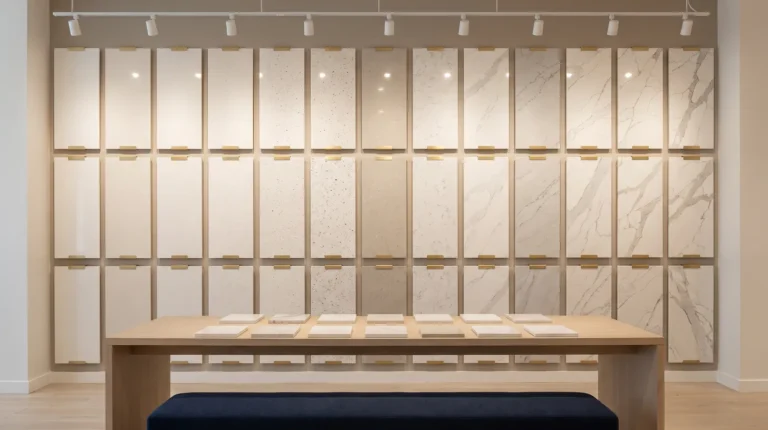
Curious how Dekton compares in person? See Dekton and quartz side by side at our Derwood showroom, edges included, and we will price your layout in both so you can decide whether the heat and UV resistance are worth it in your kitchen. Call (301) 939-0009 or book a showroom visit.
See the slabs in person at our showroom
Book a free showroom visit and compare your options in person under real lighting.
Book Showroom Visit →