Frameless vs Framed Cabinets: Which Is Better?
Frameless cabinets give easier access and wider drawers; framed cabinets are more forgiving and suit inset and traditional doors. How each is built and when it wins.
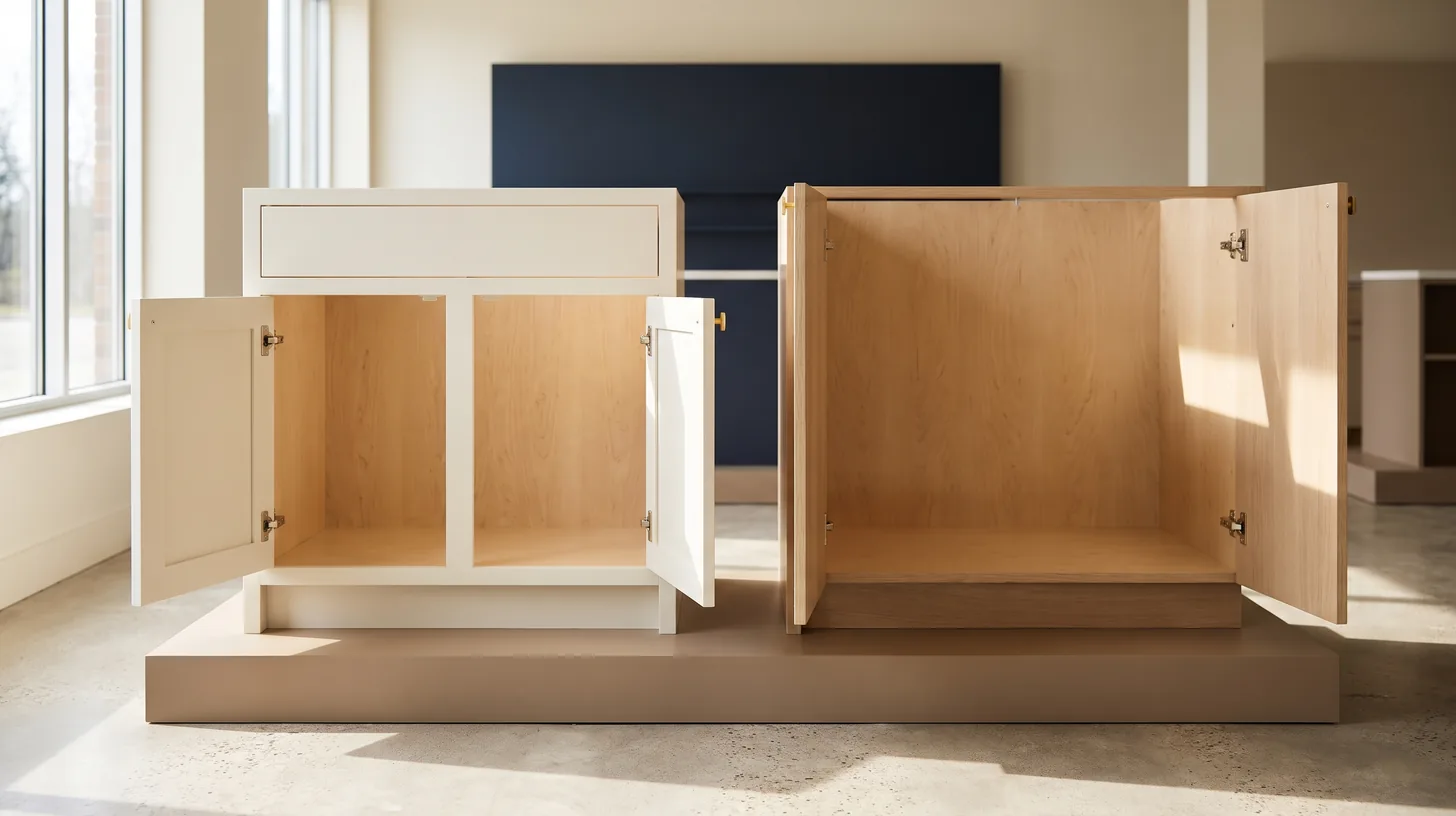
Framed cabinets have a solid wood face frame on the front of the box; frameless cabinets do not, so the doors hinge straight onto the box sides. Frameless gives easier access and 1 to 2 inches more drawer width per cabinet. Framed is more forgiving to install, allows inset doors and is the American standard. Neither is better built by default.
The difference rarely appears on a quote, yet it shapes how the kitchen looks, how much fits inside it and how much work the installation takes. Framed construction is the norm in American cabinetry and frameless is the European tradition. We sell cabinets at our Derwood showroom, and our sister company H&C Construction handles installation, which is where the real differences between frameless vs framed cabinets show up: in old walls, in drawer banks and in the gaps between doors.
How framed and frameless cabinets are built
A framed cabinet is a box with a face frame of hardwood rails and stiles, usually about 1½ inches wide, glued and fastened to its front. The doors hinge on that frame, and they can cover it fully, partly or sit inside it.
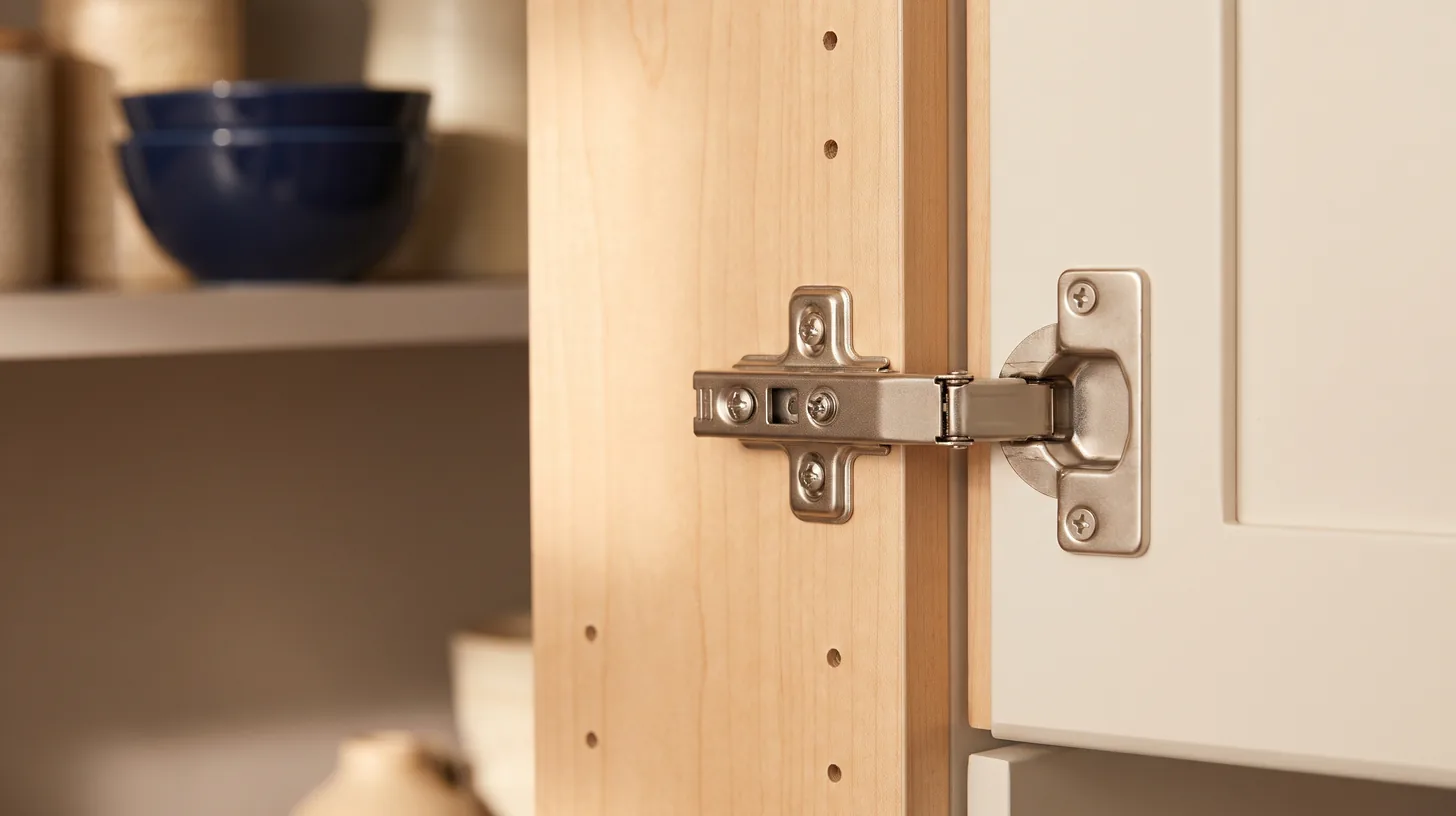
A frameless cabinet, also called European or full-access, has no face frame. Its box sides are thicker, typically three-quarters of an inch, and carry all the strength. The front edges are covered with edge banding, and every door is full overlay, hinged with concealed hinges screwed directly into the box sides. Holes for hinges and shelves follow a standard 32 mm grid, which keeps everything aligned.
| Framed | Frameless | |
|---|---|---|
| Front of the box | Hardwood face frame | Edge-banded box edges |
| Door options | Inset, full overlay, partial overlay | Full overlay only |
| Access to the inside | Frame lip narrows the opening | Full, wall to wall |
| Drawer width | 1 to 2 in narrower per cabinet | Widest possible |
| Hinges | Mounted to the frame | Mounted to the box side |
| Installation | Forgiving, frame can be scribed | Needs flat, level walls and floors |
| Typical look | Shaker, traditional, transitional | Slab, modern, minimal |
Storage and access
The face frame overlaps the opening on every side, so drawers in a framed cabinet have to be built narrower to clear it, and roll-out shelves need spacers to pass the frame. In a frameless cabinet the opening is the full interior of the box. On an 18-inch drawer base, that usually means 1 to 2 inches more drawer width.
Wide framed cabinets often add a center stile between a pair of doors, which you have to reach around. Frameless cabinets never have one. In a kitchen built around drawer banks and big pots, the difference is noticeable every day. In a kitchen of door bases with shelves, it barely matters.
Durability and installation
Both can last decades. The face frame on a framed cabinet keeps the box square in shipping and on the wall, and its hardwood holds hinge screws firmly. A frameless box gets its strength from the box material itself, so the quality of that material matters even more; ask whether the sides are plywood or particleboard, a question our guide to how much kitchen cabinets cost explains.
Installation is where the two really separate. A face frame can be scribed, trimmed by hand to follow a wavy wall, and it hides small imperfections. Frameless doors sit about an eighth of an inch apart, so any twist in the boxes shows up as a tapered gap. Floors have to be leveled carefully, walls checked for flatness, and fillers added wherever a door meets a wall so it can open fully. Those hours are part of what you pay for in cabinet installation labor.
Cost and style
Construction type does not set the price on its own. Within the same tier, framed and frameless lines cost about the same; box material, finish and door style move the number far more. Frameless lines are often sold with slab doors in matte or high-gloss finishes, which can add cost, while framed lines span everything from value shaker to premium inset.
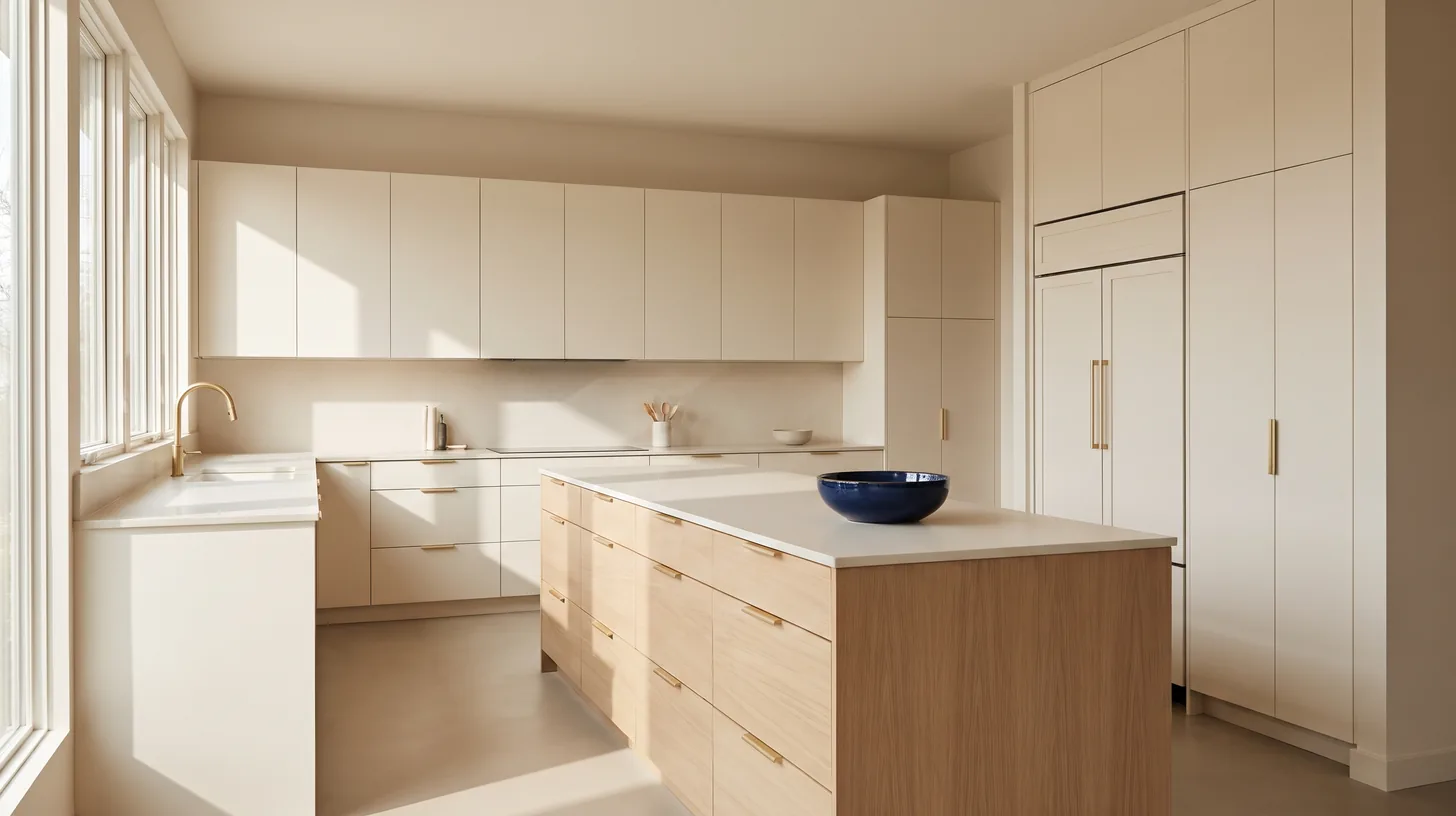
Style is the clearest dividing line. Frameless is the natural home of the slab door, handleless channels and long, uninterrupted runs. Framed suits shaker, raised panel and anything inset; if you want inset doors, framed is effectively your only choice, as our inset vs overlay cabinets guide explains. Frameless lines sold in the US generally follow the same heights, depths and width steps as framed ones, so the measurements in our kitchen cabinet sizes guide apply to both.
Which is better for your kitchen
Choose framed if you want a shaker, traditional or inset look, if your home has older walls and floors that are not perfectly flat, or if you want the widest choice of American door styles. Choose frameless if you want a modern slab kitchen, maximum drawer space in a small room, or you are building in new construction with flat walls and a precise installer.
Construction is not a brand trait. A manufacturer can build one series framed and another frameless, so a brand name alone does not tell you which you are getting. When you visit the showroom, ask which construction each line and series on your shortlist uses, and ask to see an open box: the face frame or the edge banding, where the hinges mount and how wide the drawers are tell you in a minute.
The Maryland factor
Plaster walls in older Montgomery County homes are seldom flat or plumb, and floors in mid-century houses have often settled. A framed cabinet absorbs that with scribing; a frameless one needs more shimming, more fillers and more patience. Installation labor in the DC metro runs 15 to 25 percent above national averages, so the extra hours a frameless install can take cost more here than national guides suggest.
Frequently asked questions
What is the difference between framed and frameless cabinets?
Framed cabinets have a hardwood face frame on the front of the box, and the doors hinge on that frame. Frameless cabinets have no frame; the doors hinge directly on the box sides and cover the whole front.
Are frameless cabinets better than framed?
Neither is better by default. Frameless offers more access and a modern look, while framed is more forgiving to install and allows inset doors. Box material and finish matter more to quality than construction type.
Do frameless cabinets have more storage?
Yes, slightly. With no frame narrowing the opening, drawers are typically 1 to 2 inches wider per cabinet and there is no center stile. The gain is most noticeable in drawer-heavy kitchens.
Are frameless cabinets more expensive?
Not inherently. At the same tier they cost about the same as framed. Installation can cost more, because frameless boxes need flatter walls, careful leveling and more fillers.
Can you get inset doors on frameless cabinets?
Rarely. Inset doors are built around a face frame, so they are almost always a framed option. A few custom shops build frameless inset, but at a significant premium.
Weighing framed against frameless? Bring your floor plan and a photo of your walls to our Derwood showroom, and we will show you how the lines you are considering are built, compare drawer space and tell you which construction suits your house. Call (301) 939-0009 or book a showroom visit.
See the slabs in person at our showroom
Book a free showroom visit and compare your options in person under real lighting.
Book Showroom Visit →