

Kitchen Cabinet Hardware Placement: Knobs vs Pulls
Place knobs 2½ to 3 inches from the door corner opposite the hinge and center pulls on drawers. Measurements for doors, drawers, pull sizes and knobs vs pulls.
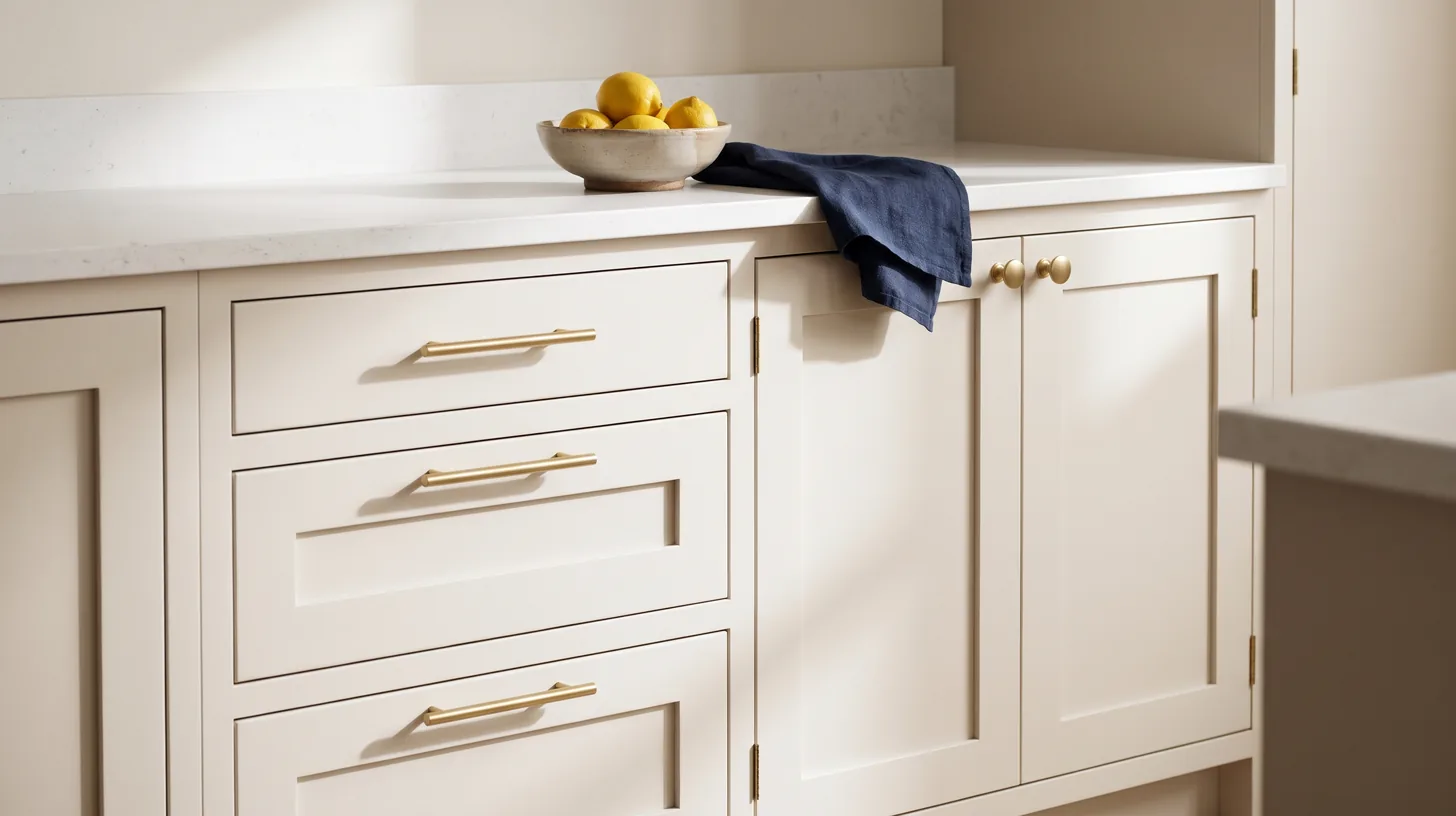
On base cabinet doors, place knobs or pulls on the side opposite the hinge, 2½ to 3 inches down from the top corner. On wall cabinet doors, mirror it: 2½ to 3 inches up from the bottom corner. Center hardware on drawer fronts and size pulls at about one-third of the drawer width; drawers 30 inches and wider can take two.
Hardware is the last selection in a kitchen and the first thing your hands touch every day. Put it a little too far from the corner and every door feels heavy; mix placements and the whole room looks slightly off without anyone knowing why. At our Derwood showroom we sell the cabinet lines, and our sister company H&C Construction drills and installs the hardware once the doors and drawers are adjusted, which is the right order. These are the measurements we work to.
Hardware placement on doors
The rule for doors is simple: hardware goes on the side away from the hinge, close to the corner your hand reaches first. That is the top corner on base cabinets and the bottom corner on wall cabinets.
| Door | Knob | Pull |
|---|---|---|
| Base cabinet door | Centered on the stile, 2½ to 3 in below the top edge | Vertical, top end 2½ to 3 in below the top edge |
| Wall cabinet door | Centered on the stile, 2½ to 3 in above the bottom edge | Vertical, bottom end 2½ to 3 in above the bottom edge |
| Tall pantry door | Around 36 to 42 in from the floor | Vertical, centered near counter height, or a long appliance-style pull |
| Corner and lazy susan doors | On the leaf that opens first | Same as base doors |
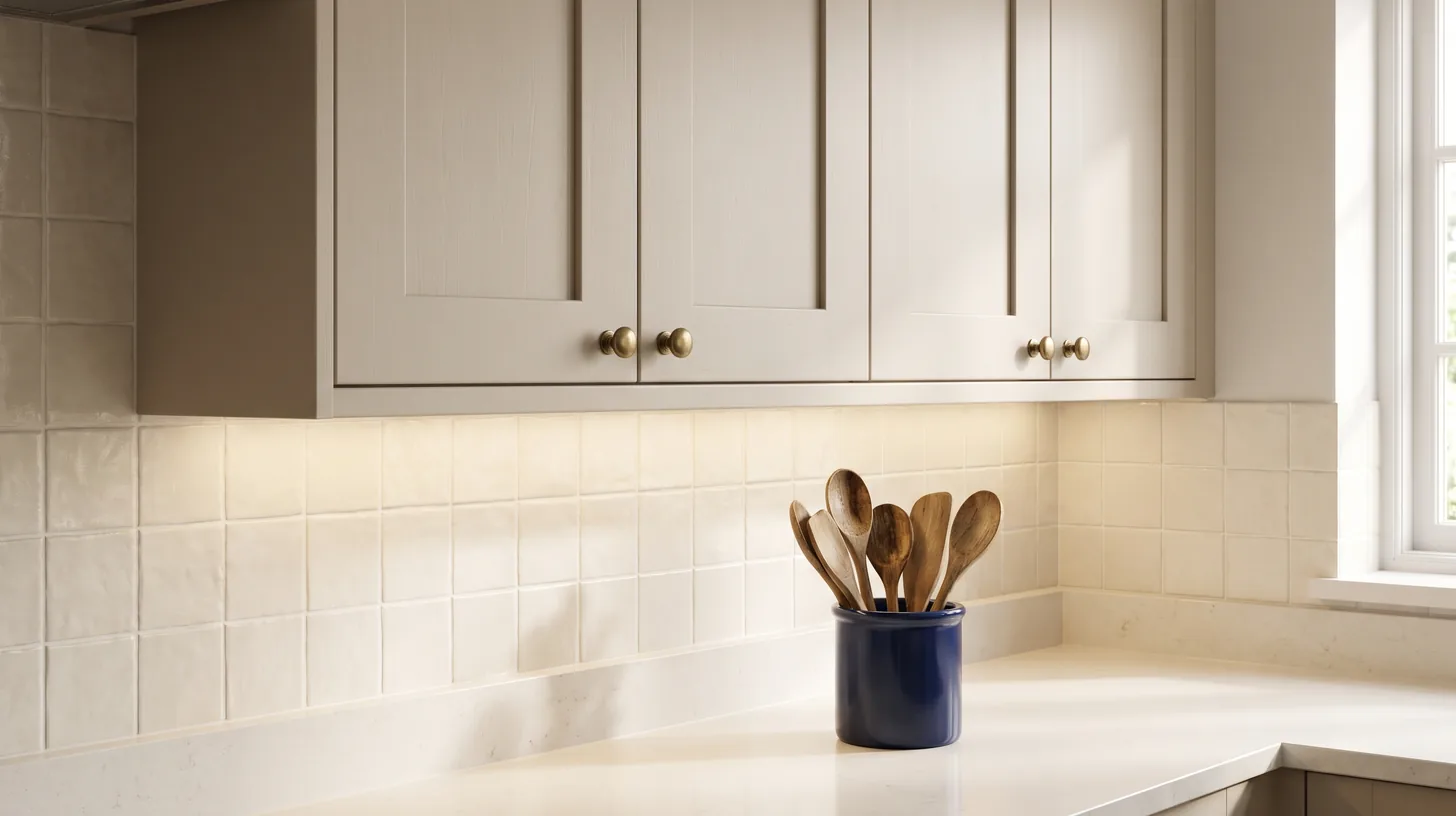
On shaker doors many designers use the door’s own frame instead: center the knob on the stile and line it up with the middle of the top rail on base doors, or the bottom rail on wall doors. Shaker rails are usually 2 to 3 inches wide, so this sets the knob a little closer to the corner, about 1 to 1½ inches in, but it follows the frame lines and looks deliberate.
Whatever you choose, use the same measurement on every door. A difference of half an inch between neighbors is visible from across the room.
Hardware placement on drawers
Drawers are easier. On a slab drawer front, center the knob or pull both ways. On a five-piece shaker drawer front, center it on the recessed panel, and on a narrow top drawer, center it on the front as a whole.
Deep drawer banks offer two options. Centering the hardware on every drawer is the classic look. Placing it on each drawer’s upper part, 2½ to 3 inches down from the top edge, puts the hardware in one straight line with the base doors beside it and makes deep pot drawers easier to reach. Both are correct; pick one and use it for the whole kitchen.
For size, use pulls about one-third the width of the drawer. Pulls are sold by the distance between their screw holes, called center to center, which is about an inch shorter than the pull itself:
| Drawer width | Pull length, about one-third | Common center-to-center size |
|---|---|---|
| 12 to 15 in | 4 to 5 in | 3 in or 96 mm (3¾ in) |
| 18 in | 6 in | 128 mm (5 in) |
| 24 in | 8 in | 160 mm (6⅓ in) or 192 mm (7½ in) |
| 30 in | 10 in | 224 mm (8¾ in), or two smaller pulls |
| 36 in | 12 in | 256 mm (10 in), or two smaller pulls |
When a wide drawer gets two pulls, set each about a quarter of the drawer width in from the side, or line them up with the hardware on the doors above it.
Knobs vs pulls: which goes where
Knobs cost less and look tidy on doors, which open with a light pull. They are the wrong tool on a heavy drawer full of pots, where you want your whole hand. Pulls give a full grip, are easier for anyone with stiff or sore hands, and read as more modern.
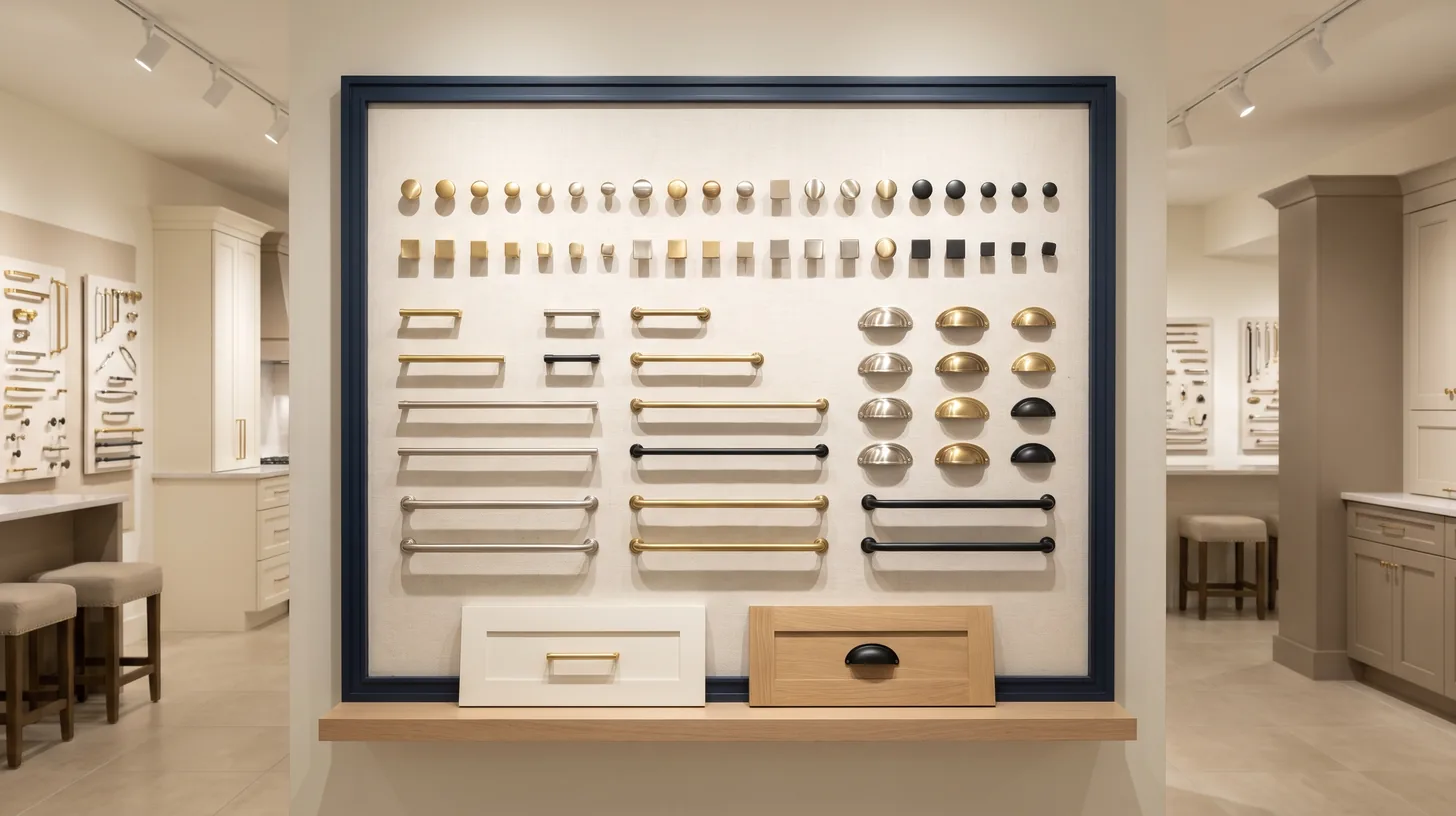
The most common combination is knobs on doors and pulls on drawers. All pulls is the cleaner, more contemporary choice, and it suits slab doors well, as our shaker vs modern cabinet doors guide shows. Inset doors need hardware on every door and drawer, because there is no edge to grab; see inset vs overlay cabinets for why.
A typical kitchen uses 30 to 40 pieces. Most quality knobs and pulls run $5 to $25 each, so budget $150 to $1,000 for the set, with designer finishes going higher. Hold samples in your hand before you order: a pull that looks right in a photo can feel thin or sharp-edged on a drawer you open twenty times a day.
Drilling it right
Hardware goes on last, after the cabinets are set and every door and drawer is adjusted. Drilling first means the holes end up in the right place on a door that later moves.
Use a drilling jig set to your chosen measurements, so every door is marked from the same reference edge. Drill straight through from the front, with a scrap block held tight behind the door to stop the back face from splintering, which matters most on painted finishes. Drawer fronts are screwed through the drawer box as well, so they need longer screws than doors; most hardware comes with breakaway screws for exactly that reason.
If you are only changing hardware on existing cabinets, match the old center-to-center size to reuse the holes, or choose pieces with a backplate wide enough to cover them. If the old holes are in the wrong place anyway, it may be the moment to look at replacing the cabinet doors rather than filling and repainting them.
Frequently asked questions
Where should knobs go on kitchen cabinet doors?
Put knobs on the side opposite the hinge, centered on the stile. On base doors set them 2½ to 3 inches below the top edge; on wall doors, 2½ to 3 inches above the bottom edge.
Where do you put pulls on kitchen drawers?
Center pulls on the drawer front, both side to side and top to bottom. On deep drawer banks you can instead place every pull 2½ to 3 inches below the top edge, so they line up with the door hardware. Use one method throughout.
What size pulls should I use on kitchen drawers?
Use a pull about one-third the drawer width: around 6 inches on an 18-inch drawer and 10 to 12 inches on a 30 to 36-inch drawer. Wide drawers can take two shorter pulls instead.
Should you use knobs or pulls on kitchen cabinets?
The most common choice is knobs on doors and pulls on drawers, because drawers are heavier and easier to open with a full grip. All pulls suits modern and slab kitchens.
How many knobs and pulls does a kitchen need?
A typical kitchen needs 30 to 40 pieces, one per door and drawer plus a second pull on wide drawers. At $5 to $25 each, that is $150 to $1,000 for the set.
Choosing hardware for new cabinets? Bring your door style to our Derwood showroom and see how knobs and pulls look and feel on full-size doors and drawers before you order. Call (301) 939-0009 or book a showroom visit.
See the slabs in person at our showroom
Book a free showroom visit and compare your options in person under real lighting.
Book Showroom Visit →

