Inset vs Overlay Cabinets: Look, Cost and Durability
Inset cabinet doors sit flush inside the frame and cost 20 to 35 percent more than overlay. How the two look, wear and adjust, and how to choose between them.

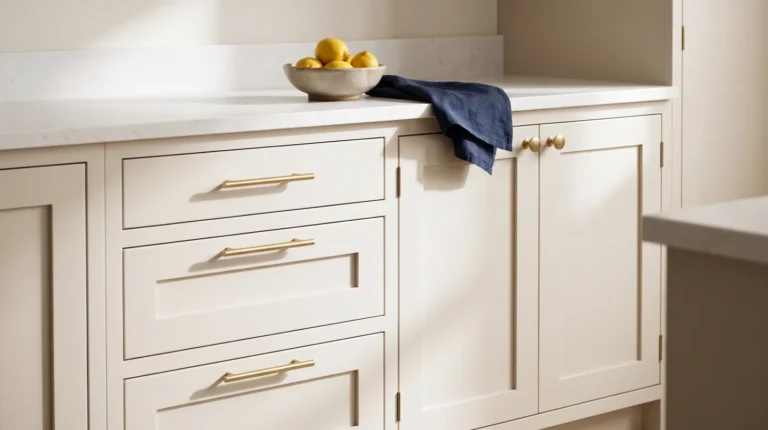
Inset cabinets have doors that sit flush inside the face frame; overlay cabinets have doors that sit on top of it. Inset looks like fine furniture and costs 20 to 35 percent more, because every door has to fit its opening with an even gap of about an eighth of an inch. Full overlay is cheaper and more forgiving, so most kitchens use it.
The difference is easy to spot in a photo and much easier to feel in person. An inset door closes into its frame with a solid, furniture-like stop; an overlay door closes against the face of the frame. At our Derwood showroom we can walk you through both styles in person, and our sister company H&C Construction installs and adjusts them afterward, so we know where each one causes trouble a year later. This is how inset vs overlay cabinets compare on looks, cost and daily wear.
Inset, full overlay and partial overlay
All three are built on a framed cabinet: a box with a hardwood face frame on the front. What changes is where the door sits relative to that frame.

| Style | Where the door sits | Frame you see | Typical look |
|---|---|---|---|
| Inset | Flush inside the face frame | All of it, with an even gap of about 1/8 inch around each door | Traditional, furniture-like, period homes |
| Full overlay | On the frame, covering almost all of it | About 1/2 inch or less between doors | Transitional and modern, most new kitchens |
| Partial overlay | On the frame, covering part of it | 1 to 2 inches around each door | Builder grade and older kitchens |
Inset comes in two common versions. Plain inset shows a flat frame around each door. Beaded inset adds a small rounded bead to the inside edge of the frame, which casts a thin shadow line and hides small variations in the gap. Beaded is the more traditional of the two and usually costs a little more again.
Partial overlay is the cheapest to make and many lines still offer it, but most new kitchens are full overlay. When people say overlay today, they usually mean full overlay.
The cost difference
On the same cabinet line, in the same finish, inset adds 20 to 35 percent over full overlay. The reasons are all in the manufacturing. The face frame has to be perfectly square, because any twist shows as a tapered gap. Every door and drawer front is fitted to its own opening. The inside edge of the frame is finished to the same standard as the door, since you can see it. And inset needs its own hardware: hinges sized for an inset door, plus stops or catches so each door closes exactly flush.
| Same 20 linear foot kitchen, installed | Full overlay | Inset |
|---|---|---|
| Stock line | $2,000 to $6,000 | Rarely offered |
| Semi-custom | $5,000 to $13,000 | $6,000 to $17,500 |
| Custom | $12,000 to $24,000 and up | $14,500 to $32,500 and up |
The overlay column comes from our breakdown of how much kitchen cabinets cost, and the inset column adds the 20 to 35 percent premium to it, rounded. Inset is mostly found in the upper semi-custom and custom tiers, and it often carries a longer lead time than the same line in overlay. Installation also takes longer, because each door is adjusted by eye until the gaps match.
Durability and daily use
Overlay is the forgiving option. If a door drops slightly, or the house shifts, the overlap hides it, and a concealed hinge brings it back in a minute with a screwdriver.
Inset shows everything. With an eighth of an inch around each door, a small change in the wood or the house becomes a visibly uneven gap, and a door that swells can start to rub. On painted inset, rubbing eventually wears through the paint on the edge. None of this is a defect; it is the nature of the style, and an inset kitchen expects an occasional hinge adjustment. Our cabinet finish durability guide explains which finishes hold up best at edges like these.
There are two practical differences you will notice daily. First, storage: inset drawer boxes run about three-quarters of an inch shorter, because the front sits inside the frame instead of in front of it, and inset hinges take a little room inside the opening. Second, hardware: an inset door has no edge to grab, so every door and drawer needs a knob or a pull.
Which one fits your kitchen
Choose inset when the architecture of the house calls for it, when you want the kitchen to read as furniture, and when the budget can absorb the premium without cutting the box construction. It suits shaker and beaded doors, painted finishes and traditional hardware such as knobs and cup pulls.
Choose full overlay when you want clean lines, a little more storage, a lower price and less maintenance. It works with every door style, from shaker to slab, which our shaker vs modern cabinet doors guide compares. A painted full overlay shaker gets you much of the inset feeling for considerably less money.
The fastest way to decide is to touch both. Open an inset door and an overlay door, ideally in the same finish, run a finger along the gaps and pull a drawer on each. Most people know within a minute which one they want to live with.
The Maryland factor
Maryland summers are humid and its heated winters are dry, so wood doors and frames swell in August and shrink in February. On inset cabinets, that movement shows directly in the gaps. Keeping indoor humidity between roughly 35 and 50 percent helps, and it is normal to schedule one round of hinge adjustment after the first full year. Older homes with settling floors make inset harder to keep perfect, which is worth weighing before you commit.
Frequently asked questions
Are inset cabinets more expensive than overlay?
Yes. On the same line and finish, inset typically costs 20 to 35 percent more than full overlay, because the frame must be perfectly square and each door is fitted to its opening by hand.
What is the difference between inset and full overlay cabinets?
Inset doors sit flush inside the face frame, so the whole frame shows with a thin, even gap around each door. Full overlay doors sit on top of the frame and cover almost all of it, leaving about half an inch or less visible between doors.
Do inset cabinets have less storage?
Slightly. Inset drawer boxes are about three-quarters of an inch shorter because the drawer front sits inside the frame, and inset hinges take a little room in each opening. In most kitchens the difference is small.
Do inset cabinet doors stick?
They can, in humid months. Wood moves with the seasons, and with an eighth-inch gap a swollen door can rub. A hinge adjustment and steady indoor humidity usually solve it.
Are inset cabinets worth it?
They are worth it when the furniture look is the point of the kitchen and the budget covers the premium without cutting box quality. If you want the most storage per dollar and minimal upkeep, full overlay is the better buy.
Not sure which style fits your kitchen? Come to our Derwood showroom to compare door styles in person, and we will price your layout both ways. Call (301) 939-0009 or book a showroom visit.
See the slabs in person at our showroom
Book a free showroom visit and compare your options in person under real lighting.
Book Showroom Visit →